
Every year, the State of the Nation Address (SONA) dress code encourages a parade of traditional Filipino formalwear. From elegant ternos to intricately embroidered barongs, the political event becomes a showcase of the country's rich sartorial heritage. While most opt for subdued and understated looks, some see their attire as a medium to spotlight their advocacies and platforms, just like Kabataan Partylist representative Raoul Manuel.
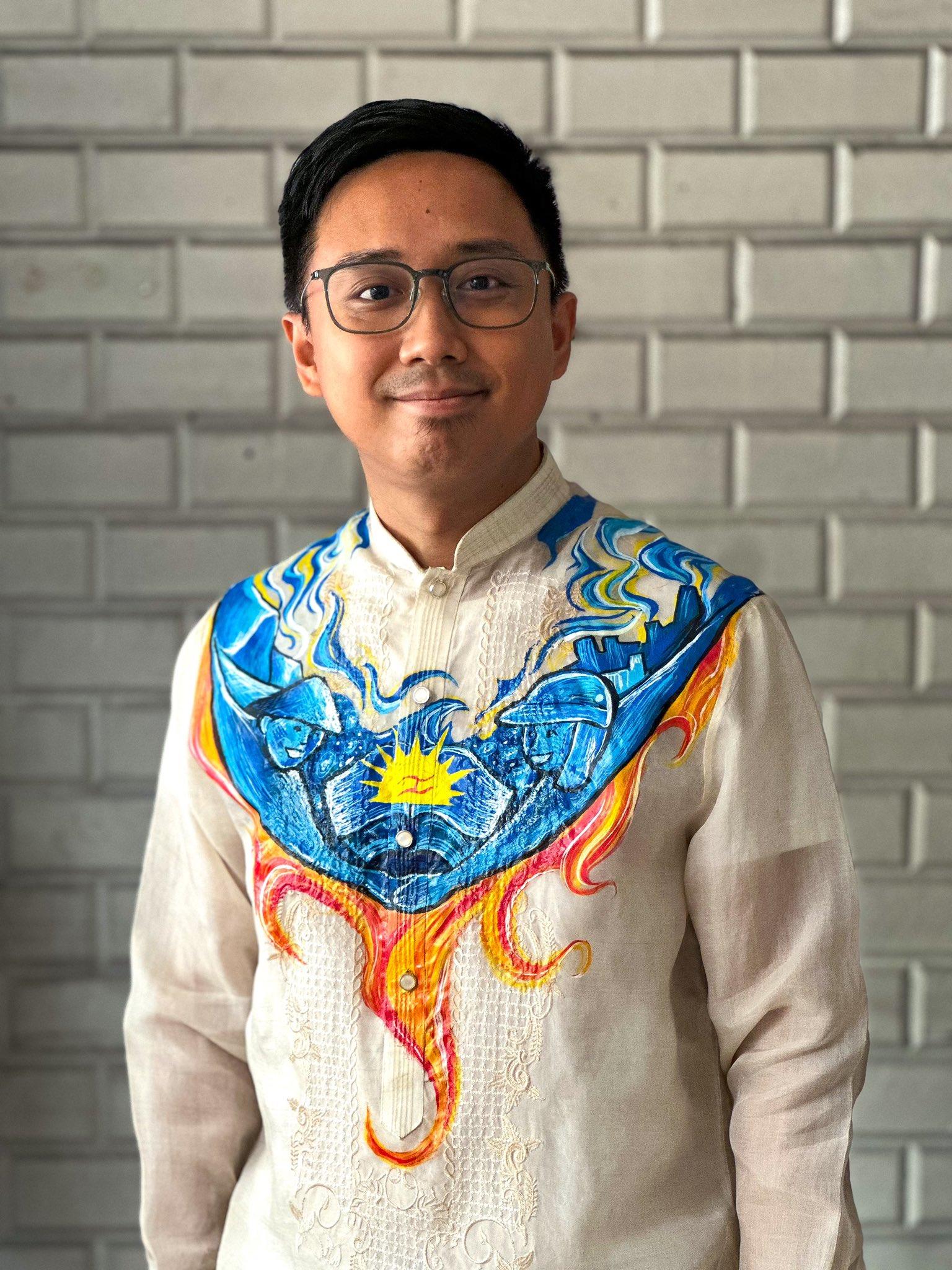
For the past three years, the 29-year-old legislator has worn hand-painted barongs by UP Fine Arts student Albert Raqueño to the SONA. In 2022, Cong. Raoul's outfit featured two holding hands and a phoenix painted in the party list's colors of blue and yellow. According to a writeup shared on Albert's Instagram in February 2023, the statement barong represented "the never-ending rebirth of generational struggle towards genuine social change." The following year, the design drew inspiration from national hero Andres Bonifacio's nationalism. "The mural on the barong takes the form of a Katipunero neckerchief with a fiery heart anchoring its knot, and the multitude of youth at the back united to fight for a better tomorrow for the nation," the Kabataan Partylist wrote in a Facebook post.
This year, Cong. Raoul's statement barong symbolizes "the hope of the new generation to graduate from the social ills dragging the country to further crisis," the party shared on Facebook.
In an exclusive interview with Preview, Albert Raqueño detailed the process behind this handpainted piece. Read on.
Preview Exclusive: UP Student Artist Albert Raqueño on the Hand-Painted Barong for Cong. Raoul Manuel during SONA 2024
To convey this message, the painting's overall shape references the hood of a toga, triangularly shaped and typically worn draped over the chest. Rendered in the partylist's signature colors of blue, yellow, and white, this year's design includes flame-like motifs beneath it.
"[This] third one this year, I believe is the strongest that the team came up with so far," Albert tells Preview. "After the first two, the symbolism this time emphasizes the youth’s active role in fighting for change."
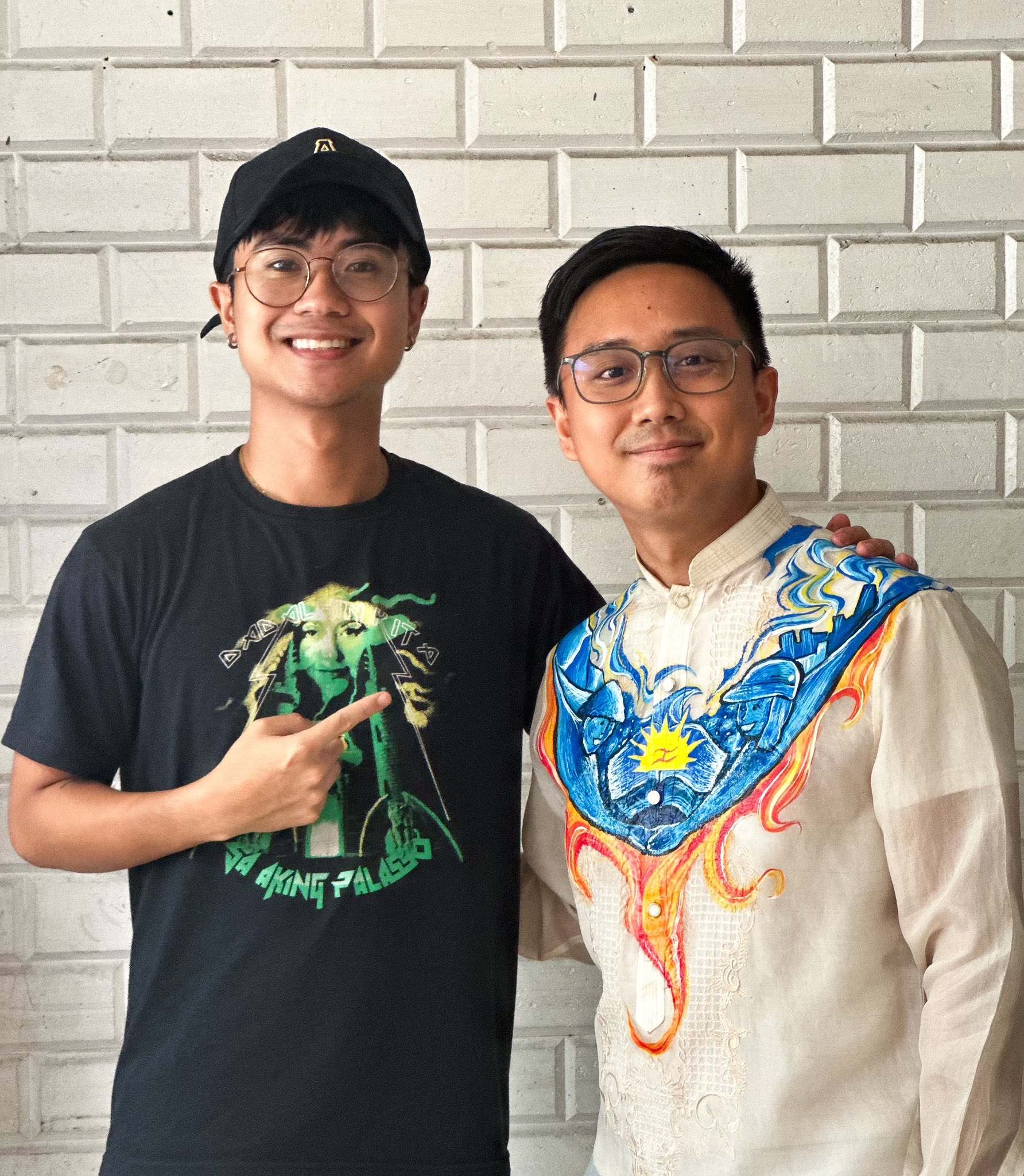
Albert closely worked with members of the Kabataan Partylist, from whom he received steady support throughout the entire process. "We worked step by step from conceptualization, coming up with drafts, to agreeing with the final look I’d eventually produce," he says.
Preparing the barong before painting is a crucial step. Given the piña fabric's sheer appearance and delicate texture, Albert made sure to flatten out the barong's surface first to make the painting process much easier. "Without [doing] this, the paint wouldn’t stick to the surface, [and] there’s also a tendency for it to bleed," he explains.
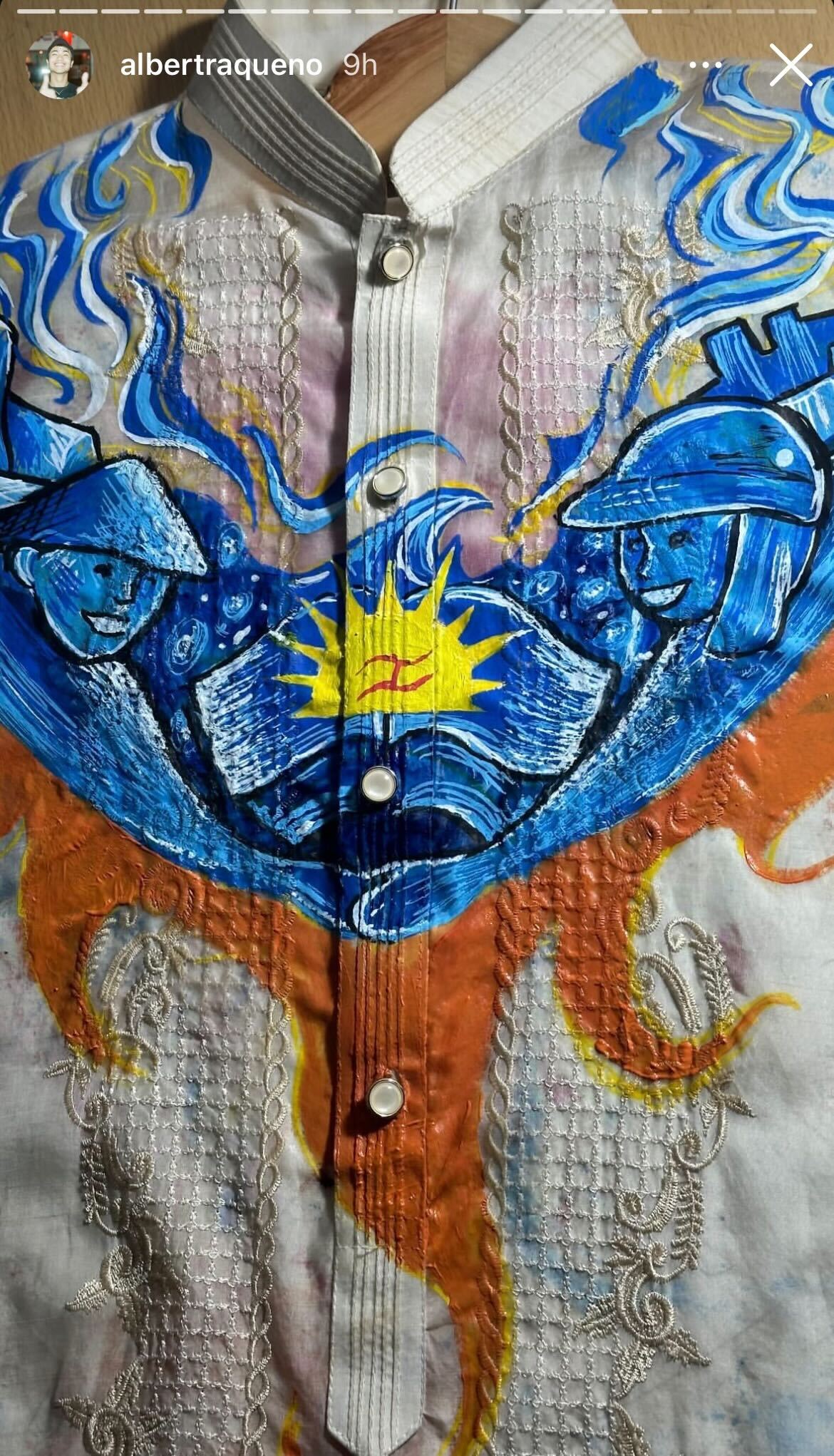
Albert also revealed that they didn't want to use a brand-new barong for this piece. "We had to make do with what Rep. Raoul Manuel already had. There were parts I had to cover up or repair, and I’m glad it worked," Albert disclosed.
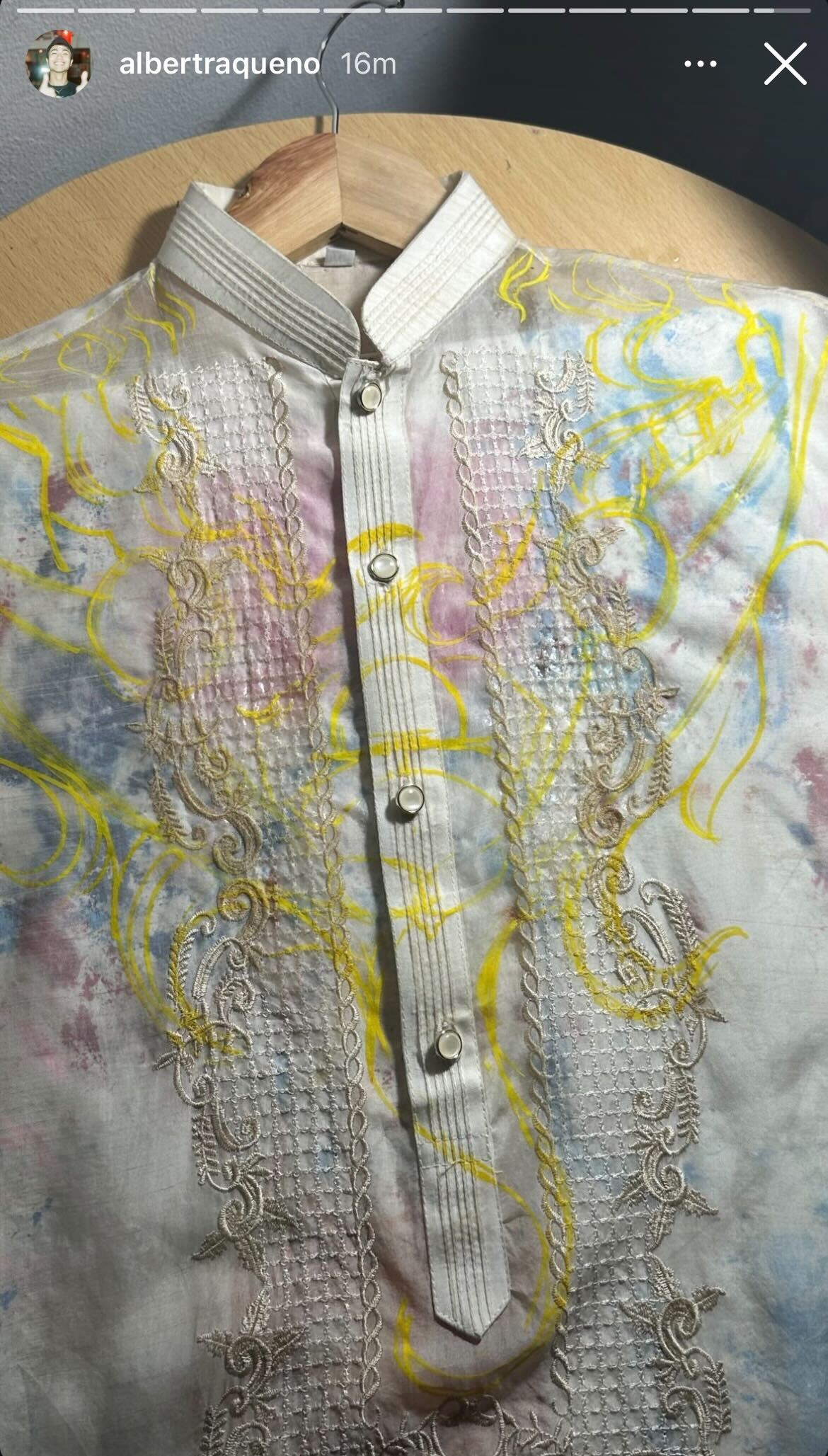
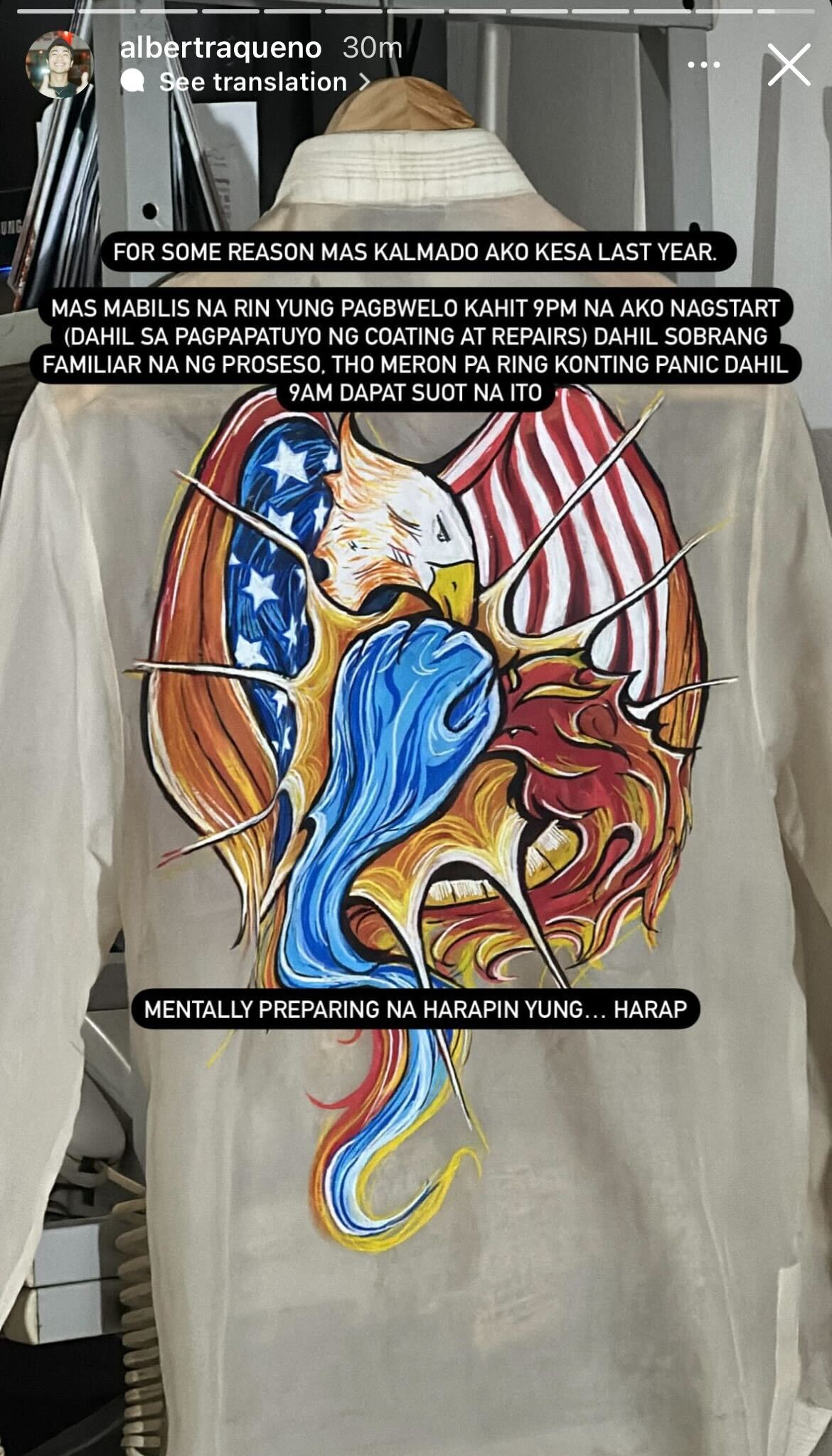
Completing the piece took him nine hours of continuous painting—shorter than the 12 hours it took for his first handpainted barong in 2022. "Since it’s my third time painting on a barong, I was much more familiar with the steps. I knew how to prepare the fabric, which paints to use, and how long it could take," Albert says.
Hey, Preview readers! Follow us on Facebook, Instagram, YouTube, Tiktok, and Twitter to stay up to speed on all things trendy and creative. We’ll curate the most stylish feed for you!
