
Amid the mountainous regions of Metro Cebu, Furne Amato debuts a collection fashioned after the birds of prey. Now based in Dubai but born and bred in the Visayan province, Furne trumpets his return with designs that are as menacing as they are alluring.
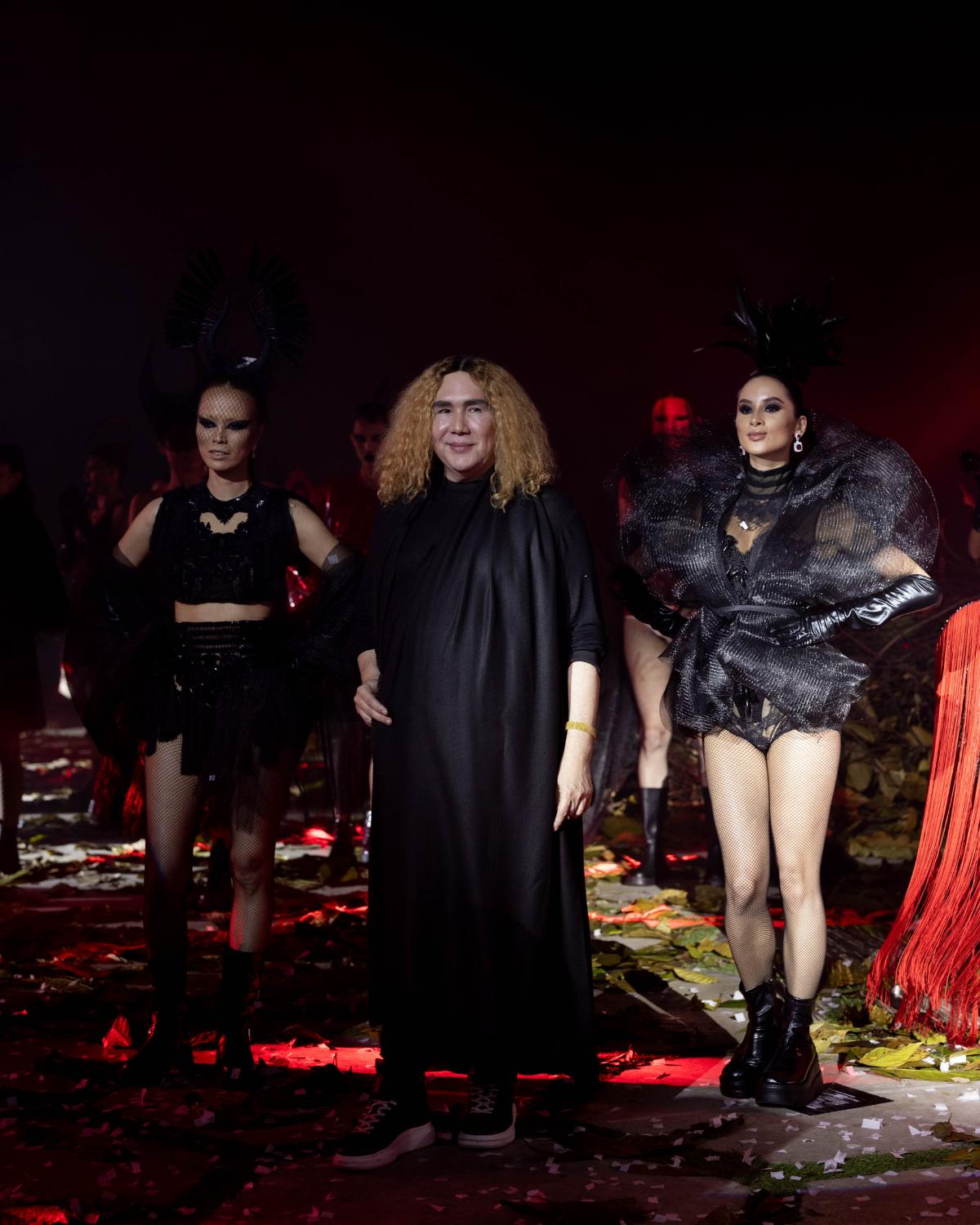
Furne Amato Soars with the Birds of Prey
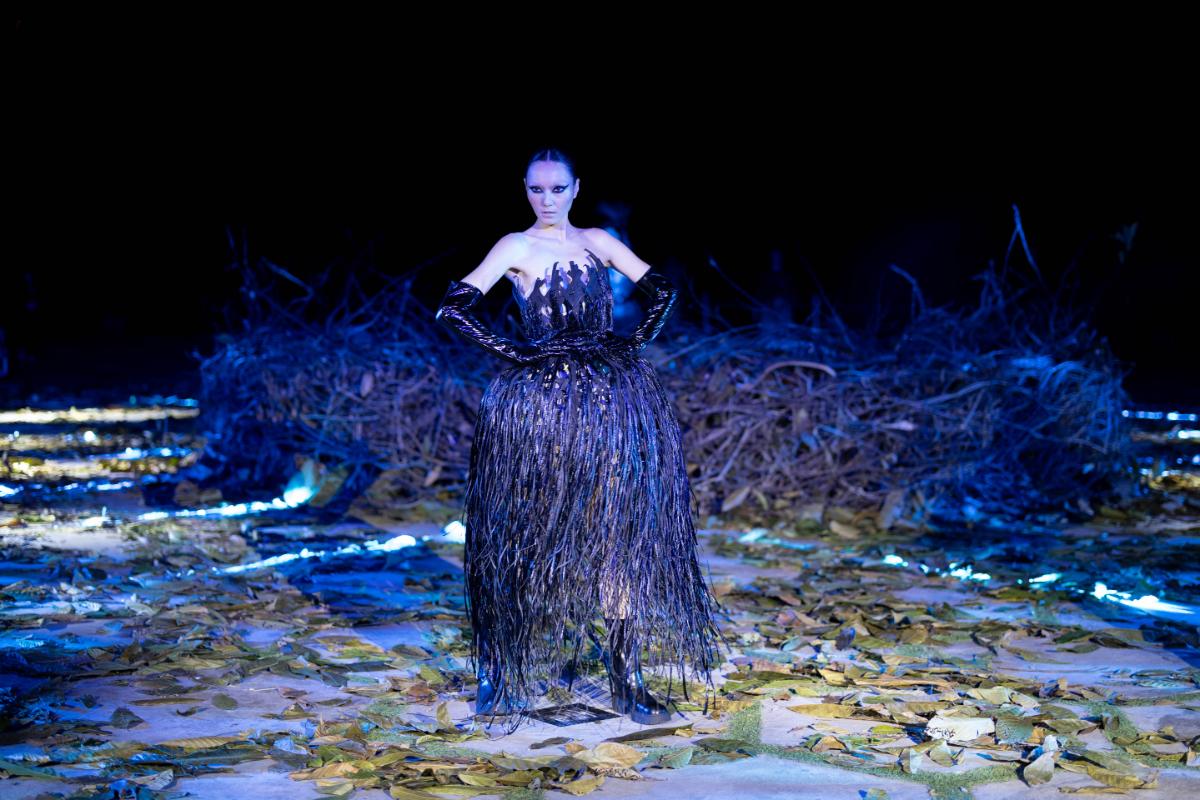
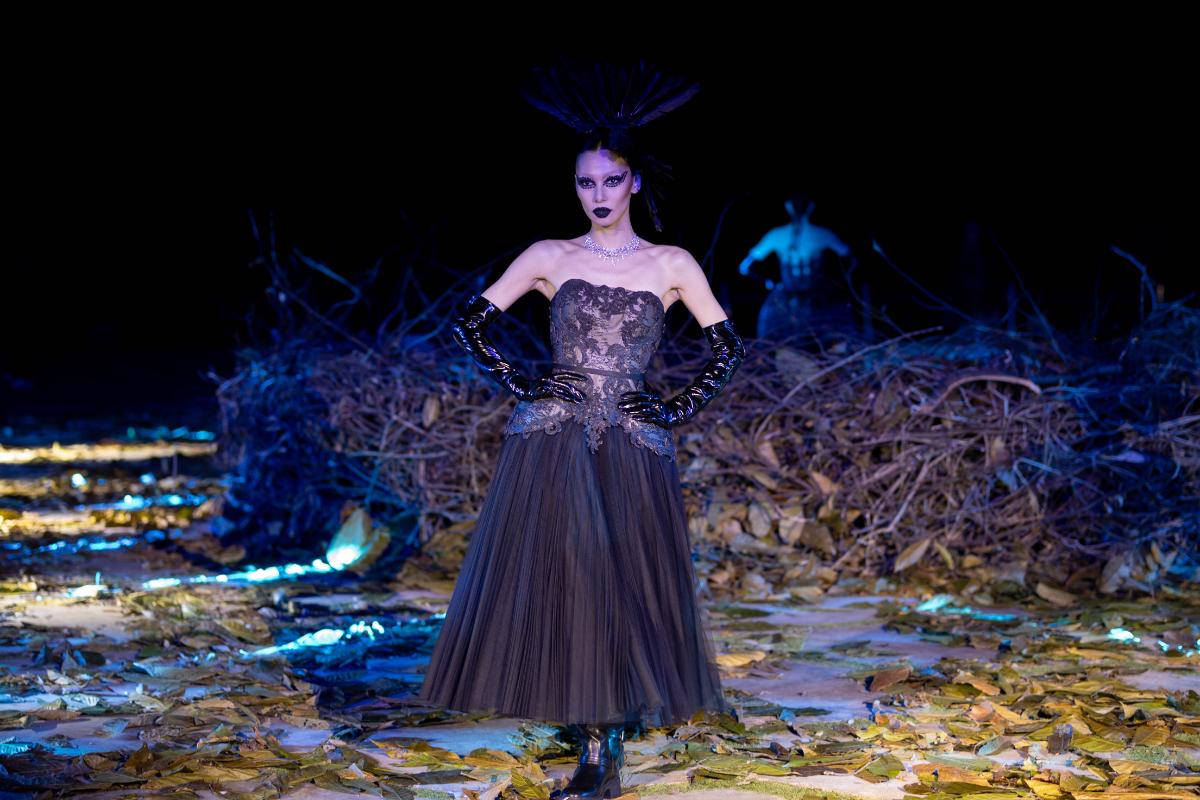
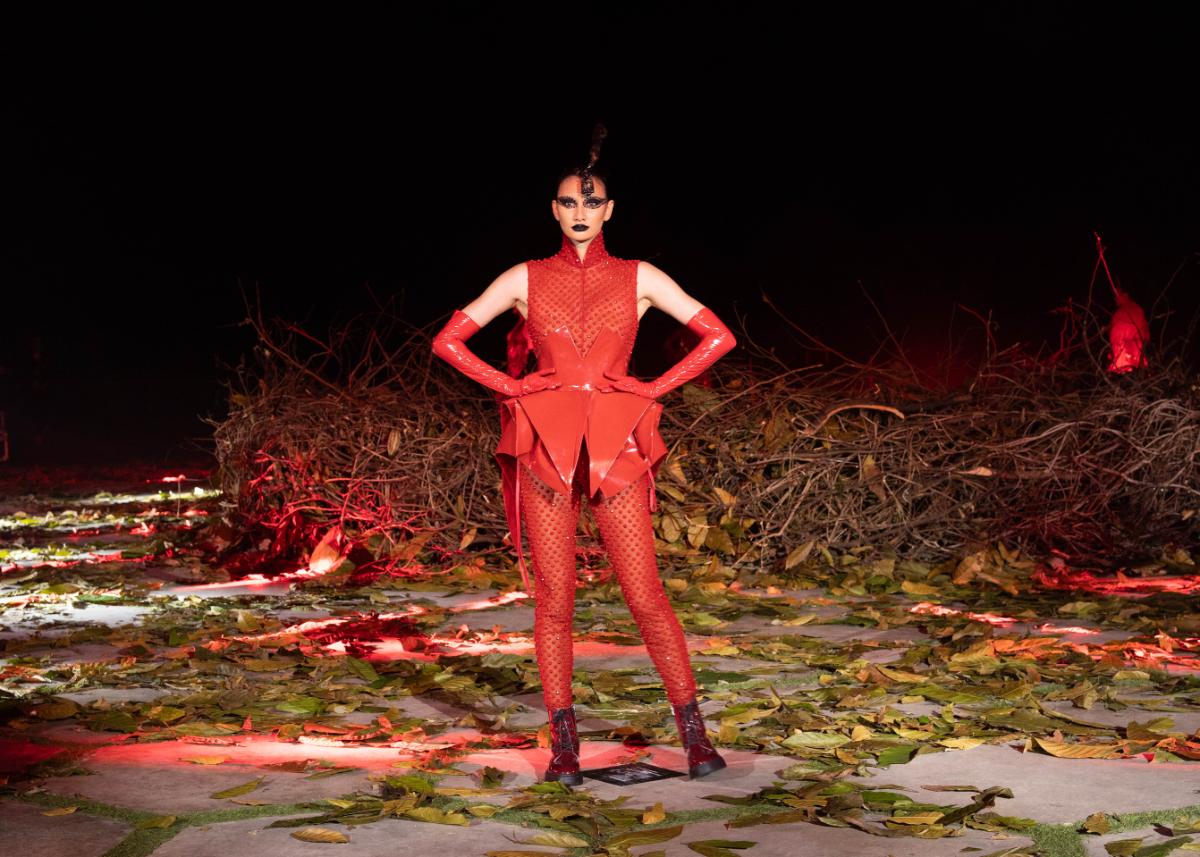
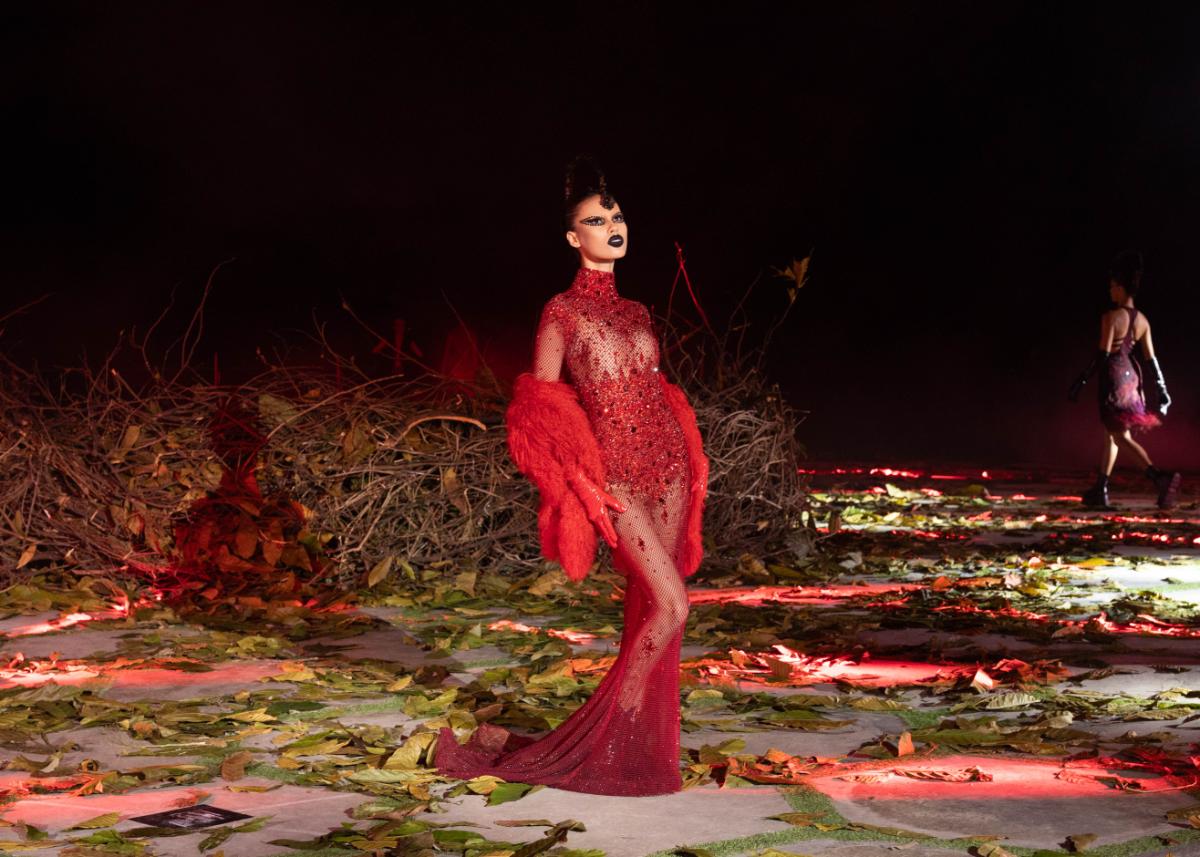
Situated at the center of TOPS Cebu—a mountain lookout and events venue that offers panoramic views of the city—is a literal nest. As fog began to engulf the stage, models entered in multi-textural garments rendered in shades of black and red. Harsh fringes and latex accessories were offset by soft feather appliques and delicate embroidery.
A commonality between all of the looks, as varied as they were in design, was the combat boots on the models' feet. "I wanted them to look more modern," said Furne, but he underscored that it was also a practical choice given the venue's uneven surface.
One might assume that Furne is rooting from some unconventional fascination to come up with pieces that border on the macabre. In actuality, however, it's simpler than what one may think. "For other people, it's a nightmare. But it's my sweet dream," he explained to Preview. "That's why I used Sweet Dreams [by Eurythmics as my closing song.]"
As the '80s synth track played to punctuate the show, Furne's intentions were apparent in even the most minute of details. Muses were painted with sharp contours to mimic the appearance of beaks, and their path entailed circling the nest in three levels, referencing migratory patterns observed in most birds.
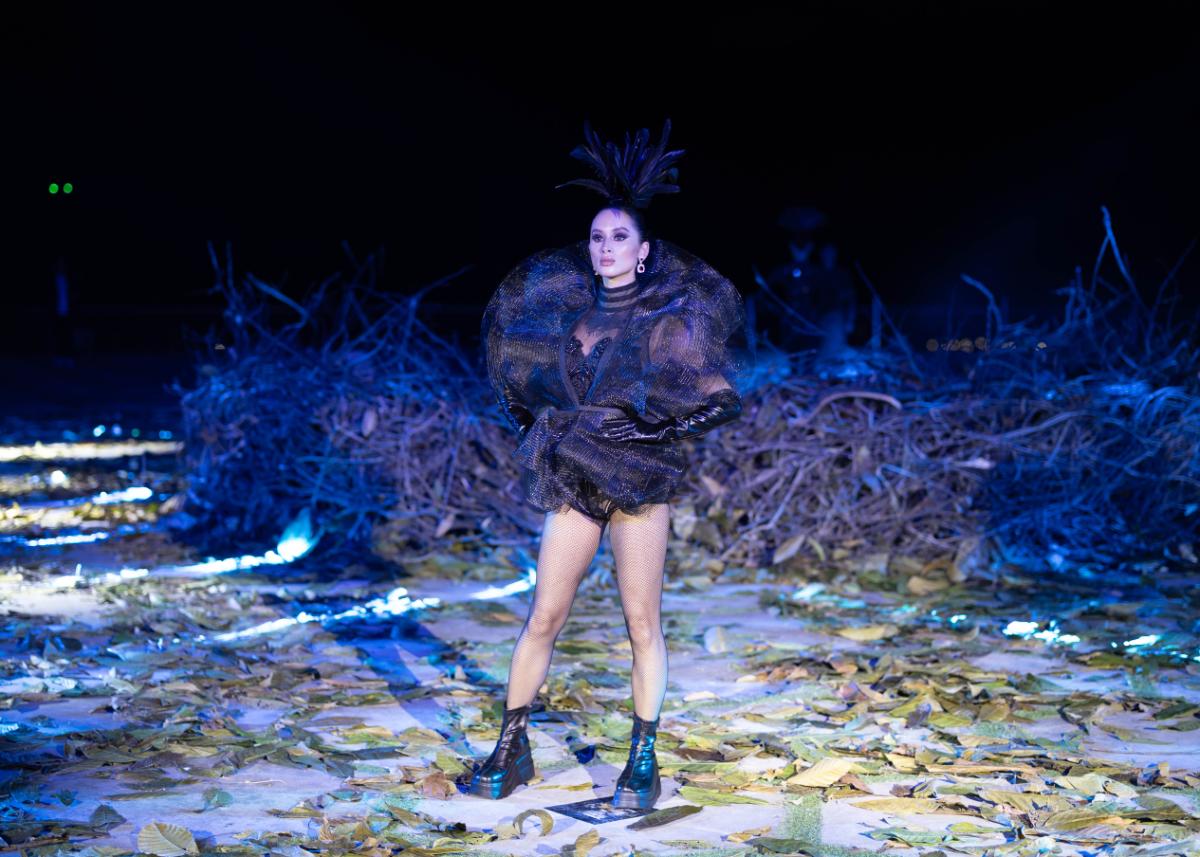
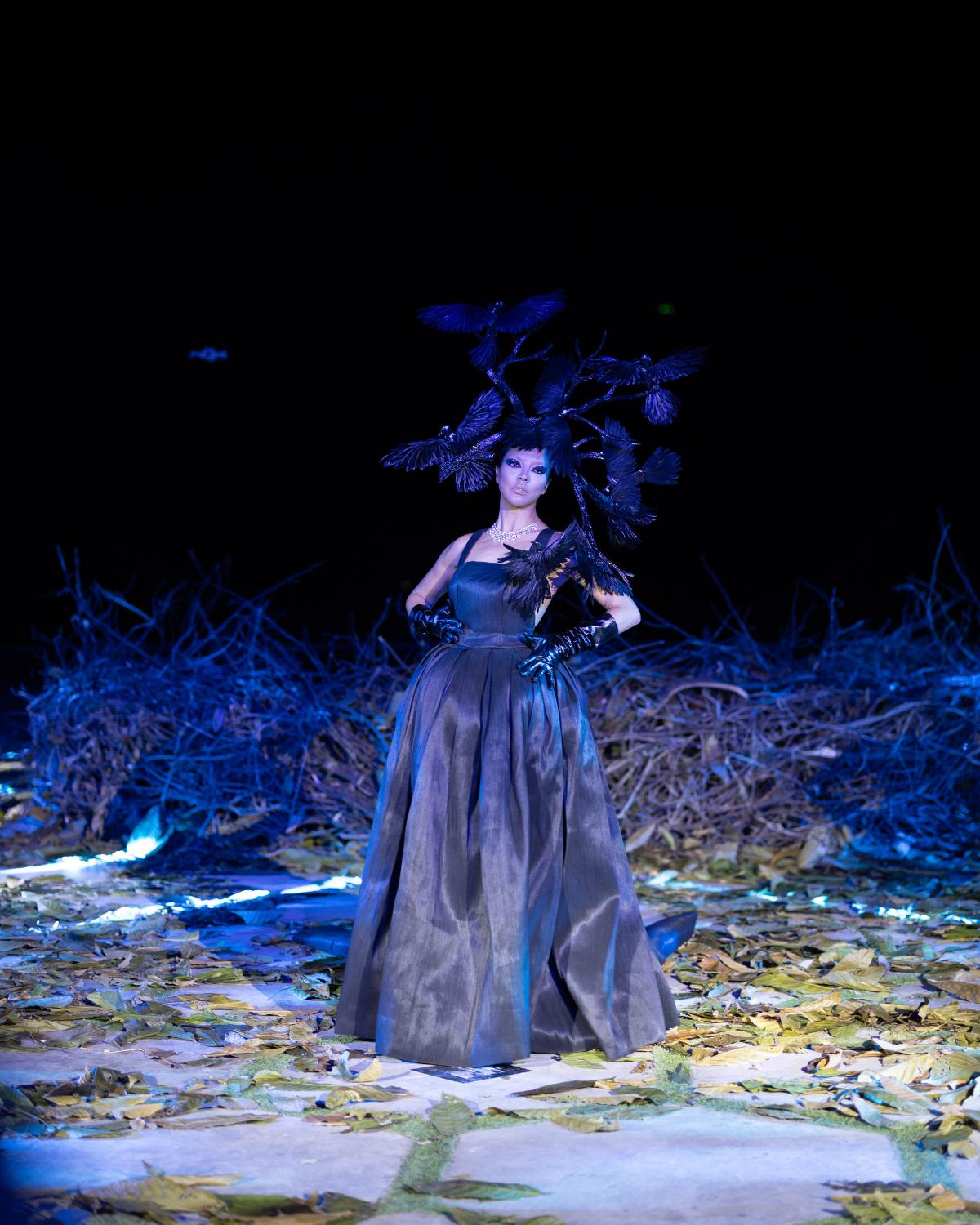
The collection's duochromatic palette is a tribute to the dominant hues found in the garments of the T'boli tribe. One to always champion Filipino motifs, Furne exclusively used black and red materials to hark back to the textiles worn by the Mindanaoan indigenous group. A middle portion of the show featured garments inventively made with T'nalak fabric, a tri-colored cloth crafted by weavers of the tribe.
This reference to Mindanaoan culture extends to the birds of prey that the collection was named after in the first place. Furne says that the main inspirations were crows and the Philippine eagle, the latter being endemic to the country's southernmost region. "I want to push forward what we have in the Philippines. It's about time," he waxed.
In a way, the fashion show was a means for the designer to signal his comeback to his hometown. And simultaneous with his return are his efforts to uplift Cebuano talent. At around the same time Furne was preparing for the show, he also opened Amato Home and Cafe along Salinas Drive, only a couple of steps away from Cebu's IT Park.
Aside from a good cup of coffee and an up-close look at Furne's couture creations, Amato Home and Cafe also houses collaborations with local artisans and designers. Furne envisions the establishment to become a hub for patrons to not only gather but to also support their fellow Cebuanos' works.
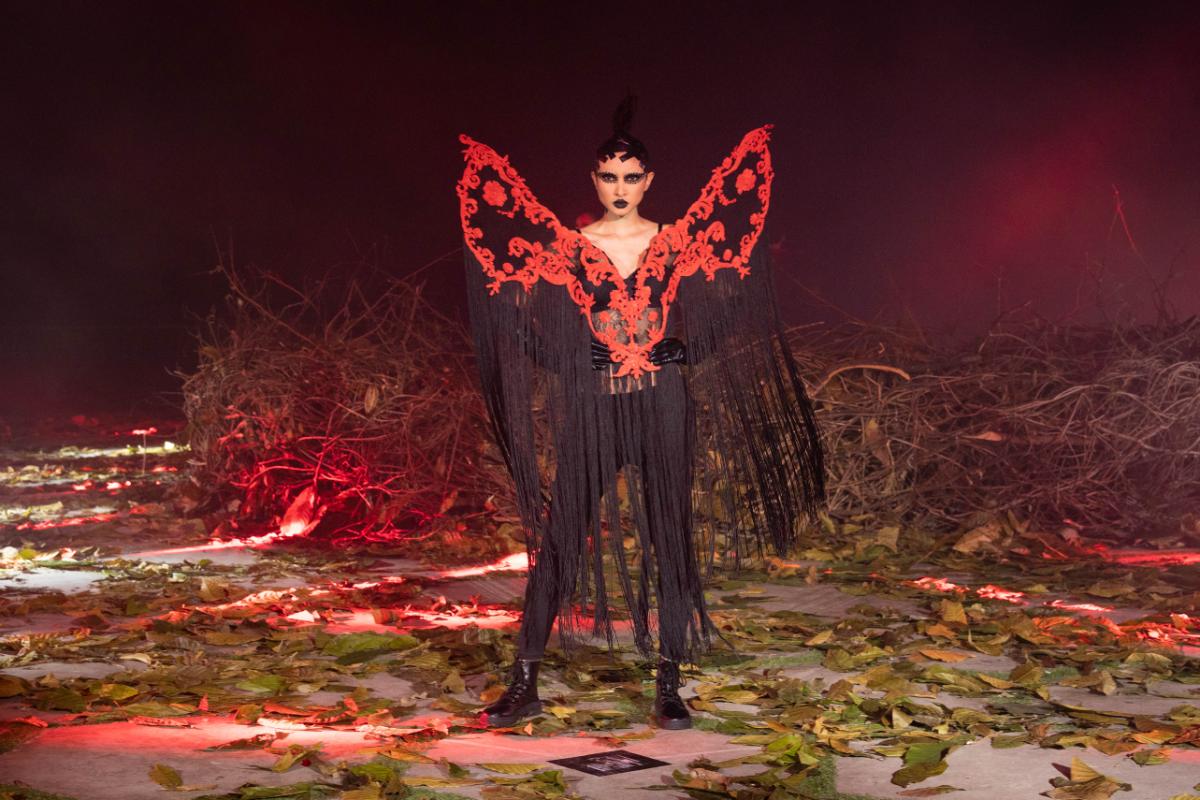

A few minutes before the birds of prey took their course, Furne shared a story of how he was dubbed as the "Elphaba" of the Filipino fashion scene by Boy Abunda, a callback to Wicked's Witch of the West. As compared to his contemporaries, Furne certainly takes on a darker aesthetic with his work, which one can easily liken to witchcraft or the occult.
However, the designer has proven that his work is beyond what one sees on the surface. In his words, "Darkness doesn't always mean black. Even pastel [colors can be dark] if you have that darkness in you. Even light has darkness." After three decades into his career, Furne exhibits that "darkness" doesn't equate to a void of emptiness. There is, in fact, a profoundness present in the great unknown.
So if you care to find the great unknown that Furne roots from, look to the southern sky towards the Queen City.
Hey, Preview readers! Follow us on Facebook, Instagram, YouTube, Tiktok, and Twitter to stay up to speed on all things trendy and creative. We’ll curate the most stylish feed for you!
