
More Videos You Can Watch
The Making of Francis Libiran’s “Sinag” Barong for the 2024 Paris Olympics
In an exclusive interview, Francis Libiran walks us through his creative process as he designed "armors" for our Filipino athletes.
Published Jul 19, 2024
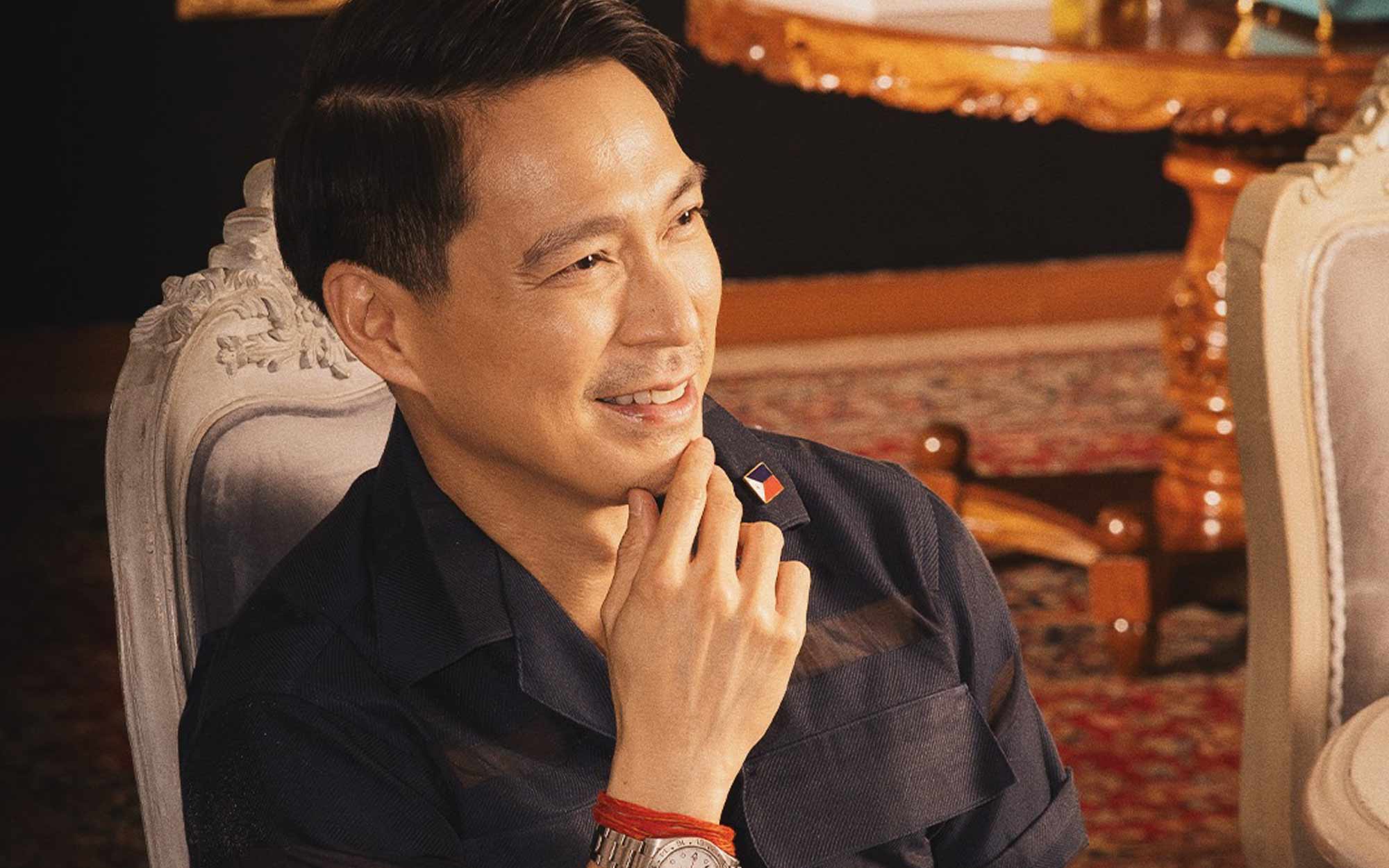
Much like its namesake, Francis Libiran's "Sinag" barong for the Paris Olympics is meant to radiate national pride on the global stage.
The stage is set for our national athletes. The 2024 Summer Olympics will commence on July 26th, with 22 Filipino Olympians joining their global counterparts in a grand welcoming parade in Paris, France.
For the first time in history, the opening ceremonies of the Olympic Games will not be held within the closed confines of a stadium. In a historic departure from tradition, all 10,500 delegates will be paraded along the iconic Seine River, the very waterway that cuts through the heart of Paris. This six-kilometer journey will see international sportsmen on boats representing their countries, traveling from the eastern to the western reaches of the French capital.
This year’s organizing committee predicts the ceremony will be the largest in Olympic history, drawing over 300,000 residents and tourists to the Seine’s riverbanks to witness this grand procession.
As the world watches, the choice of attire becomes especially crucial. After all, the presence of our Filipino athletes on that parade becomes a testament to the world-class caliber of our local talent.
For the upcoming Paris Olympics, tasked with the tall order of dressing our national athletes is veteran designer Francis Libiran.
ADVERTISEMENT - CONTINUE READING BELOW
Francis Libiran’s “Sinag” Barong for the 2024 Paris Olympics
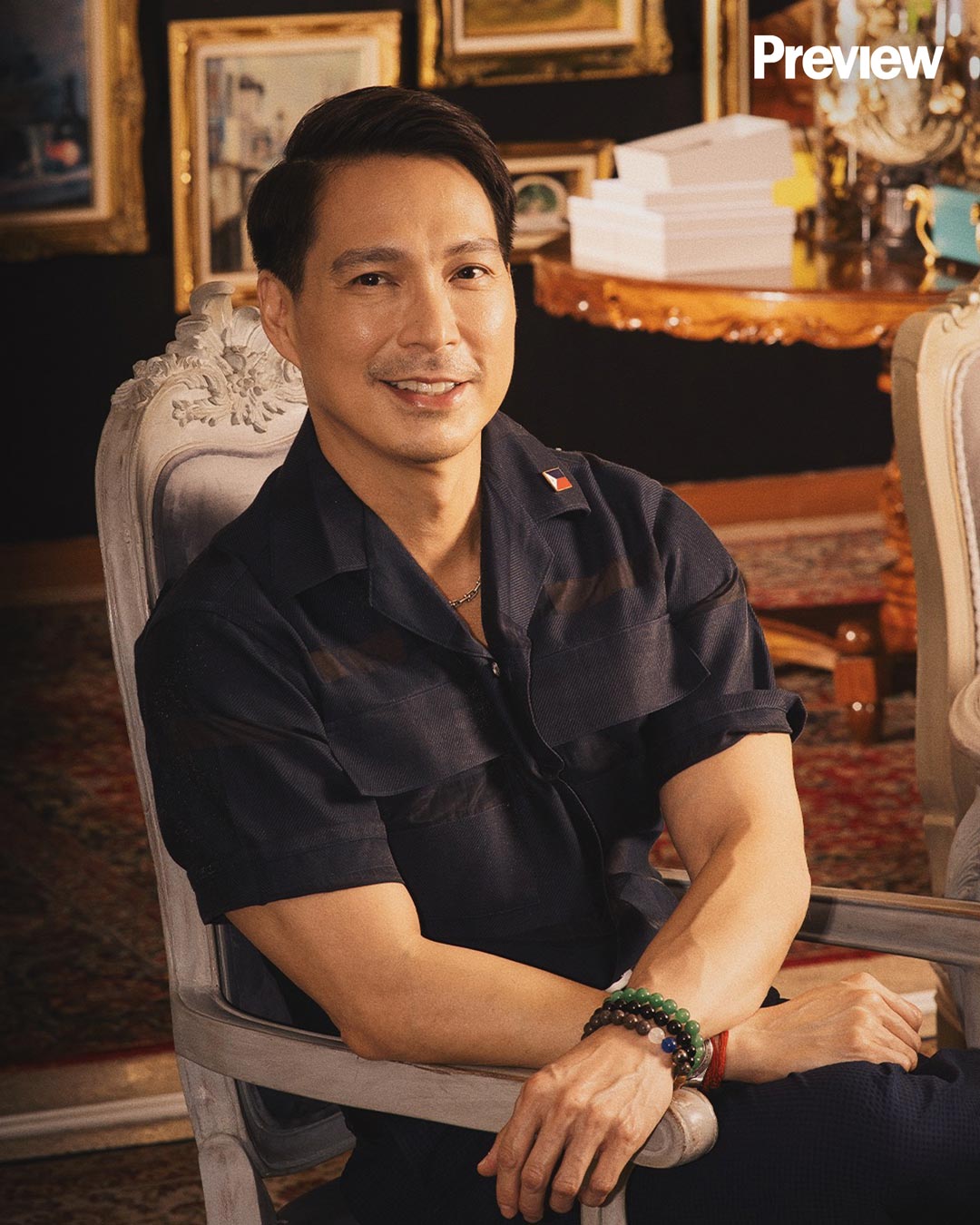
Kevin Gonzales
A Call to Arms
Upon receiving the message from the Philippine Olympic Committee, Francis was charged with a clear mission: to craft a garment that not only symbolizes the Philippines but also captures the fighting spirit of our athletes. "They said that they want something that’s vibrant, something that represents the Philippines when they’re parading at the River Seine," he tells Preview. This vision has since materialized in the “Sinag” barong, a creation that intertwines a story of bravery and national pride.
CONTINUE READING BELOW
watch now
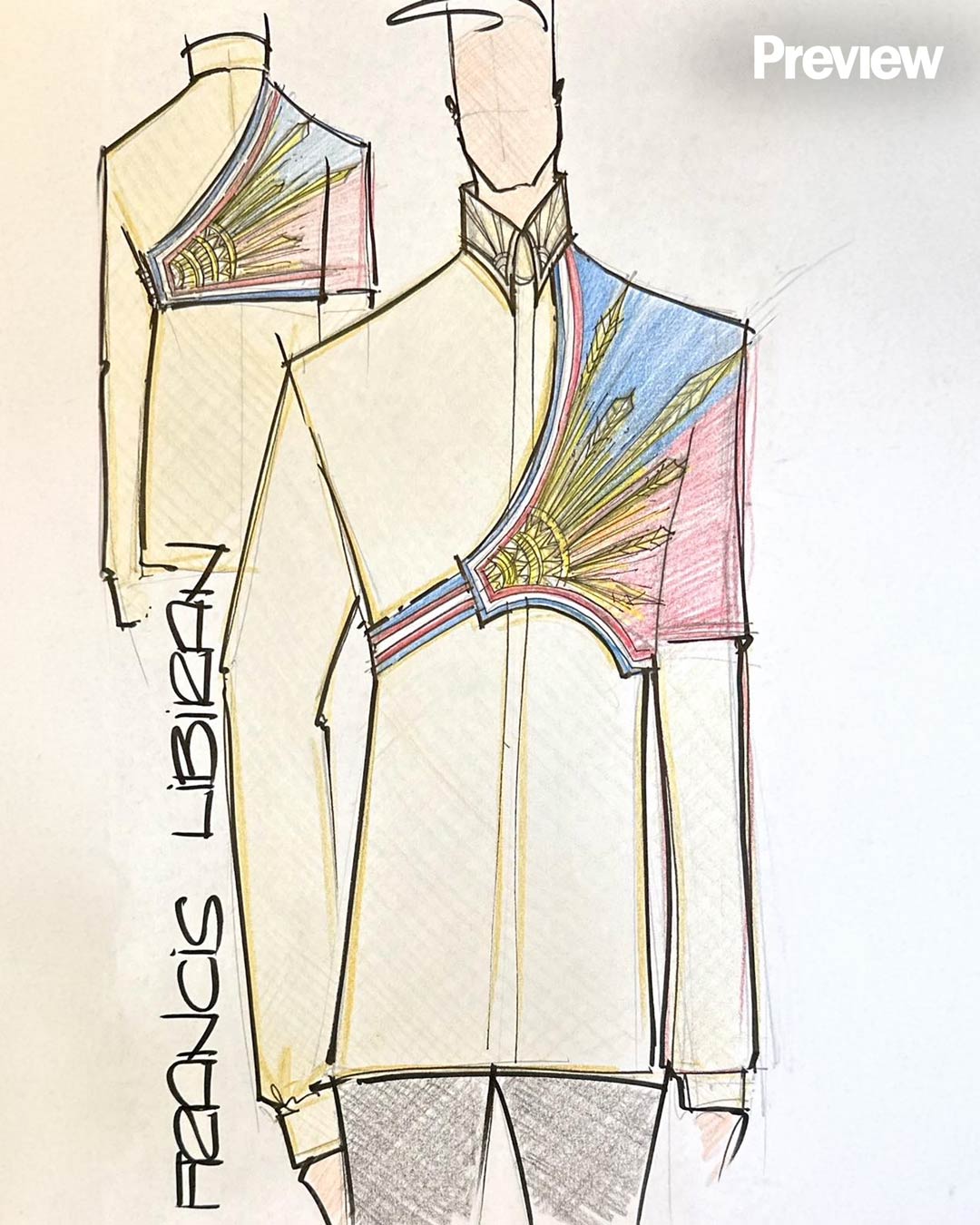
The official sketch of Francis Libiran's Sinag barong. Photo courtesy: Kacey Pamintuan of Francis Libiran
The Concept: Armor for Battle
At the heart of the “Sinag” barong lies a profound concept: the garment as armor. “I wanted something that represents our athletes as they go into battle,” Francis explains.
ADVERTISEMENT - CONTINUE READING BELOW
Rooted in the idea of athletes as modern-day warriors, his design thus transforms the traditional barong tagalog into a piece of ceremonial armor, capturing the essence of both historical valor and national pride.
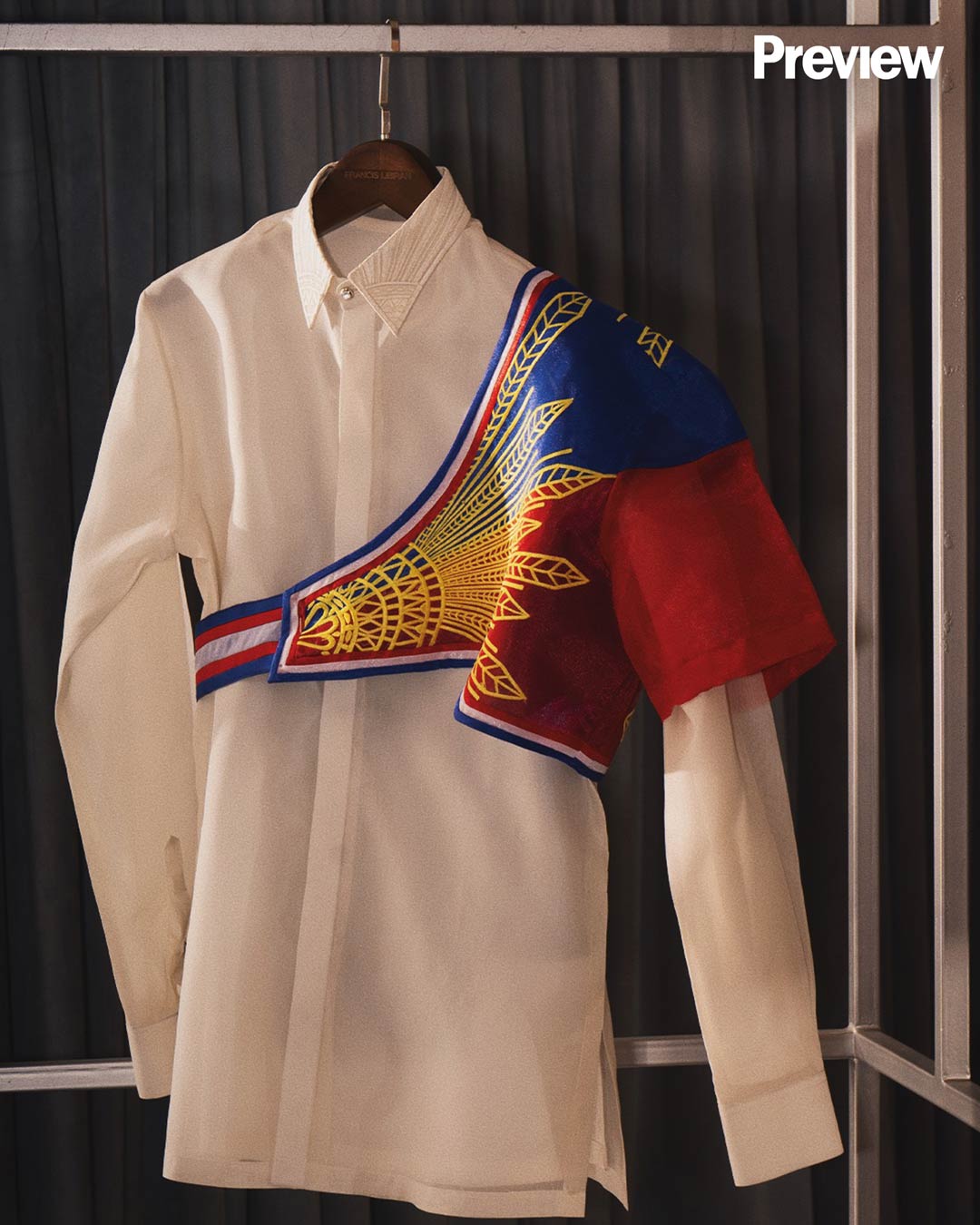
“I wanted something that represents our athletes as they go into battle,” Francis explains. Crafted from piña-jusi fabric, a textile known for its delicate and sheer texture, the barong’s off-white color serves as a canvas for a striking and statement-making accent: the detachable sling.
Kevin Gonzales
ADVERTISEMENT - CONTINUE READING BELOW
On the Detachable Sling: A Badge of Honor
Central to the creative vision of the Sinag barong is the detachable silk organdy sling. Featuring the Philippine flag's royal blue and crimson red colors, the piece features the sun's rays drawn out in yellow Pintados-inspired patterns—a nod to the pre-colonial tattoos of ancient Visayan warriors.
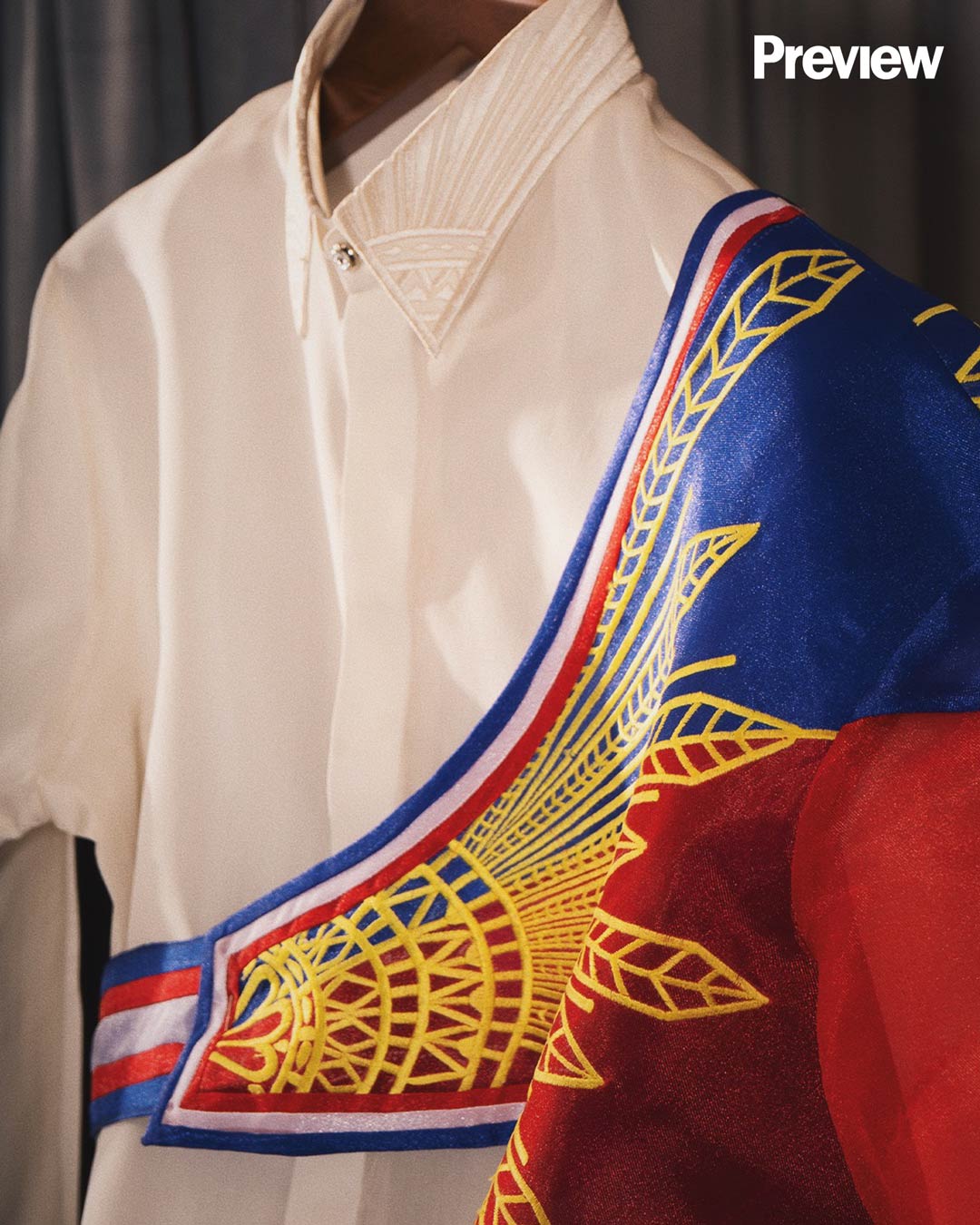
Kevin Gonzales
ADVERTISEMENT - CONTINUE READING BELOW
The choice of the sling detail was no hasty design decision. Anatomically, the human heart leans closer to the left side of the chest. And according to Francis, the sling detail, representative of the country, was intentionally meant to be worn over the athletes' chest.
"I want it closer to their hearts. That’s why it’s placed on that left side," he affirms.
Aptly worn on this side of the chest, the sling represents the athletes’ connection to their homeland. It embodies the idea that, as they step into the global arena, they carry the pride and spirit of the Philippines close to their hearts.
“It’s like a badge of honor,” Francis explains, adding that it's “a way for our athletes to feel proud and protected as they represent the Philippines.”
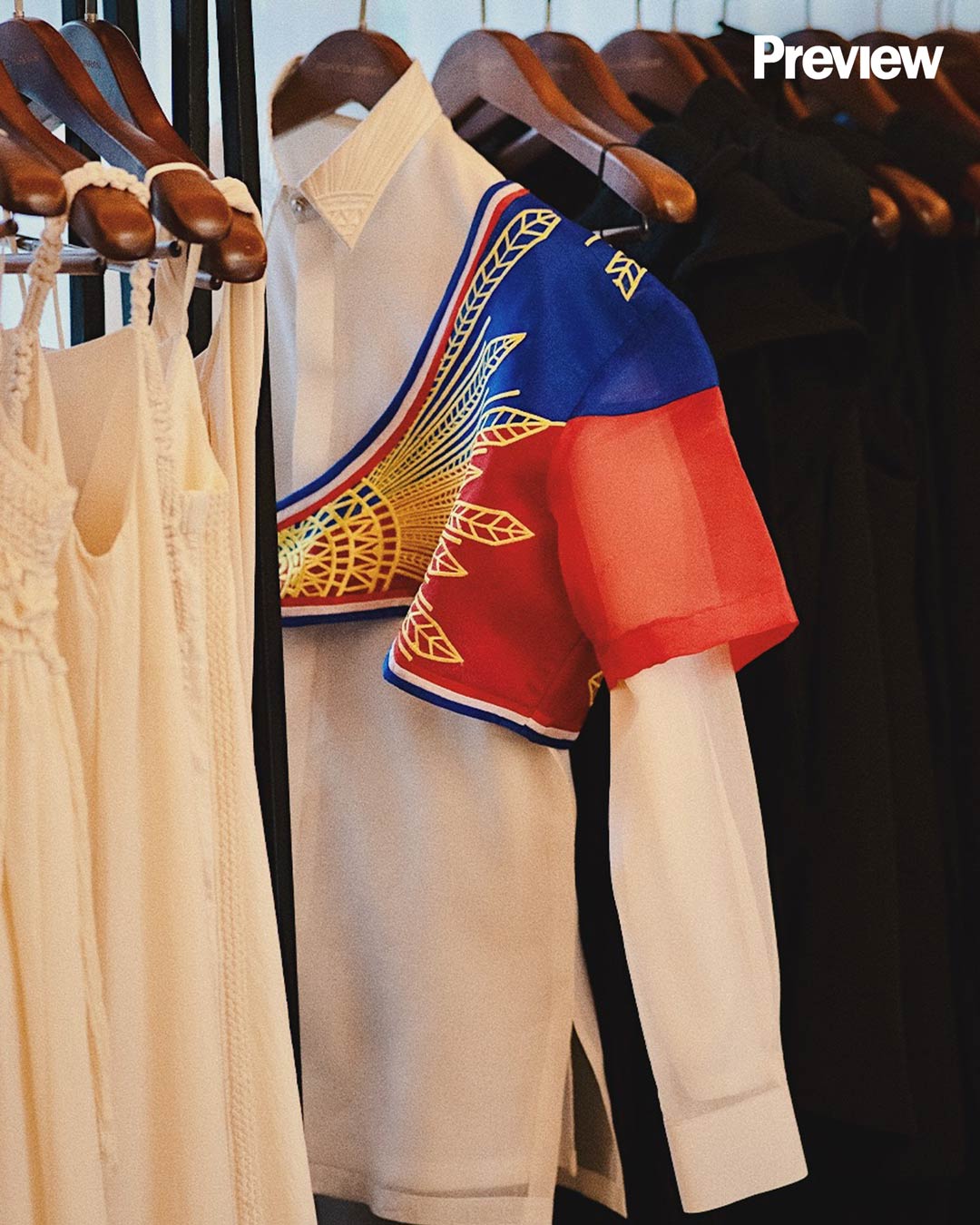
Kevin Gonzales
ADVERTISEMENT - CONTINUE READING BELOW
A Legacy of Representation
Francis is no stranger to designing garments for the opening ceremonies of international tourneys. When the Philippines hosted the 30th Southeast Asian Games in 2019, over 3,000 Filipino delegates donned his “Flag” barong. This design featured a bicolored collar adorned with the royal blue and crimson red hues of the Philippine flag, alongside the radiant rays of the sun embroidered in white across the shoulders and chest. In 2022, his “Agila” barong for the 31st SEA Games featured an intricately embroidered Philippine eagle on the left chest, while a bold, striped blue-and-red detail ran from the collar to the cuff. The following year, the Philippine Sports Committee commissioned him anew for the 32nd Southeast Asian Games, where he created the “Araw” barong, a piece that highlights the flag’s colors on a radiant sun descending from the left shoulder to the chest.
But more than anything, this time around, his Sinag barong for the Paris Olympics is a tribute to the Philippines and its athletes. "It’s not really [about] me as a designer. It doesn’t represent me, I’m representing our country," he says. "When I was doing this one, I was thinking [that it’s] for the Philippines, and the overall feel of how our athletes will be represented on that stage."
ADVERTISEMENT - CONTINUE READING BELOW
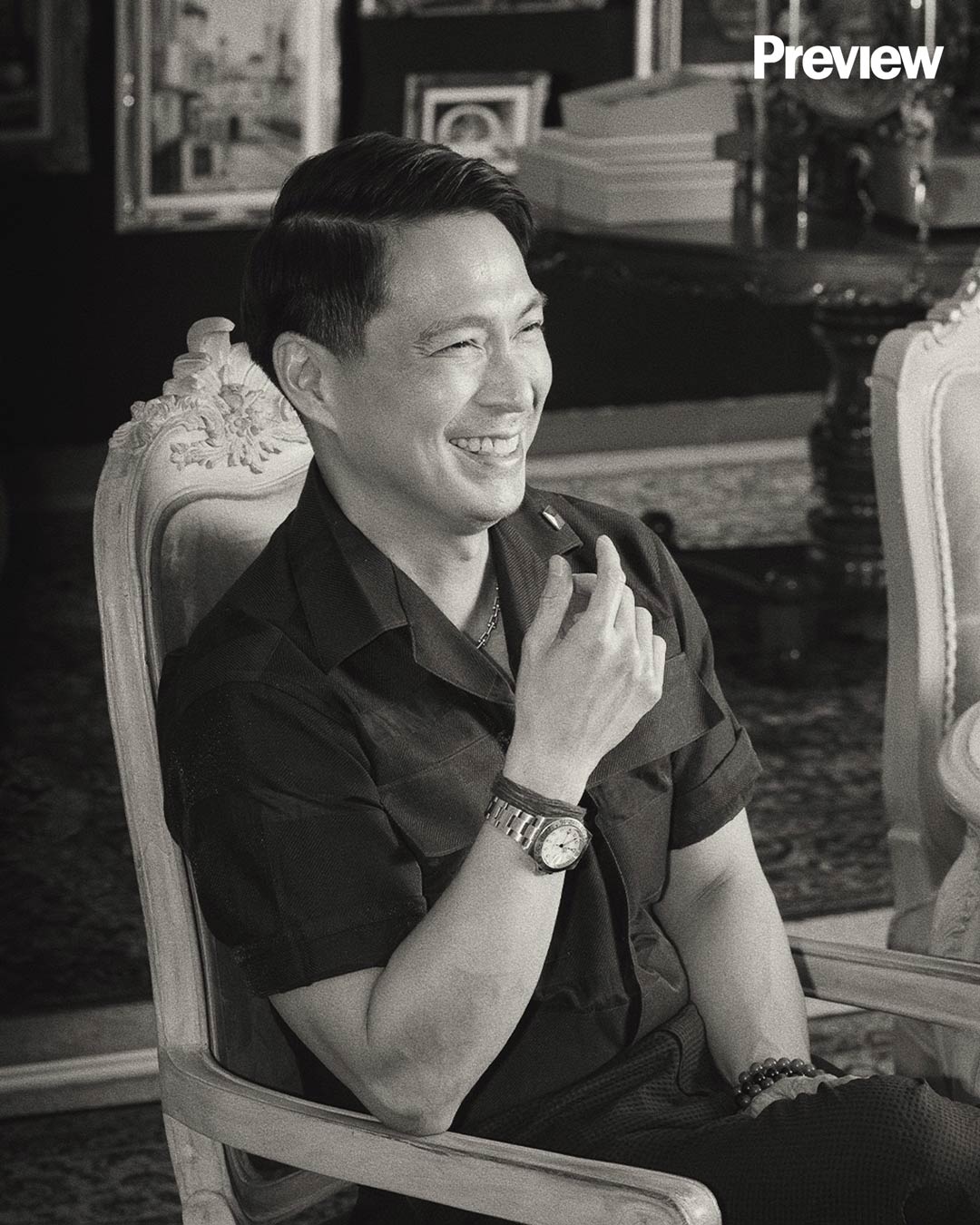
Kevin Gonzales
A Preview Original production
Written and Produced by: Paulina Singh
Photographed by: Kevin Gonzales
Art Directed by: Jana Jodloman
Grooming by: Muriel Vega Perez, assisted by Lalai Glendro
Hey, Preview readers! Follow us on Facebook, Instagram, YouTube, Tiktok, and Twitter to stay up to speed on all things trendy and creative. We’ll curate the most stylish feed for you!