
Tired of the same range of neutrals in your closet? No problem with nude, navy, or black tones—they’re classic, timeless, and make for no-fail staples. But if you’ve been aching to inject some color in your wardrobe, we can’t blame you. Bright and bold hues add a ton of fun and personality to any ensemble!
A lot of people have a hard time adding pops of color into their own wardrobe. For some, it can feel like too much of a risk or a departure from what they’re used to; besides, what if the colors clash? The last thing anyone wants is to walk around in a pair of hues that just simply don’t work well together.
The rules for combining colors and mixing and matching best on what suits them can be a little confusing for those new to it. But it doesn’t have to be hard or intimidating! In fact, there’s a particular way to know how to combine these shades. Enter the color theory.
What Is The Color Theory
Sir Isaac Newton’s invention of the color wheel in 1666 has since continued to benefit many artists, painters, and designers who still rely on the color wheel to reliably tell them which shades will create harmonious color schemes.
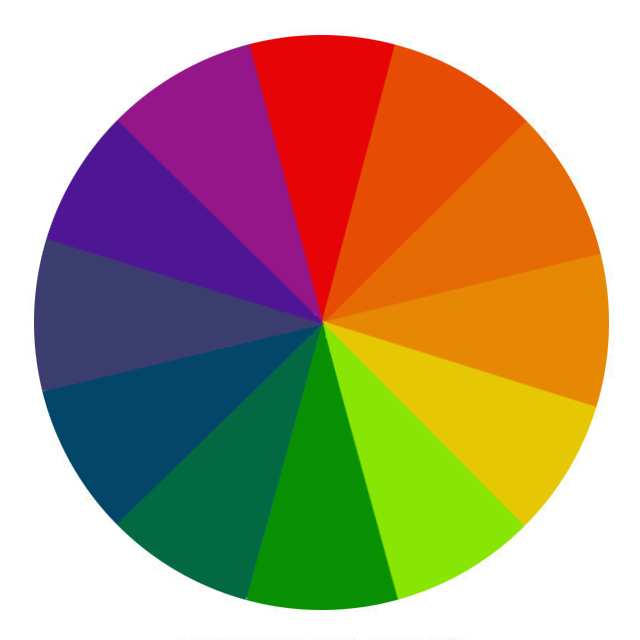
Color theory refers to both the science and art of using color. It tackles the human perception of color, as well as its visual effects of how colors mix, match or contrast with each other.
Color theory can also include the meanings each color can symbolize or exude, as well as methods on how to replicate them.
Today’s color wheel has evolved far beyond Newton’s own studies to reflect new in-between tones (think Pantone’s viva magenta or a sunset-like yellow-orange). Today, it remains a great guide that helps you pair even the unlikeliest shades together. Ready to mix and match colors? Check out the various schemes you can use to create stylish wardrobe palettes.
Color Theory Schemes
Monochromatic
Monochromatic shades are subtly gorgeous, giving depth and dimension through light and dark shades of the same color that blend beautifully. Think of it like a gradient effect, but on clothes.
You can never go wrong with tonal dressing, as being in the same color family automatically makes the shades look harmonious. One more way you can push the envelope on a monochromatic palette? Sport different textures. You can also choose to punctuate a monochromatic palette with a bold hue such as red just to give it that pop.

Complementary
For those who aren’t afraid to be bold, sporting complementary or opposite colors on the wheel create a striking visual contrast. Think of pink paired with green, or blue paired with orange. The best way to create balance in your look is by using more of one color and less of the other, instead of a 50-50 ratio. This could be too distracting for the eyes and could draw your attention to different areas at once.
Also, don’t forget that even softer, paler hues can still be complementary. Important if you want to go for a softer look!

Analogous
With analogous palettes, neighboring colors make for effortlessly gorgeous combinations. You can see a lot of analogous shades in nature: think about the hues you see in the sky as it changes colors, like the varied shades at sunset.
When pairing analogous colors, it’s better to pair similar tones with one another: bold goes with bold, pale goes with pale. Each take will have its own different vibe. Also, don’t be afraid to give one color more attention than the others, and using the rest as accents for a visually interesting look.

Split Complementary
With a split complementary palette, you have two analogous colors, or those beside each other in the color wheel, paired with one complementary color. This complex palette of pairing like-with-like and then contrasting it with an opposite color creates serious visual interest and shows off your style savvy. It’s about showing off something unexpected and making it work.
While a split complementary palette may sound challenging, many of your clothes with patterns may likely show off a split complementary scheme. Hence, it’s simply up to you to make them even work better.

Which one will you be trying out next?
Hey, Preview readers! Follow us on Facebook, Instagram, YouTube, Tiktok, and Twitter to stay up to speed on all things trendy and creative. We’ll curate the most stylish feed for you!
