
On July 20, 2024, Filipino-Canadian vlogger Kyle Jennermann, fondly known as Kulas, officially tied the knot with social entrepreneur Therine Diquit. The wedding, held in Marogondon, Cavite, took on a traditional Filipino theme. All guests were dressed in Barong Tagalog and traditional Terno dresses. Kulas and Therine performed the tinikling for their wedding dance, and the reception featured an all-Filipino menu. After all, their wedding day was also a celebration of the couple's joint passion for Filipino culture. In fact, both the bride and groom donned Filipino-made pieces from head to toe!

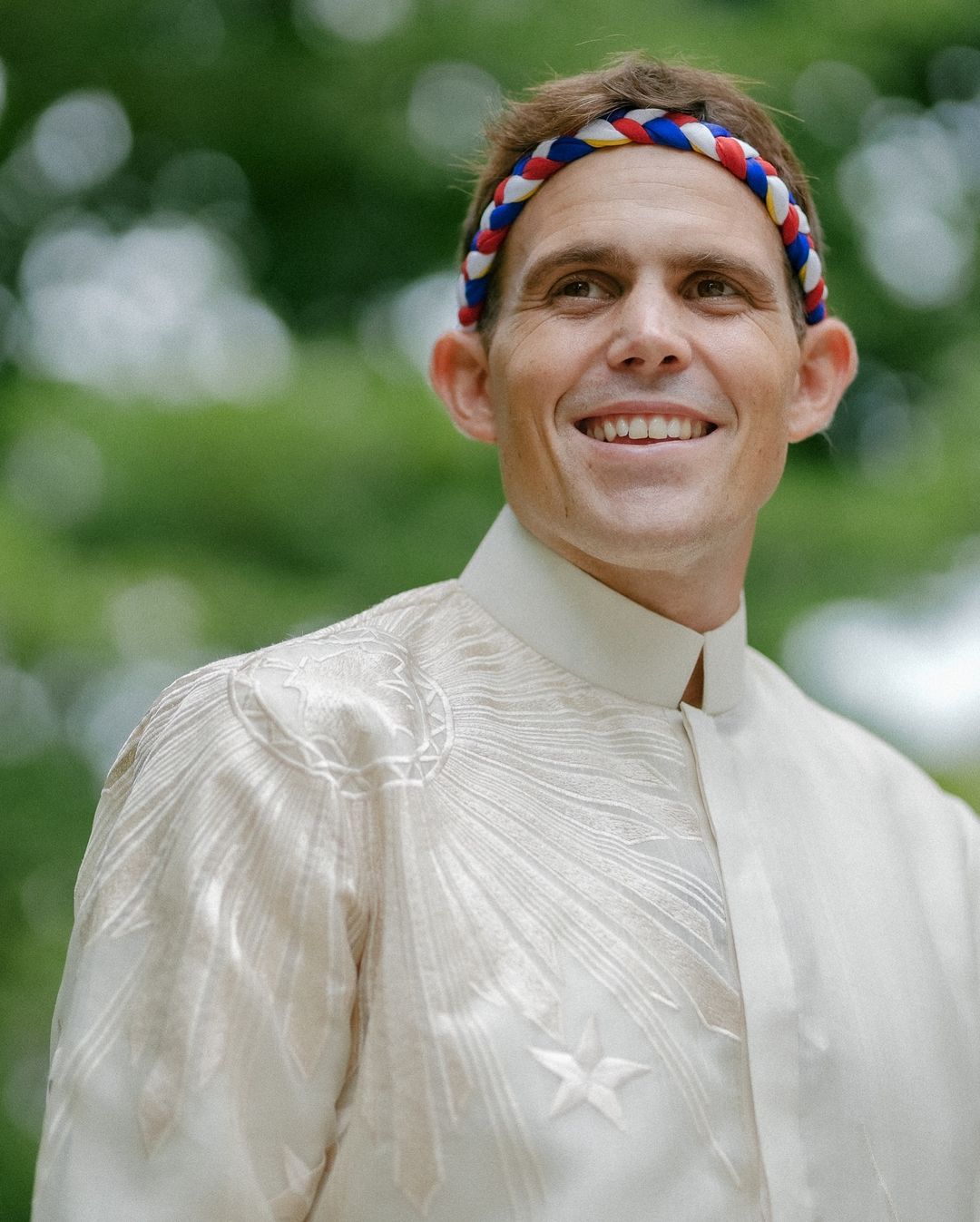
A naturalized Filipino citizen who has embraced the country's culture throughout his decade-long stay, Kulas always knew he would wear a barong on his wedding day. "I knew from the moment we got engaged, that I would wear a barong for my wedding," he wrote in an Instagram post. "I grew up a Canadian and that will always be within me. But now it is the Philippines radiating out in my life. This barong is me, and is what I am becoming. "
To bring his concept to life, the vlogger turned to season Filipino designer Francis Libiran to create a custom barong for the occasion.
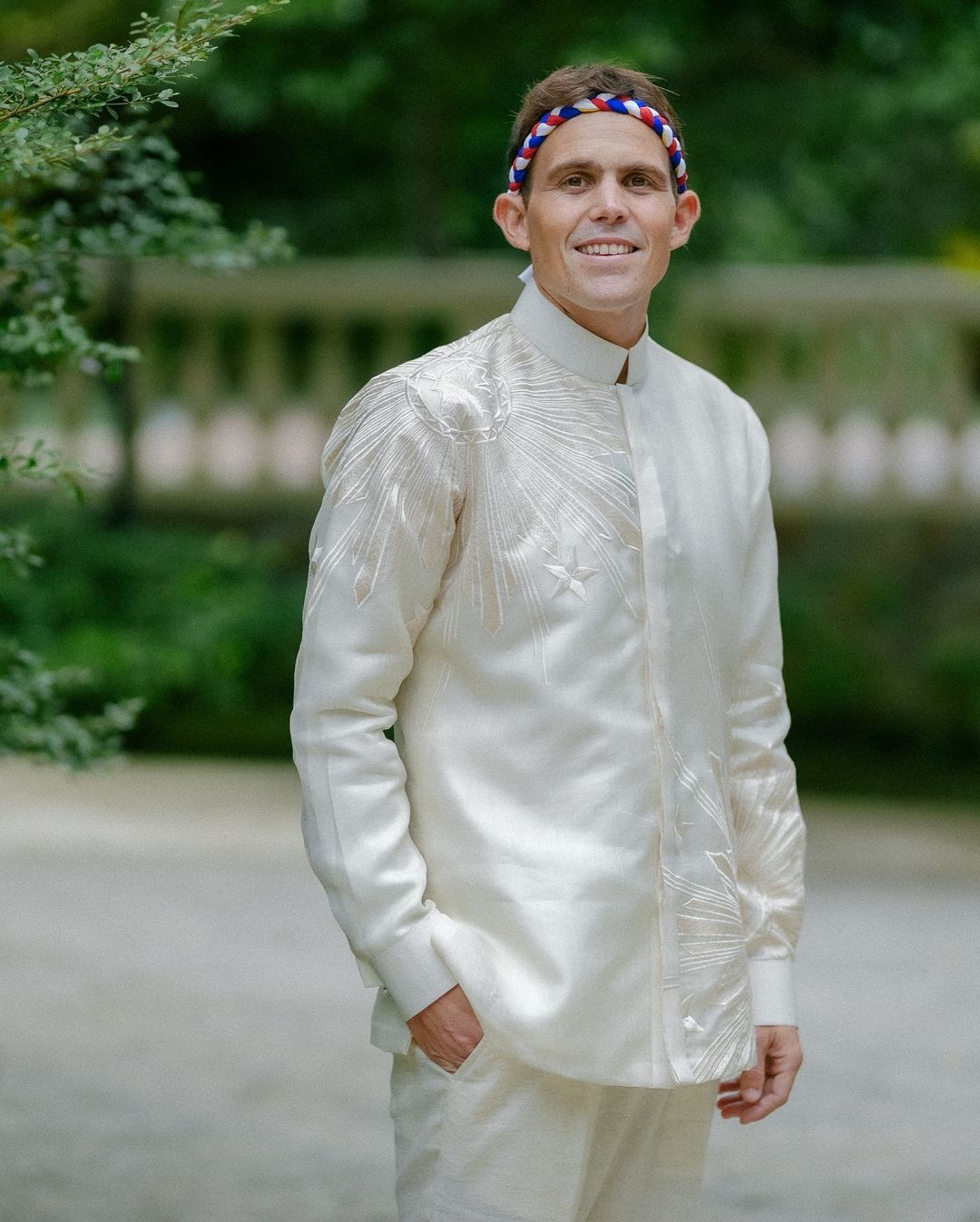
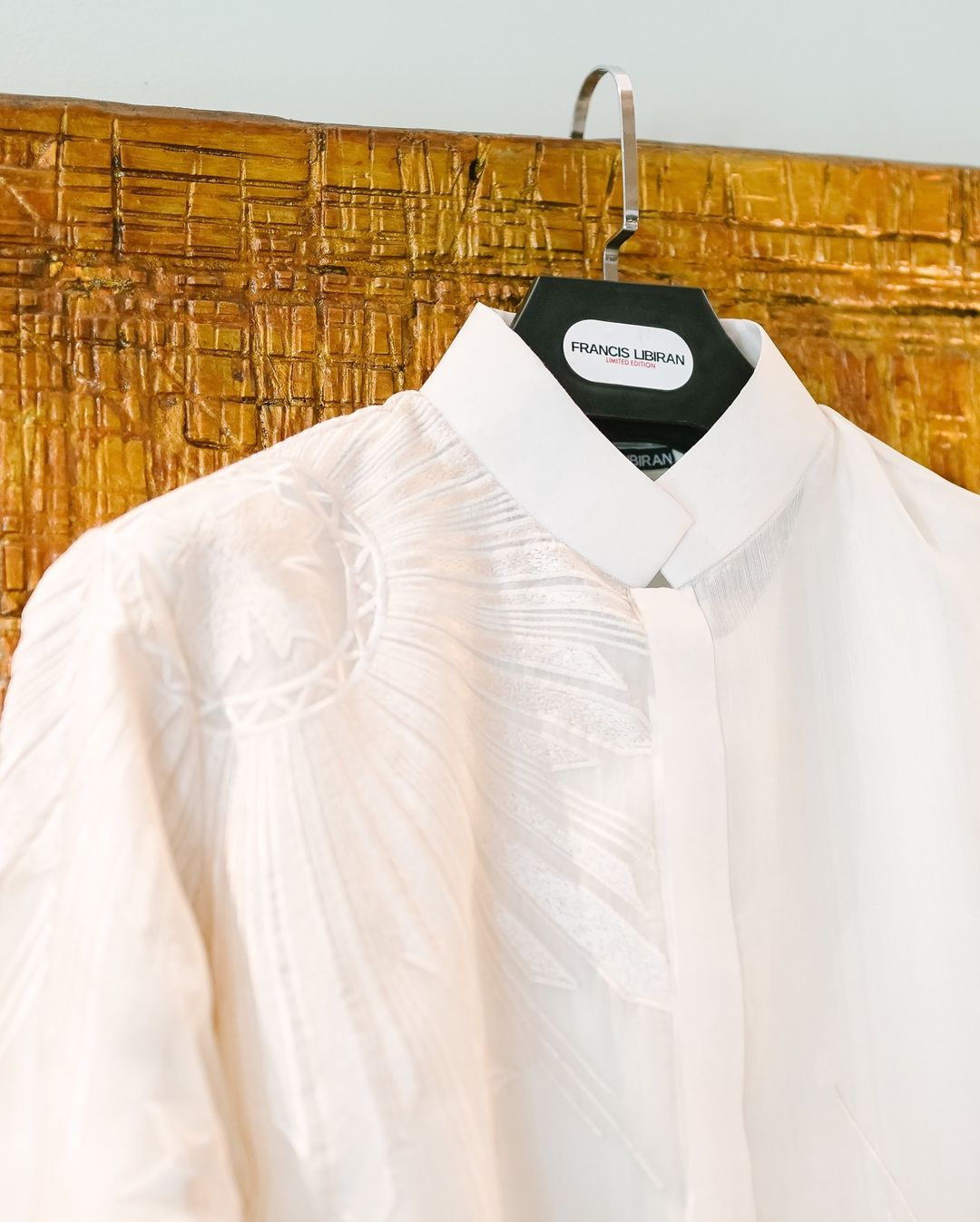
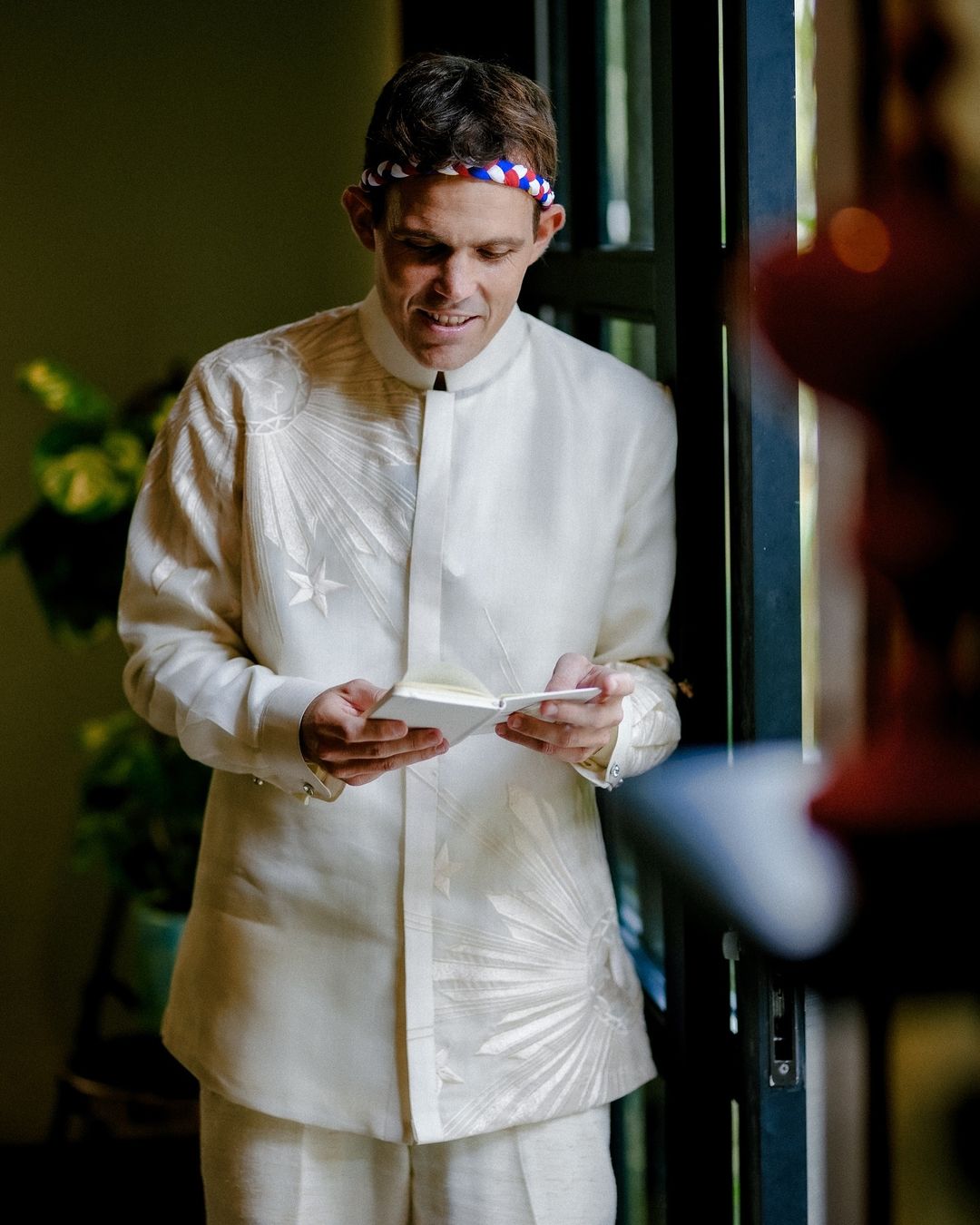
In an interview with Preview, Francis shared that Kulas had only one request: a barong that would symbolize both his Canadian heritage and his identity as a Filipino. To realize this vision, Francis crafted the piece from seda silk and Kawayan textile—materials made with silk indigenous to Misamis Oriental, where Kulas first set out on his journey towards becoming Filipino. Notably, while barongs are typically made from piña-jusi fabric, this one is the first of its kind to be fashioned from such textiles.
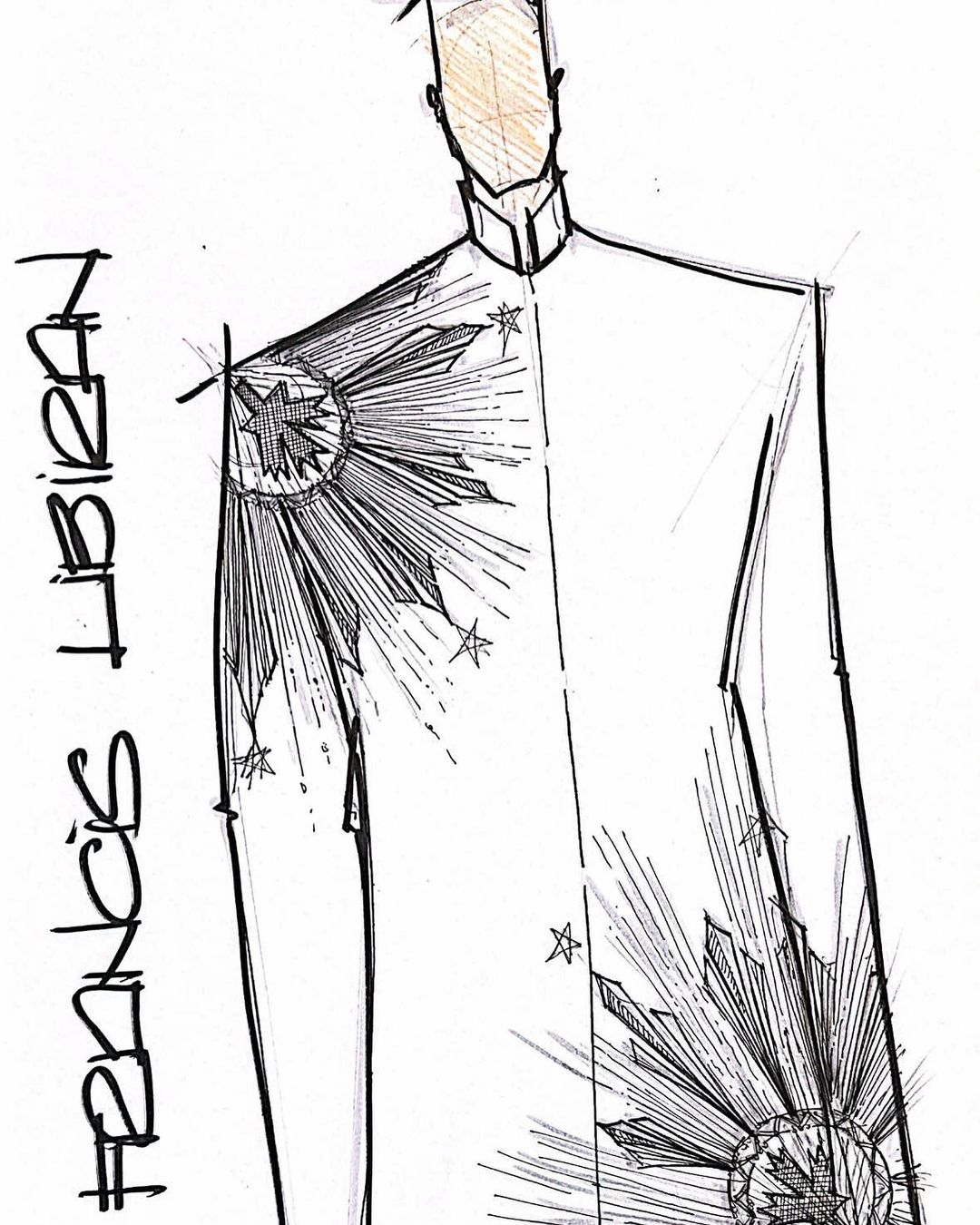
Read on to discover how Francis Libiran designed Kulas' wedding barong that spotlights the ties that bind him to both Canada and the Philippines.
Preview Exclusive: Francis Libiran on the Making of Vlogger Kyle Jennermann's Wedding Day Barong
1. What was the concept and inspiration behind Kulas’ barong for his wedding?
"In terms of design, the two main points of it are the Canadian maple leaf and Philippine flag stars, which are both tributes to Kulas' Canadian roots and Philippine citizenship.
Technology comes from the innovative fabric that we used for the barong; it is made out of Philippine silk handwoven by the ABAI Weavers Multi-Purpose Cooperative from Misamis Oriental and Kawayarn from Abra."
2. How did you collaborate with Kulas on this barong? Did he have any specific requests?
"Kulas has only one request, he wants his barong to speak about his ancestry [as a Canadian] and being Filipino at the same time."
3. How did you approach designing this barong for Kulas? What techniques or methods were involved?
"I approached designing for Kulas as an honor, as we share the same vision—to present the Philippines to the world. The barong should be something that is unique, and shall represent the country to the world in a unique and iconic way."
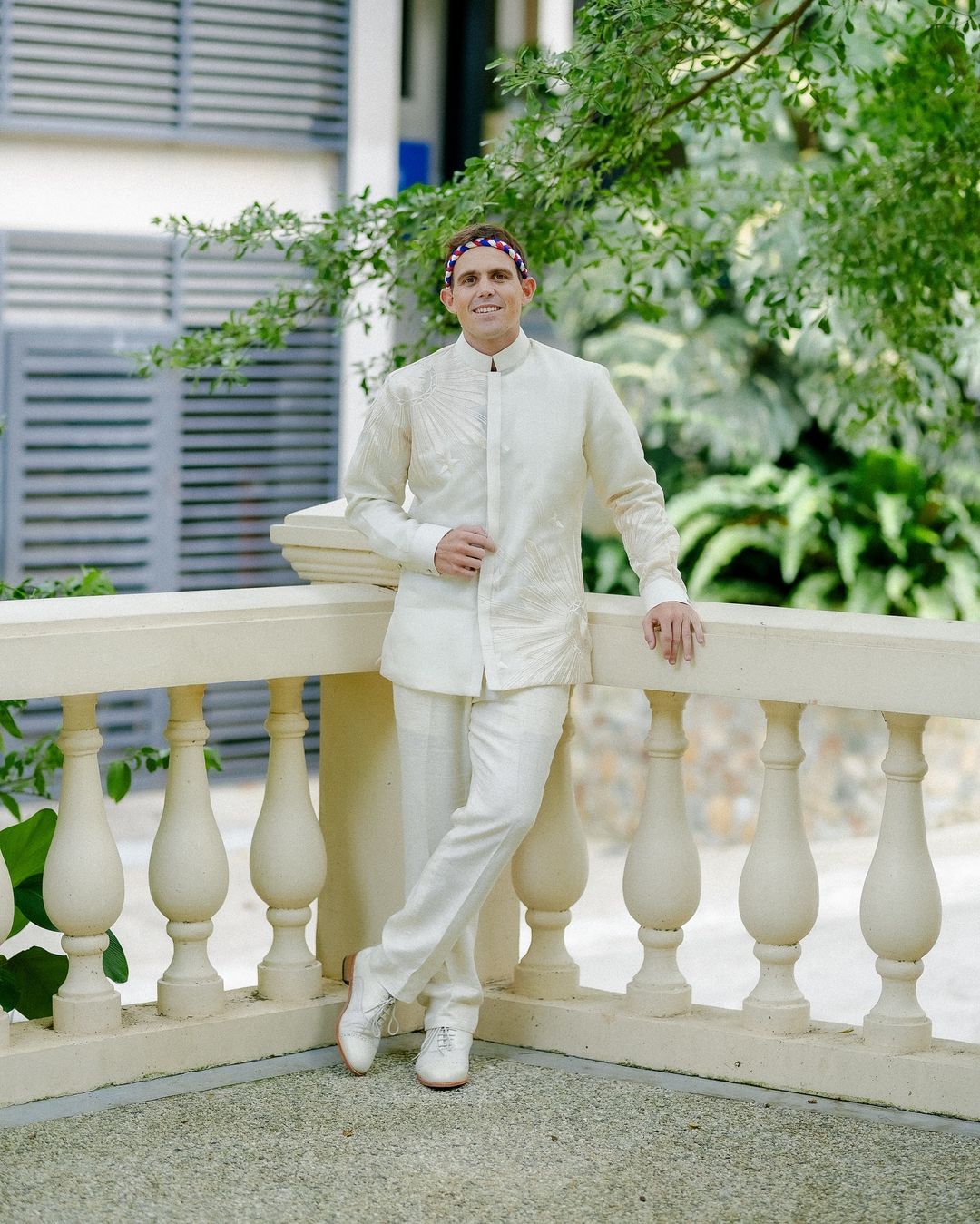
4. The Filipino-Canadian-inspired embroidery was a very thoughtful accent. Could you tell us more about how you decided to design the motifs this way?
"The embroidery designs are inspired by the Canadian and the Philippine flags, flags are distinct symbols of nations, so what I did was to get a symbolic element from each flag, the stars for the Philippines and maple leaf for the Canadian flag."
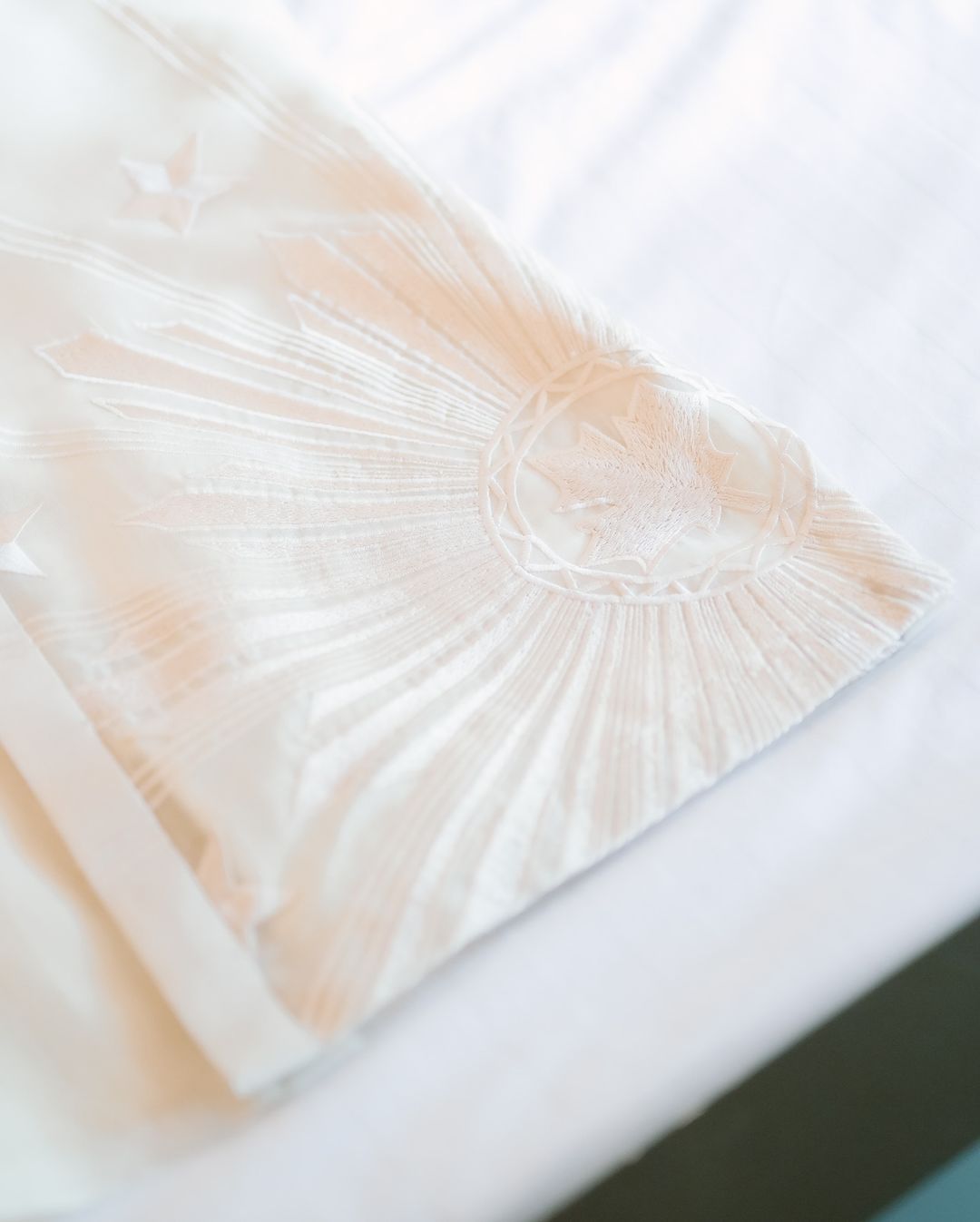
5. Why opt for seda silk and Kawayarn fabric as the textiles for this barong? What was it like working with these materials?
"As a designer, I believe that fashion is not just about style but more about purpose.
The textile made out of Kawayan fiber is sustainable, indigenous, and environment-friendly. It is an innovation from Abra, and an advocacy of the couple."
"The Philippine silk is made by ABAI Weavers Multi-purpose cooperative from Misamis Oriental, Northern Mindanao where Kulas started Becoming Filipino, his first home in the Philippines."
"These two textiles presents meaning and purpose for the couple, thus the reason why we chose these particular textiles for the couple's special day."
6. Can you share a fun fact about the making of this barong? Were there any memorable moments from the design process?
" I think the most memorable for me was when Kulas presented me [with] the fabric that he worked with DOST. For me it was unique and no one has ever made a barong out of it, this presented me an opportunity and a challenge to be the first to create such a masterpiece."
Hey, Preview readers! Follow us on Facebook, Instagram, YouTube, Tiktok, and Twitter to stay up to speed on all things trendy and creative. We’ll curate the most stylish feed for you!
