
Vietnamese tycoon and prominent real estate magnate Truong My Lan has been sentenced to death by a court in Ho Chi Minh City on Thursday, April 11. This sentence comes as the culmination of a case that has exposed financial fraud within Vietnam's banking and real estate sectors. Truong, who is 67 years old, was found guilty of orchestrating a fraud amounting to $12.5 billion, a figure that represents nearly 3 percent of Vietnam's Gross Domestic Product (GDP) as of 2022. According to the court, total damages amount to $27 billion, which she is expected to return.
Who is Truong My Lan?
Truong My Lan, born October 13, 1956, is a Vietnamese businesswoman of Shantou, Guangdong heritage. She is married to Hong Kong real estate businessman Eric Chu Nap Ke. They have two daughters.

Truong started out in the retail business by helping sell cosmetics with her mother in Ho Chi Minh City. In 1992, she founded Van Thinh Phat, a conglomerate with interests spanning luxury residential buildings to shopping centers.
From 2012 to 2022, she had control of Sai Gon Joint Stock Commercial Bank (SCB), Vietnam's largest bank by assets. It was established through a merger of three banks previously facing bankruptcy.
What is the Van Thinh Phat Holdings Group?
Founded in 1992, the Van Thinh Phat Holdings Group is headquartered at 193-203 Tran Hung Dao, Co Giang Ward, District 1, Ho Chi Minh City. The conglomerate is primarily known for its significant investments and operations in the real estate sector. The company has been instrumental in developing a range of projects, including luxury residential buildings, commercial properties, and shopping centers. Some of its most notable properties in Ho Chi Minh are the Windsor Plaza Hotel, Times Square Saigon, Capital Place, and Sherwood Residence Hotel.

The Van Thinh Phat Holdings Group has an ecosystem of more than 1,000 businesses, including domestic and foreign subsidiaries and member companies. The business of the Van Thinh Phat Holdings Group can be divided into four main groups. First, the financial institutions that include Sai Gon Joint Stock Commercial Bank, Tan Viet Securities Joint Stock Company, and Viet Vinh Phu Financial Investment Joint Stock Company. Second, there are Vietnam-based real estate businesses, particularly restaurants and hotels. Third, the established companies for the purpose of engaging in various financial activities, such as getting legal entities to contribute capital and borrowing money from banks, among others. Fourth, the network of companies abroad.
Van Thinh Phat Holdings Group has been a major influence in shaping the Vietnam's urban landscape. The group's activities extend beyond real estate, potentially encompassing various other sectors, although it is most renowned for its contributions to property development.
What Is Truong My Lan's Financial Fraud Case About?
Truong was arrested in October 2022 and trial began on March 5. During the hearing on April 11, she was convicted of directing the allocation of $44 billion in loans from Saigon Commercial Bank to herself and her associates over the span of 11 years. She is required to return $27 billion. The prosecution argued that she utilized "ghost companies" to perpetrate the fraud, involving bribing government officials and flouting banking regulations to misappropriate funds. Despite her engagement in charity activities and this being her first offense, the court deemed the severity of her actions to be too significant.

Up to 2,700 people testified, 10 state prosecutors and 200 lawyers were involved, and evidence was in 104 boxes with a total of six tons. Eighty-five more people were under trial with all defendants found guilty.
The case against Truong also involved other key figures, including her niece, Truong Hue Van, the chief executive of Van Thinh Phat, who was sentenced to 17 years in prison for aiding her aunt. Additionally, a former central bank official, Do Thi Nhan, received a life sentence for accepting $5.2 million in bribes related to the fraud case.
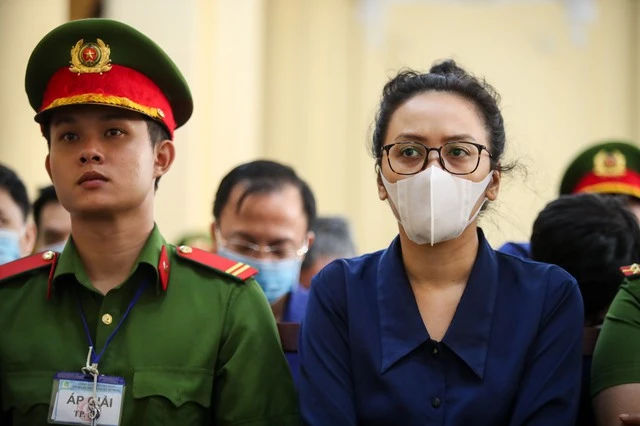
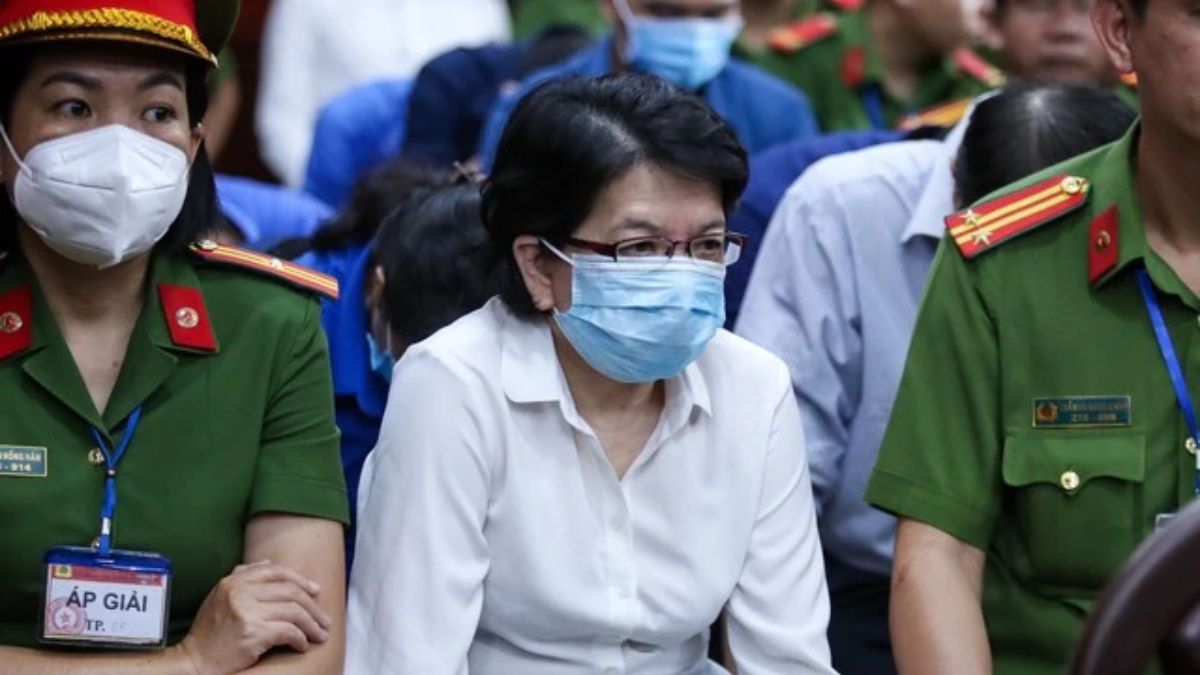
Truong's case is particularly notable for its implications on the trust in Vietnam's financial institutions and political leadership. The fraud not only violated the property management rights of individuals and organizations but also severely eroded public confidence in the banking sector and the broader economic stability of the country. Her actions have pushed SCB into a state of special control, raising concerns about the overall integrity of Vietnam's financial system.
The sentencing of Lan is part of a broader anti-corruption drive in Vietnam, known as the "Blazing Furnace" campaign, which has intensified since 2022 under the leader of the ruling Communist Party, Nguyen Phu Trong. This campaign has targeted various high-profile figures within the country, including former president Vo Van Thuong, who resigned in March after being implicated in the campaign. The crackdown underscores the Vietnamese government's determination to eliminate corruption, a long-standing challenge within the nation's history.
What is the Death Penalty in Vietnam like?
Vietnam's history with the death penalty can be traced back to its medieval period, when capital punishment was employed as a tool for maintaining social order and punishing crimes against the state and morality. The colonial era introduced new legal systems and punitive measures, further entrenching the death penalty within the judicial framework. However, it was during the socialist period that the death penalty became particularly prevalent, reflecting the government's stringent approach to crime and punishment.
Originally, prisoners sentenced to the death penalty were blindfolded and tied to stakes, while the execution was carried out by a firing squad of seven police officers. This was replaced with the method of lethal injection in November 2011 through the Law on Execution of Criminal Judgments.
In November 2015, the revision of Vietnam's Penal Code saw a reduction in the number of crimes punishable by death. Capital punishment was abolished for seven crimes, namely: surrendering to the enemy, opposing order, destruction of projects of national security importance, robbery, drug possession, drug appropriation, and the production and trade of fake food. Prisoners 75 years old or older were also exempted.
Hey, Preview readers! Follow us on Facebook, Instagram, YouTube, Tiktok, and Twitter to stay up to speed on all things trendy and creative. We’ll curate the most stylish feed for you!
