
When Tessa Prieto—socialite, philanthropist, and fashion icon—broke her silence about violence under the hands of her former partner, Angel Chua, she didn’t mince words. In an interview with PEP.ph, she revealed in extreme detail how Angel hit and strangled her, sometimes on record. At one point, she even forced her fingers into Tessa’s mouth.
But while the information alone was horrifying, what netizens turned their attention to is the least relevant—although noticeably distinct—aspect of her testimony: the language, especially the line “I had pasa and stuff.”
Why Are We Making a Joke Out of Tessa Prieto's Story of Abuse?
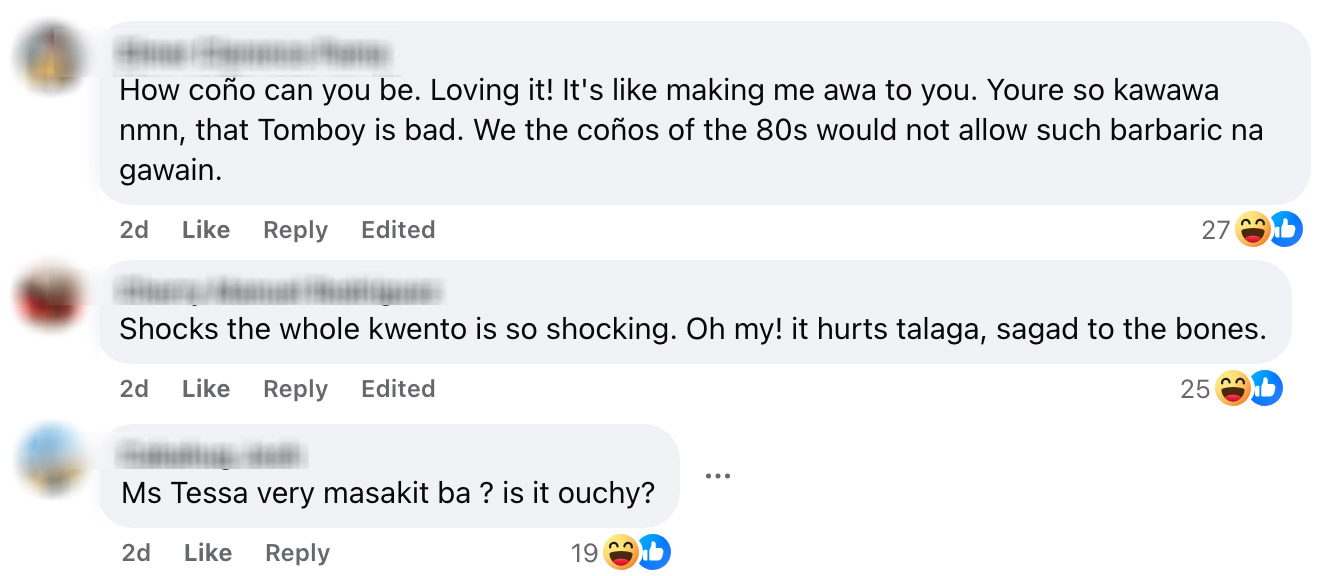
One commenter said: “It's like making me awa to you. You're so kawawa [naman], that Tomboy is bad. We the coños of the '80s would not allow such barbaric na gawain.”
“Shocks the whole kwento is so shocking,” chimed another. “Oh my! It hurts talaga, sagad to the bones.”
“Ms Tessa very masakit ba?” another netizen asked. “Is it ouchy?”
The article has drawn over 500 laugh reactions, and the comments about language eclipse those of a homophobic nature (Angel Chua is a lesbian woman).
What gives? Have we become so desensitized to news about violence against women (VAW), that we’re more bothered by “pasa and stuff” than the reality of a bruise? Has social media clout-chasing gotten so bad, we’re willing to gloss over the woes of a woman scorned in the name of gaining laugh reacts?
Why There's Nothing Funny About Violence Against Women
By the World Health Organization’s count, nearly one in three women have been subjected to physical or sexual violence by an intimate partner or non-partner. Violence against women remains one of the country’s most pervasive social issues.
Along with that pervasive issue is the prevalent culture of silencing. There remains a lot of shame that comes with talking about being a victim of abuse. Fear surrounds talking about one’s experience with abuse: fear of being judged, of not being believed, of retaliation, and thus further abuse. It thus hinders reporting and holding abusers accountable.
One likely reason for the mockery is the presence of a class struggle. Tessa is a victim, but she is also wealthy. And for netizens from a more humble background, the language is aspirational and thus ironic for a story about oppression.
Another likely reason is the gender of the abuser. Oh, it’s nothing but a catfight, people probably think.
However, being a woman is not an excuse to inflict pain on another. And being rich does not make another woman immune from being a victim of violence. Even the rich can be victims of VAW, and their cases are just as serious.
If anything, Tessa’s privilege allows her the opportunity to speak—a luxury for victims of lower socioeconomic backgrounds who are at the mercy of their abusers.
To speak out against an abuser who has stripped you of your self-worth takes a lot of courage and confidence. Every retelling requires revisiting the most traumatic experience of one’s life. Nobody wants to be in that position, and yet it is necessary.
It is necessary for a victim to be honest with the raw, painful, shameful truth so they can seek justice. It is necessary for them to leave their comfort zone to prevent others from having the same fate. It is necessary for them to speak so they can be free.
Mocking Tessa’s language is a form of silencing. It downplays her cry for help into a joke—one that is not even funny.
If we can’t stop ourselves from finding the humor in the tone, the least we can do is to shut up.
For godssake: Let the woman speak.
* * *
About the author
Pola del Monte is a Fortune 500 editorial leader, journalist, and communication consultant for organizations like UN Women. She posts about writing, communication, power, and influence on Instagram (@MissChiefEditor) and hosts the podcast “Discourse with Miss Chief Editor”.
Hey, Preview readers! Follow us on Facebook, Instagram, YouTube, Tiktok, and Twitter to stay up to speed on all things trendy and creative. We’ll curate the most stylish feed for you!
