
Ako'y isang sirena
Kahit ano'ng sabihin nila, ako ay ubod ng ganda.
Ako'y isang sirena
Kahit ano'ng gawin nila, bandera ko'y 'di tutumba
More than a decade ago, Filipino rapper Gloc-9 released the song Sirena featuring vocalist Ebe Dancel. The five-minute track likened a queer individual to a mermaid forced to swim in an unaccepting environment. It’s considered to be incredibly progressive for its subject matter, especially given how hip-hop within and beyond the country is typically a male-dominated scene.
12 years later, the song is going through a resurgence in popularity, much to the surprise of Gloc-9. “'Yung song na 'yan, nung ire-release namin 'yan, takot na takot ako,” he recalls in a recent interview, “Takot na takot dahil ayaw kong maka-insulto ng tao. Alam ko kasi nung sinulat ko 'yan, hindi ko tsinelas o sapatos ang suot-suot ko.”
The rapper revealed that the song was actually a gift for his gay child, who, at the time, hadn't come out yet. In a way, it was Gloc-9’s way of affirming his kid that there was nothing to be afraid of. “Ako ay proud na proud sa anak [ko.] Ako ay excited sa kung ano man ang kaya niyang ma-achieve sa buhay niya,” he puts it. “Nung natapos ko 'yung Sirena hindi ko naman alam. And I don't mind. Anak ko 'yun.”

I remember where I was when I first heard the song. I was in seventh grade, trapped in my own shell as an adolescent who didn’t have any grasp on who they were and how they identified. Surrounded by my predominantly straight classmates in an all-boys school, I was subconsciously made to repress any feeling that I was different.
Back home, I also had to put on a facade for my parents, who, at the time, were hesitant about having an openly-queer child in their home. No limp wrists, no swaying of the hips, no hints of femininity in anything I were to do or say. I had to drown myself in my own lies, denying every claim or suspicion that I was gay. Ironically enough, I had to hold my breath in order to survive.
Once Gloc-9's song hit mainstream radio, any guy who had even the slightest softness to them would get called a sirena by the big and mighty jocks in the hallways. Being called such was a pejorative. You were different. You were unwelcome.

When I think about it, mermaids are such a tender part of queer childhoods, albeit we had to hide them under closed covers. Many of us were well-acquainted with Ariel and her desire to be part of this world. We’d give anything (yes, even our voices) just to experience what it’s like to live and love as any other person on land. We would be downright obsessed with watching her on TV, but the second we hear someone approaching, we'd quickly switch channels to something more appropriate and manly.
Then, of course, came our localized sirens such as Marina and Dyesebel. As a kid, I recall telling my parents that I loved watching their shows because I had a “crush” on the lead actresses. While Claudine Barretto and Anne Curtis could definitely steal anyone’s heart, I didn’t necessarily want to be with them. Rather, I wanted to be them.

All I ever wanted as a kid was to gracefully glide with the waves, unabashedly flaunting the iridescent scales on my tail. When no one would be looking, I would stick both my legs into a pillow and pretend I was diving into the deep blue. At that point in my life, I hadn’t been instilled with any notion that boys shouldn’t do this or that certain things are only meant for girls. I just swam. My imagination was as vast as the sea.
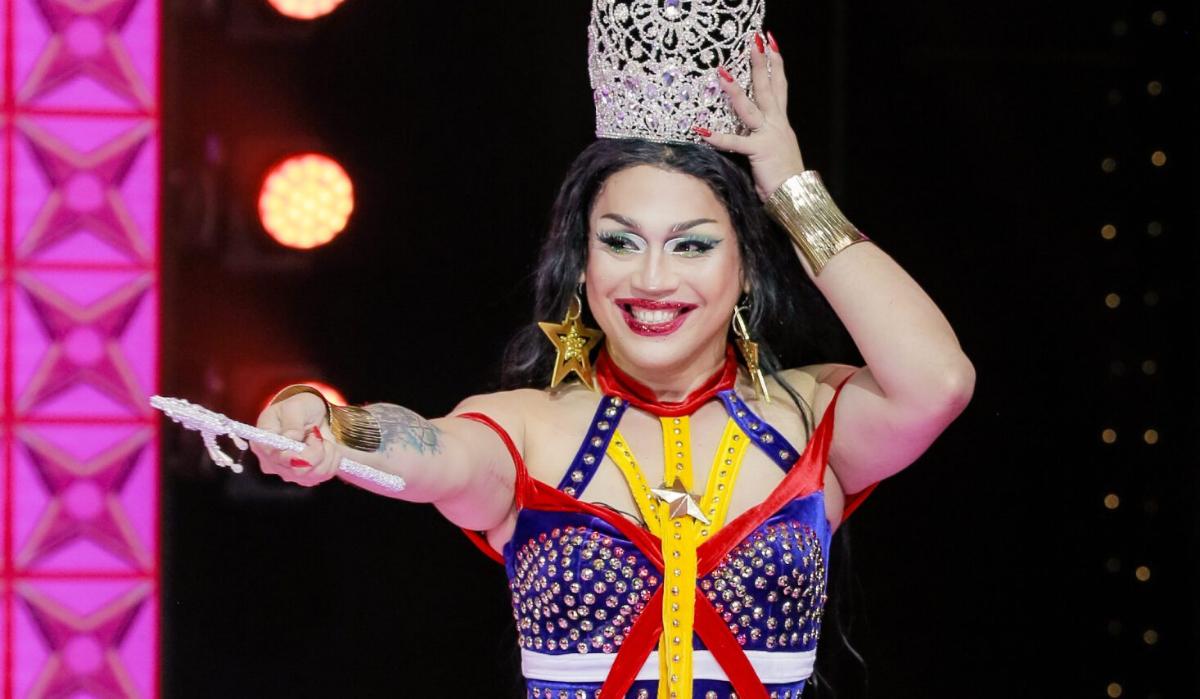
Nowadays, Sirena is a queer anthem in its own right. It’s played at Pride parades and lip-synced by drag queens at clubs and brunches. It was the exact song that granted Precious Paula Nicole, the historic first victor of Drag Race Philippines, her crown and scepter. Dozens of LGBTQIA+ people mentally fuel themselves with lyrics that go, “'Di sinusukat ang tapang at ang bigote sa mukha. Dahil kung minsan, mas lalaki pa sa lalaki ang bakla.” Shoved into tanks and forced to drown our whole lives, the sirena has finally risen above.
Many people applaud Gloc-9 for his progressive message, especially now that it’s given a heartwarming context. I, for one, am lucky to have a father who has come around to thinking the same way he does. “Anak, patawad sana sa lahat ng aking nagawa,” the song goes, which were also the exact words I got to hear from my own dad, too. I no longer had to hold my breath. When I finally let go, I discovered how I grew "gills" of my own. All those years of concealing who I was and being in survival mode taught me how to breathe underwater. At last, I was in my element.
With every melodic rap, the song always hits, and it hits hard. Like numerous people across the country, I see myself through its lyrics, particularly the verse that goes: “Sa paglipas ng panahon ay 'di ko namamalayan na imbes na tumigas ay tila lalong lumambot ang puso kong mapagmahal, parang pilik-matang kulot.” No matter how hard I tried, there was no escaping my true identity. I wasn't meant to flow with the current. I was always meant to make waves.

Sirena allowed me to see the streak of light that persistently seeps through the surface. What was once a shameful jeer has become a triumphant battle cry. It speaks of a universal experience between LGBTQIA+ people who simply want to be part of this world.
Ultimately, it was a song that taught me how to swim. Whenever a wave would crash into me, the best thing I could do was listen to its lyrics as I went under, trusting that I would make it out alive.
About the author
Em Enriquez is a Content Creator at Preview. You can usually find them wearing tinted sunnies, jorts, and black loafers with scrunched-up white socks.
Hey, Preview readers! Follow us on Facebook, Instagram, YouTube, Tiktok, and Twitter to stay up to speed on all things trendy and creative. We’ll curate the most stylish feed for you!
