More Videos You Can Watch
The Price of Pride
Pride is a celebration; but more than that, it is a revolution.
by Em Enriquez
Published Jun 26, 2024
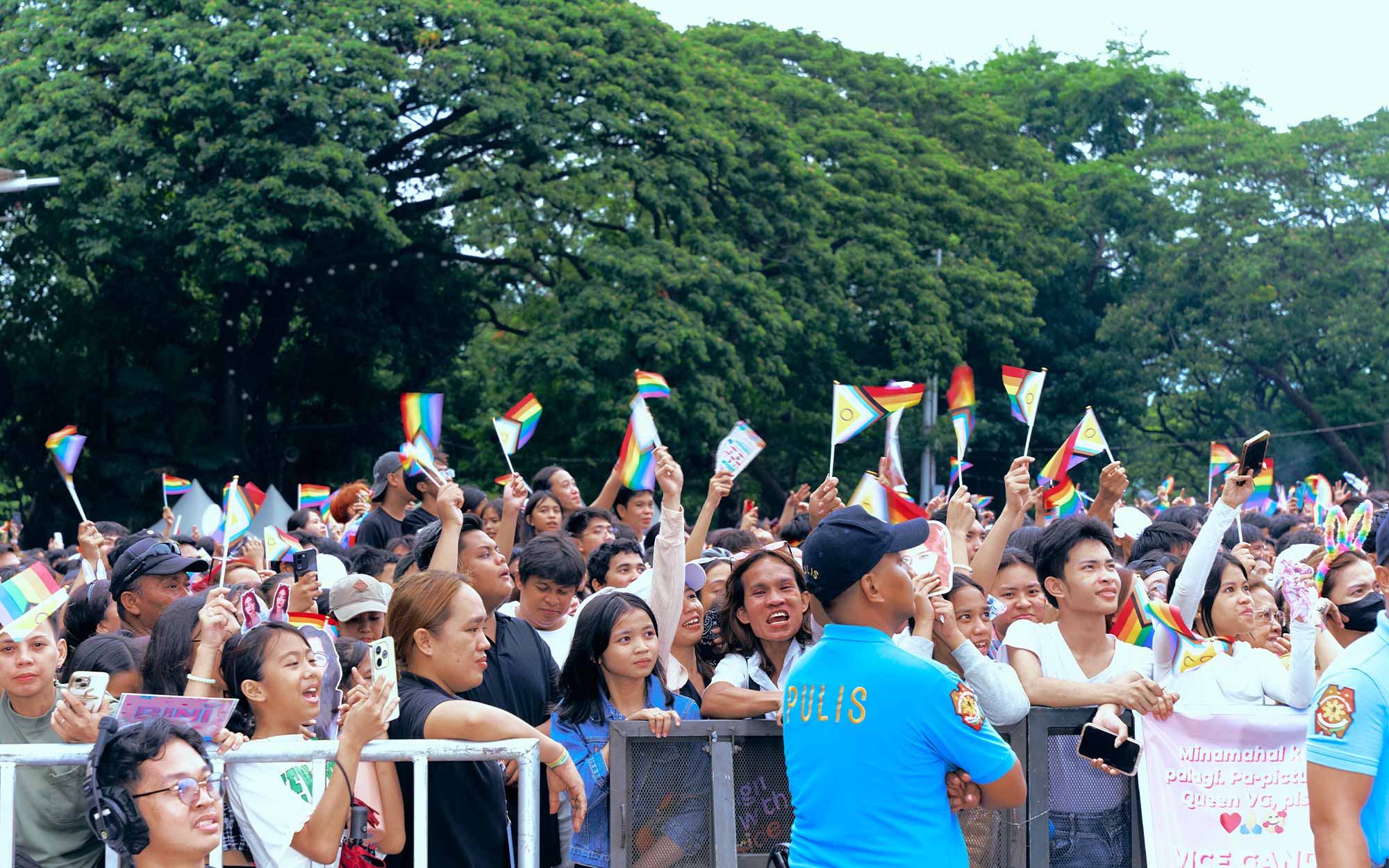
What happens to Pride when queer safe spaces are commercialized and compromised?
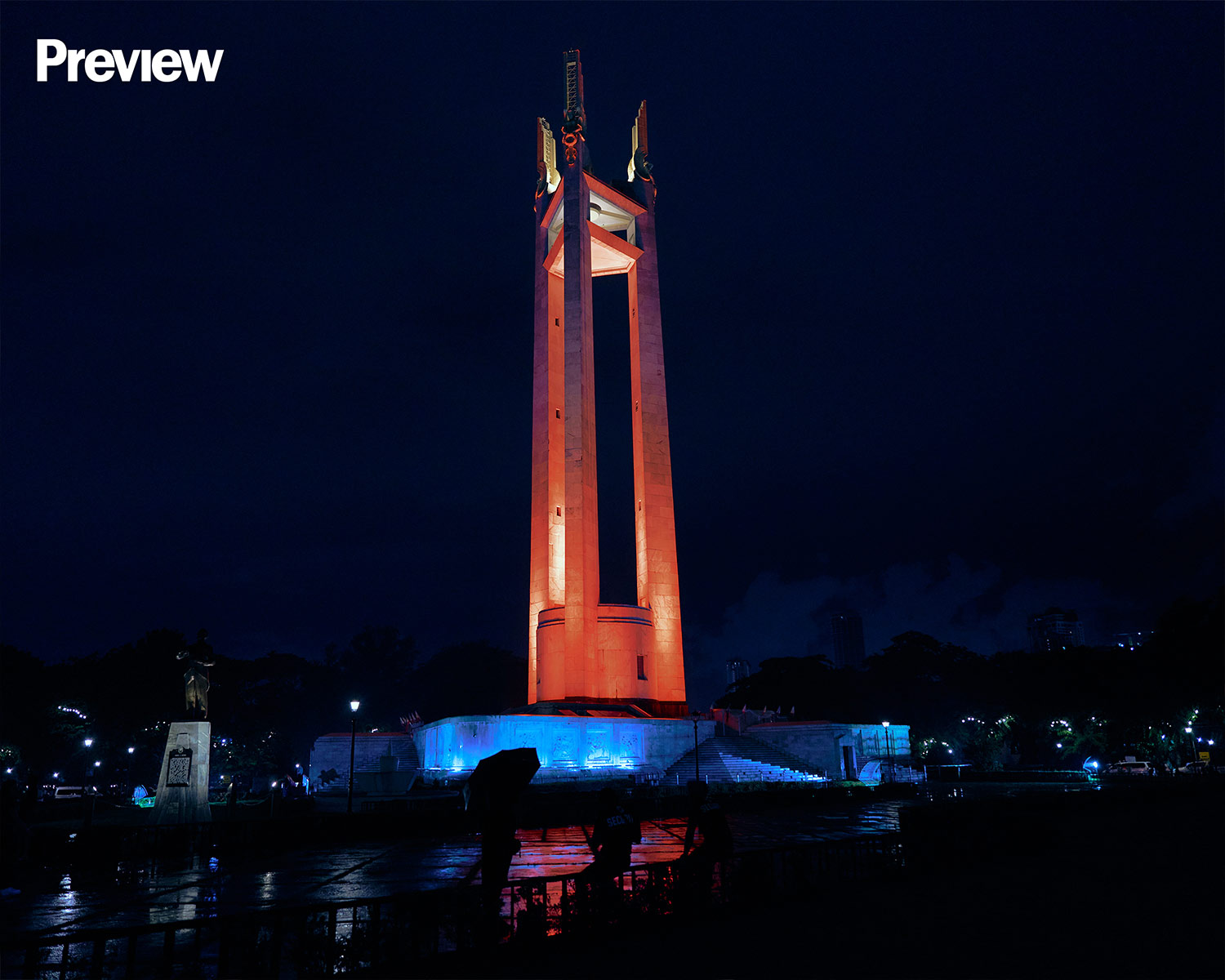
At about 6:45 p.m. last June 22, the #LoveLaban2Everyone Pride Festival came to a pause.
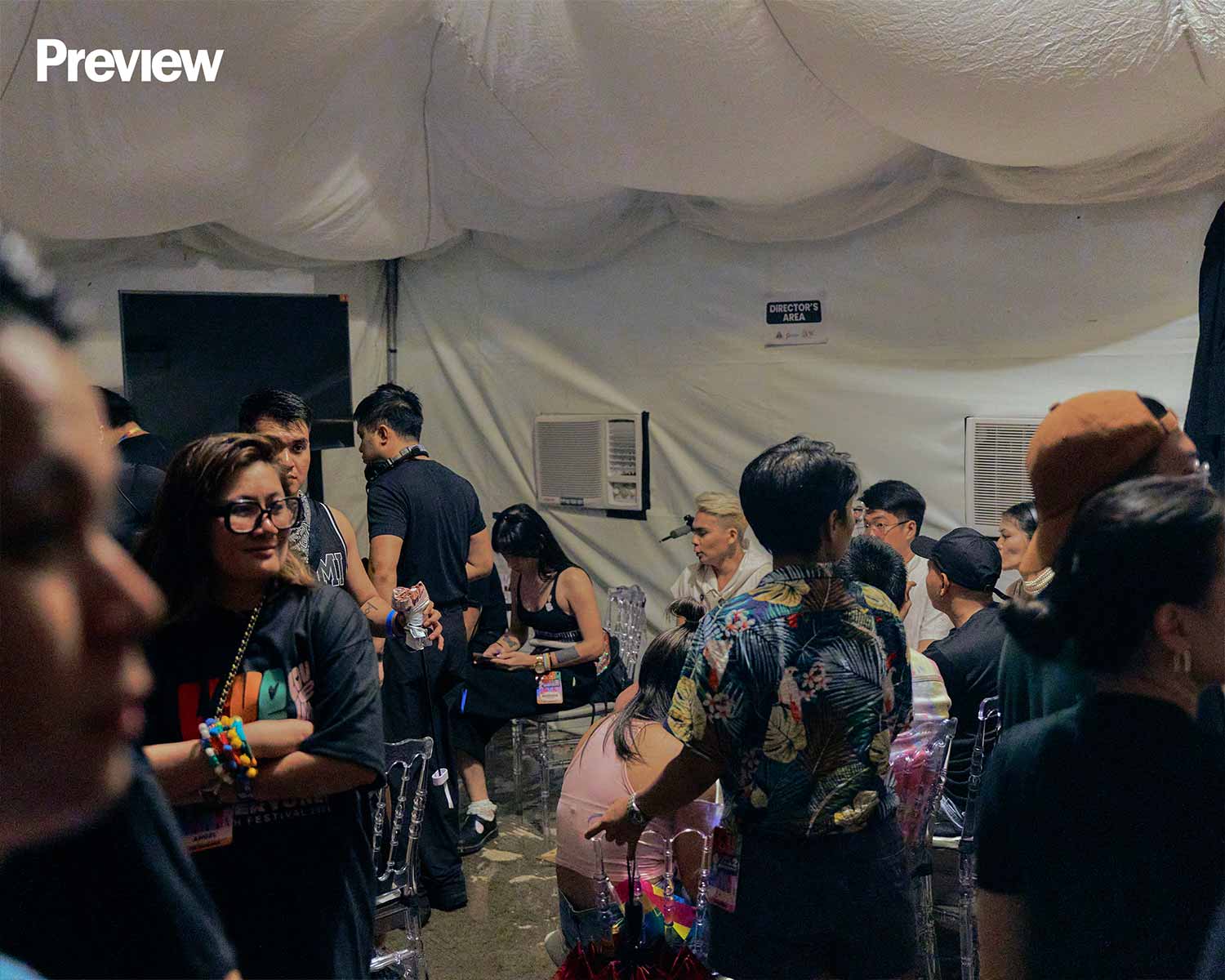
Weather forecasts that day had everyone expecting torrential showers. True enough, the heavy rain began pouring as the evening's festivities were just getting started. Backstage, an overwhelming pitter-patter was beating down on the tents, making it hard to hear one another.
And then the lights went out. Everyone in the tent, now just a bunch of silhouettes and voices, screamed in a high-pitched frenzy.
Lyndon Kyle Asuncion
ADVERTISEMENT - CONTINUE READING BELOW
A little later, head organizers Rod Singh and Vince Liban stepped out to address the power outage. The main stage was turned off and left momentarily empty as the hosts were instructed to step down. The crowd, previously merrily waving rainbow flags in the air, now huddled under umbrellas as the rain relentlessly went on. Heads peeked out in bewilderment, some in wonder if the show will continue.
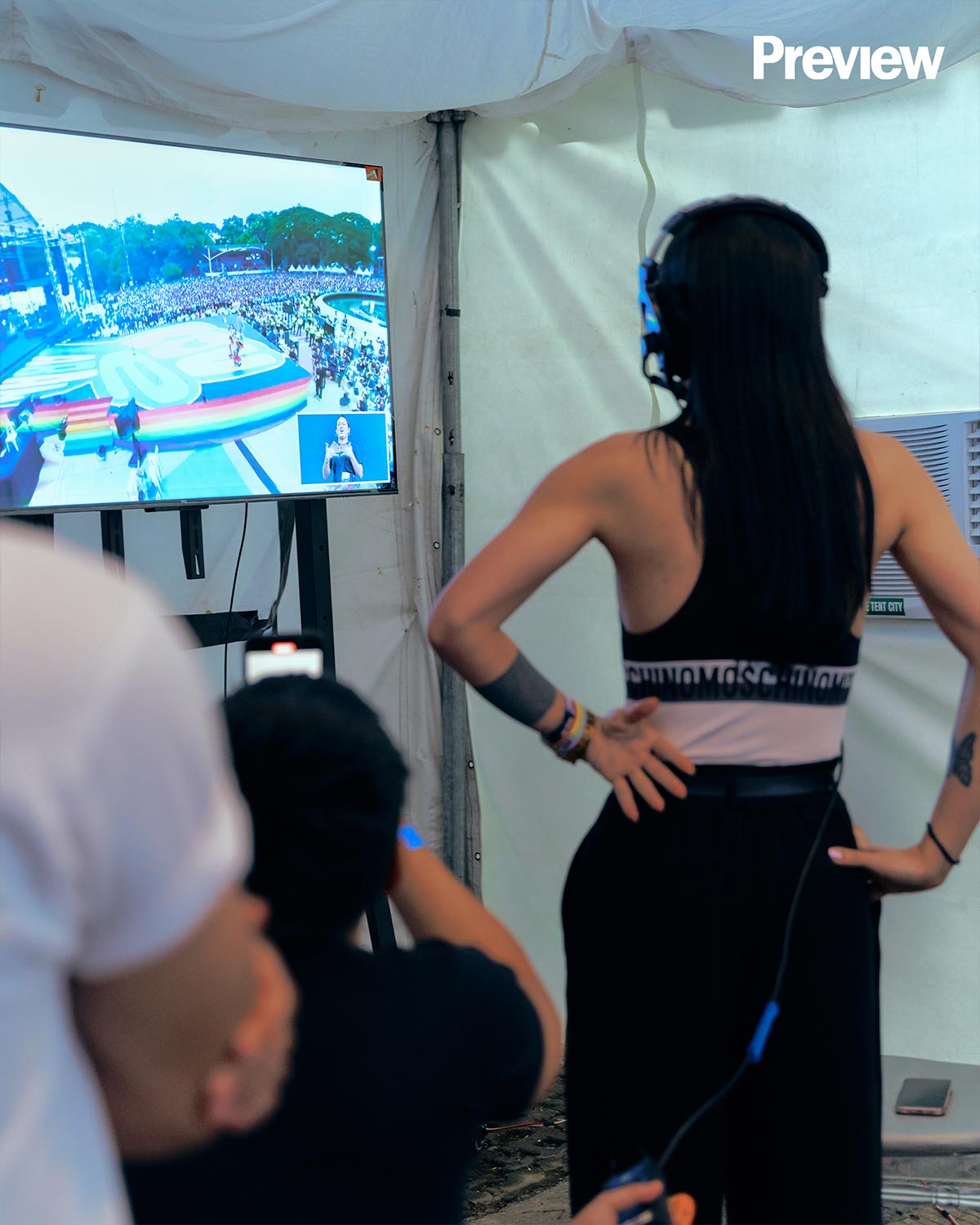
The unplanned intermission lasted 40 minutes. Direk Rod eventually walked back into the tent, and, before she could catch her breath, said: "Pride PH, we need your help."
Lyndon Kyle Asuncion
CONTINUE READING BELOW
watch now
Direk disclosed to the organizers, volunteers, and guests that the rain damaged the electrical equipment needed to keep the program going. The showers were expected to persist until 9:00 p.m., which would make it a hazard to continue even with a contingency plan. The venue had also reached an overcapacity, brimming with over 200,000 people scattered across its grounds. In the interest of everyone's safety, the rest of the night had to be canceled.
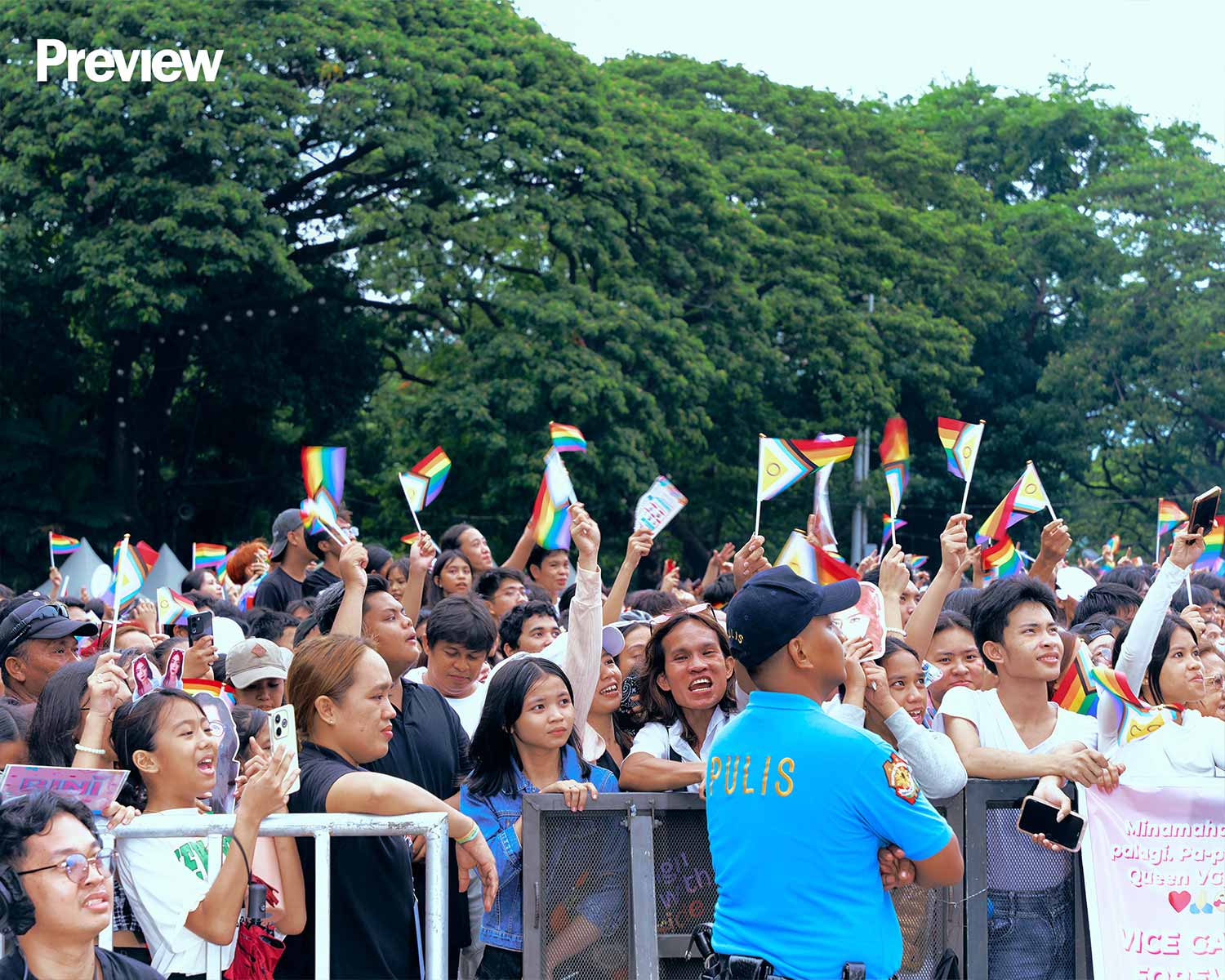
Lyndon Kyle Asuncion
ADVERTISEMENT - CONTINUE READING BELOW
The Quezon City #LoveLaban2Everyone Pride Festival from the Ground Up
At first, amassing that many people seemed like a victory. In 2023, the event garnered over 110,000 attendees, which made it the largest Pride event in Southeast Asia up until this year. It was some sort of indication that more and more members of the LGBTQIA+ community yearned for a safe space to gather. For just one day, they could convene somewhere and not be subject to hate or discrimination.
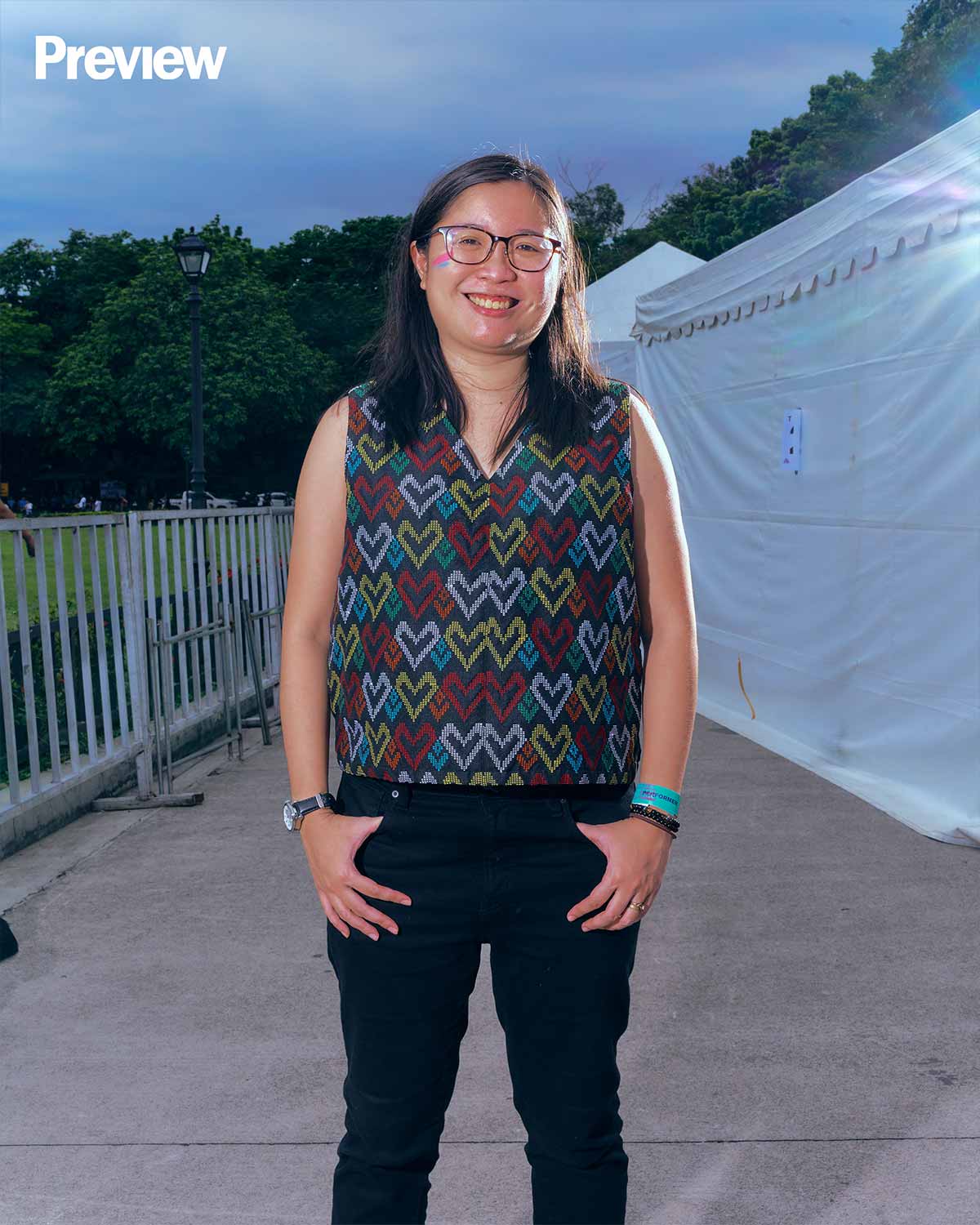
Nica del Rosario dedicates her song 'Balang Araw' to the LGBTQIA+ community Lyndon Kyle Asuncion
ADVERTISEMENT - CONTINUE READING BELOW
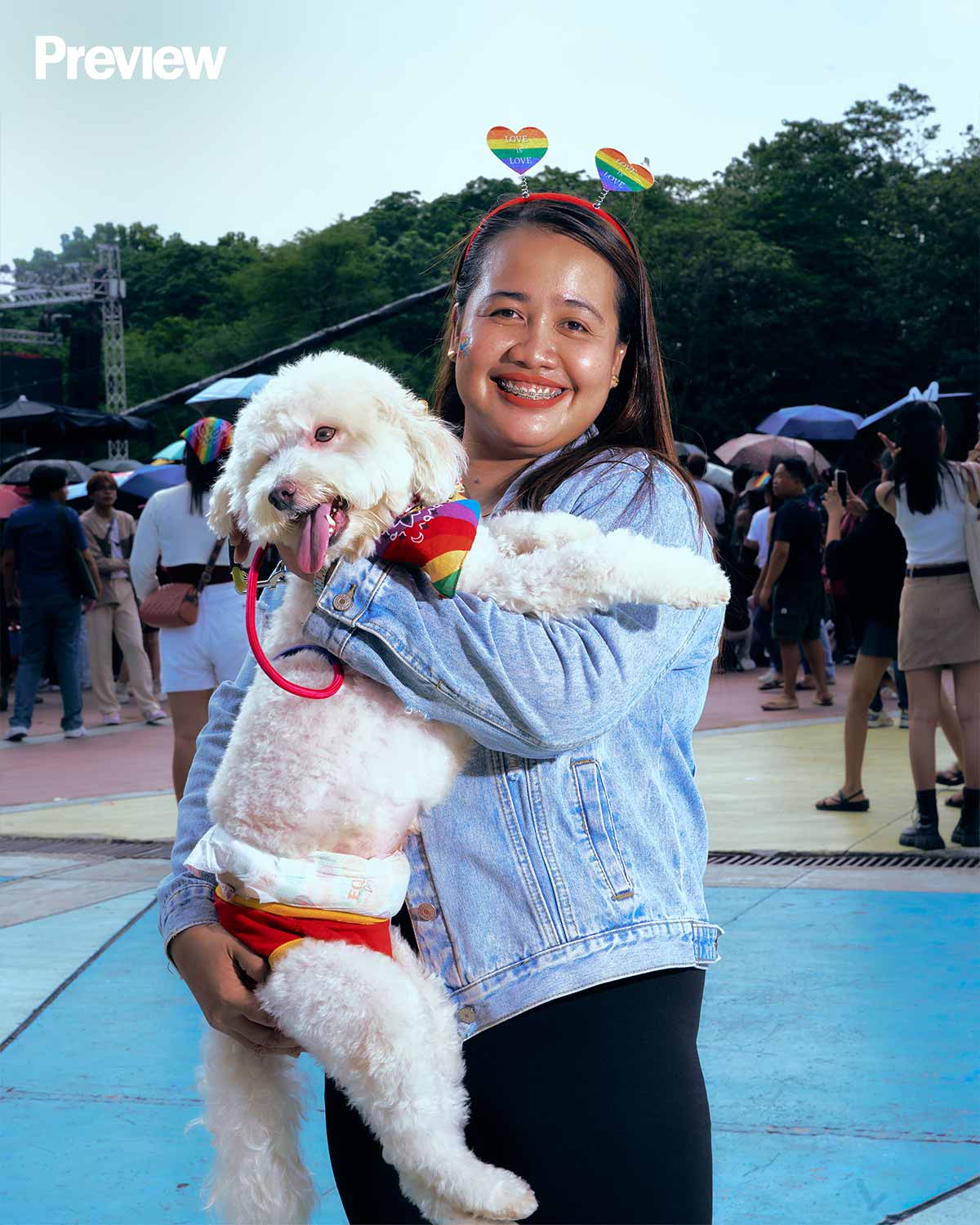
Jam's partner asked her to come to Pride for the first time this year. Joining them was their dog Tyler. Lyndon Kyle Asuncion
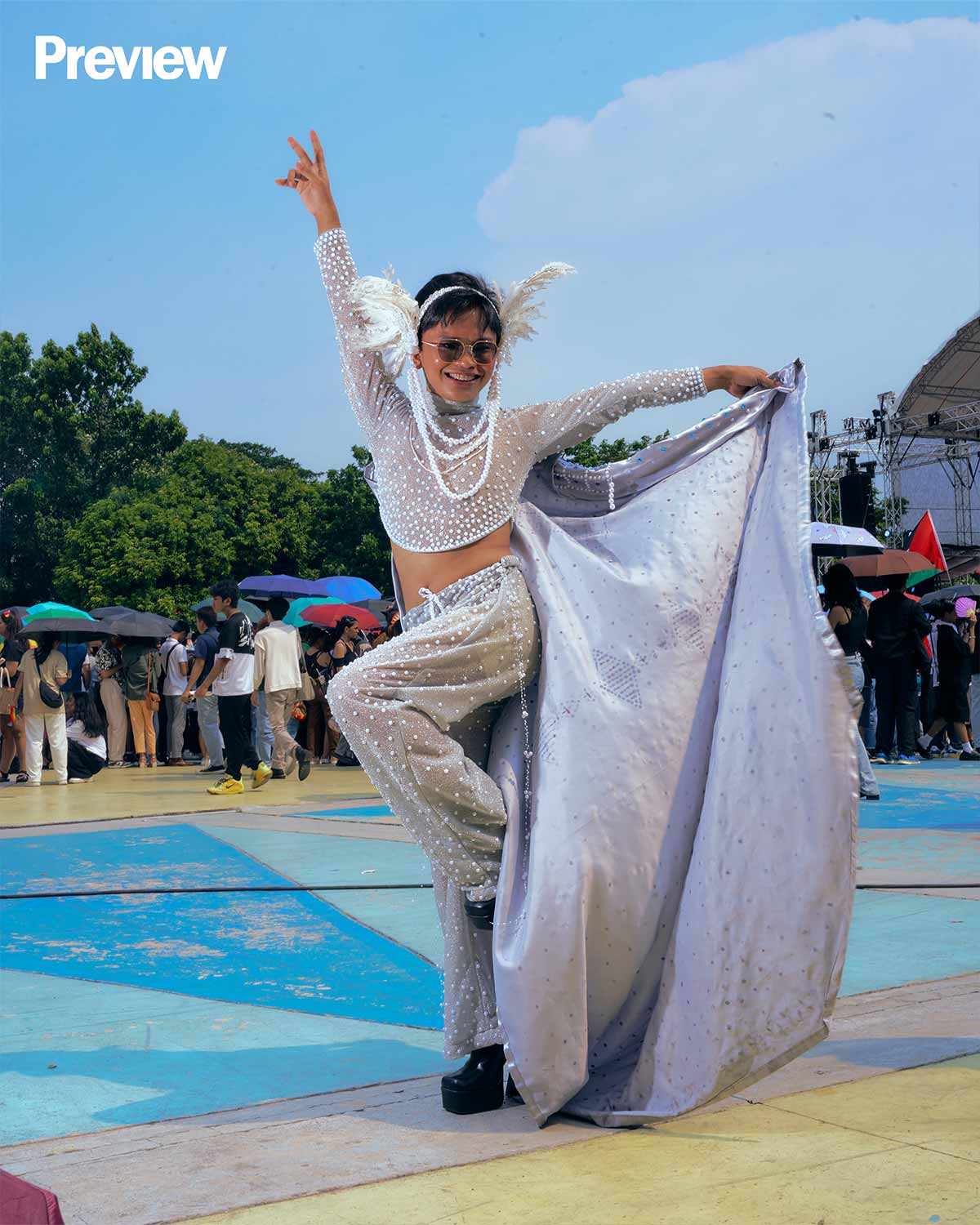
Jeff stayed up the night prior making their look, which they were proud to flaunt around the Quezon Memorial Circle. Lyndon Kyle Asuncion
ADVERTISEMENT - CONTINUE READING BELOW
Diana (Instagram/dianamercadillo) attests to this. "This is the one day of the year when I feel safe the most. I can wear whatever I want and no one judges me," she says with her iridescent wings flowing in the breeze. "It's rare to be in this kind of event where it feels inclusive of everyone," shares Rio (Instagram/film.rio), who was also glittering in fairy fashion.
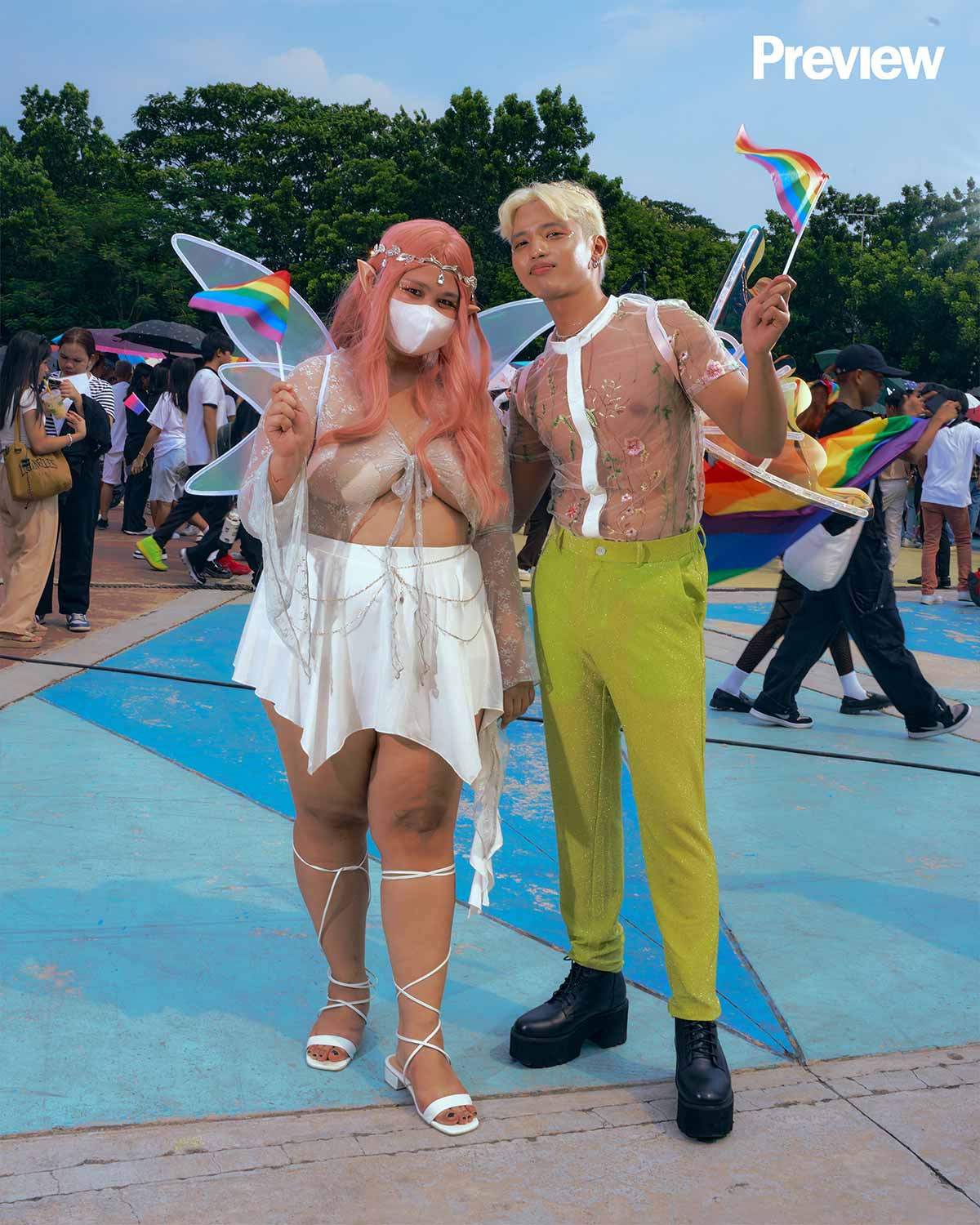
Diana and Rio Lyndon Kyle Asuncion
ADVERTISEMENT - CONTINUE READING BELOW
"Pride is everyone's ability to create a safe space for every member of the community, [whether for those who are openly queer or] inside the closet. It's for allies as well," Gian Bernardino, vocalist of the group Cup of Joe puts it. Along with his bandmates, Gian was one of the last few acts to step on stage before the rain unforgivingly poured down.
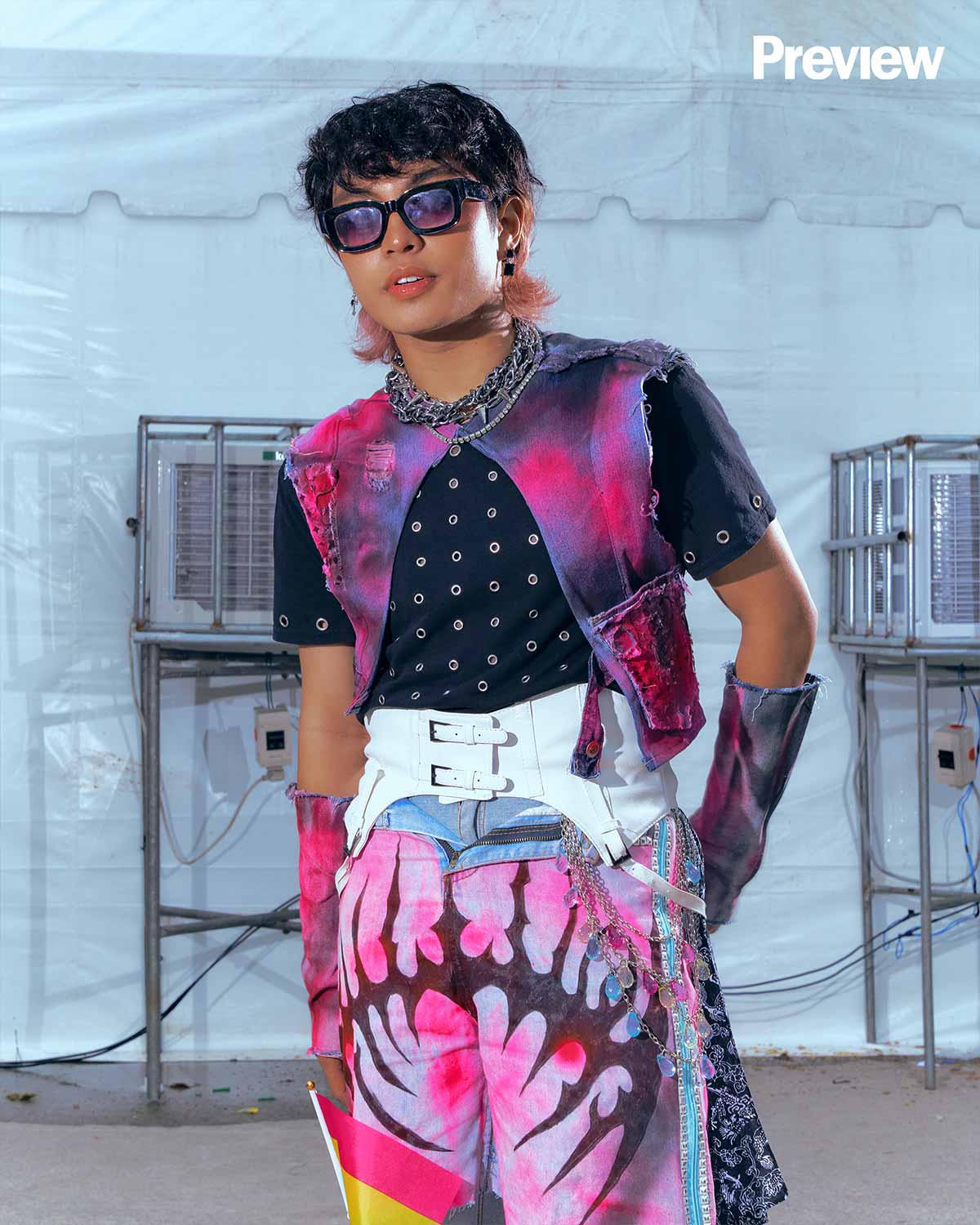
Gian Bernardino, vocalist of the band Cup of Joe Lyndon Kyle Asuncion
ADVERTISEMENT - CONTINUE READING BELOW
This safe space, however, was compromised this year.
The groups who participated in the actual march, which is arguably the most vital component of any Pride gathering, were barred from entering the Quezon Memorial Circle due to the overcapacity. Those who took to the streets to chant "Makibeki! 'Wag mashokot!" were excluded. Instead, the cries heard inside the venue were "Ilabas n'yo na yung BINI!" and "Tama na yung kabaklaan na yan!"
The very essence of Pride was challenged this year. As Drag Race alum Minty Fresh says, Pride is supposedly "a reminder ng mga ipinaglalaban natin." It's a "legacy," as Pipay puts it, of the things we should continually be fighting for as a community
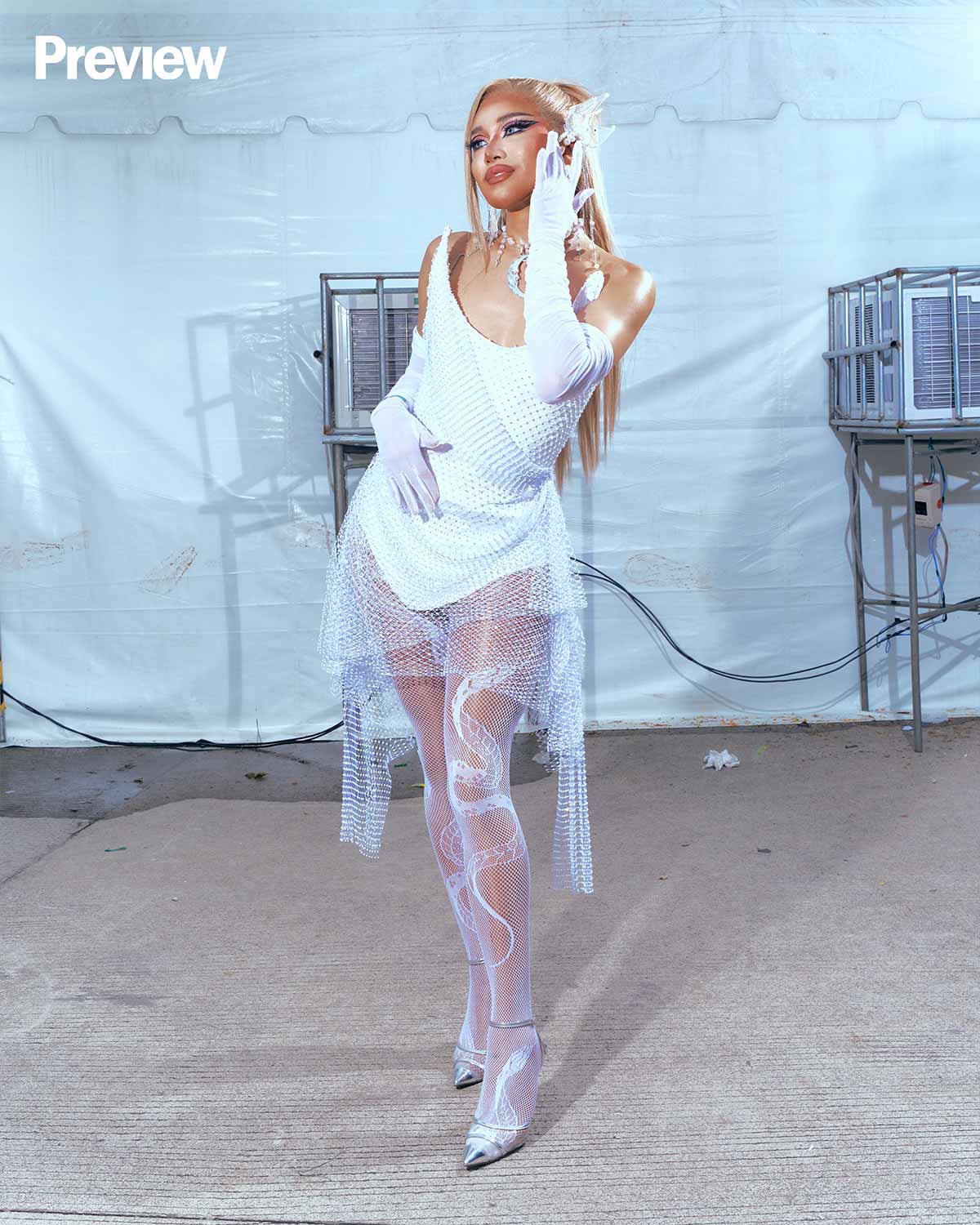
Minty Fresh of Drag Race Philippines season 1 Lyndon Kyle Asuncion
ADVERTISEMENT - CONTINUE READING BELOW
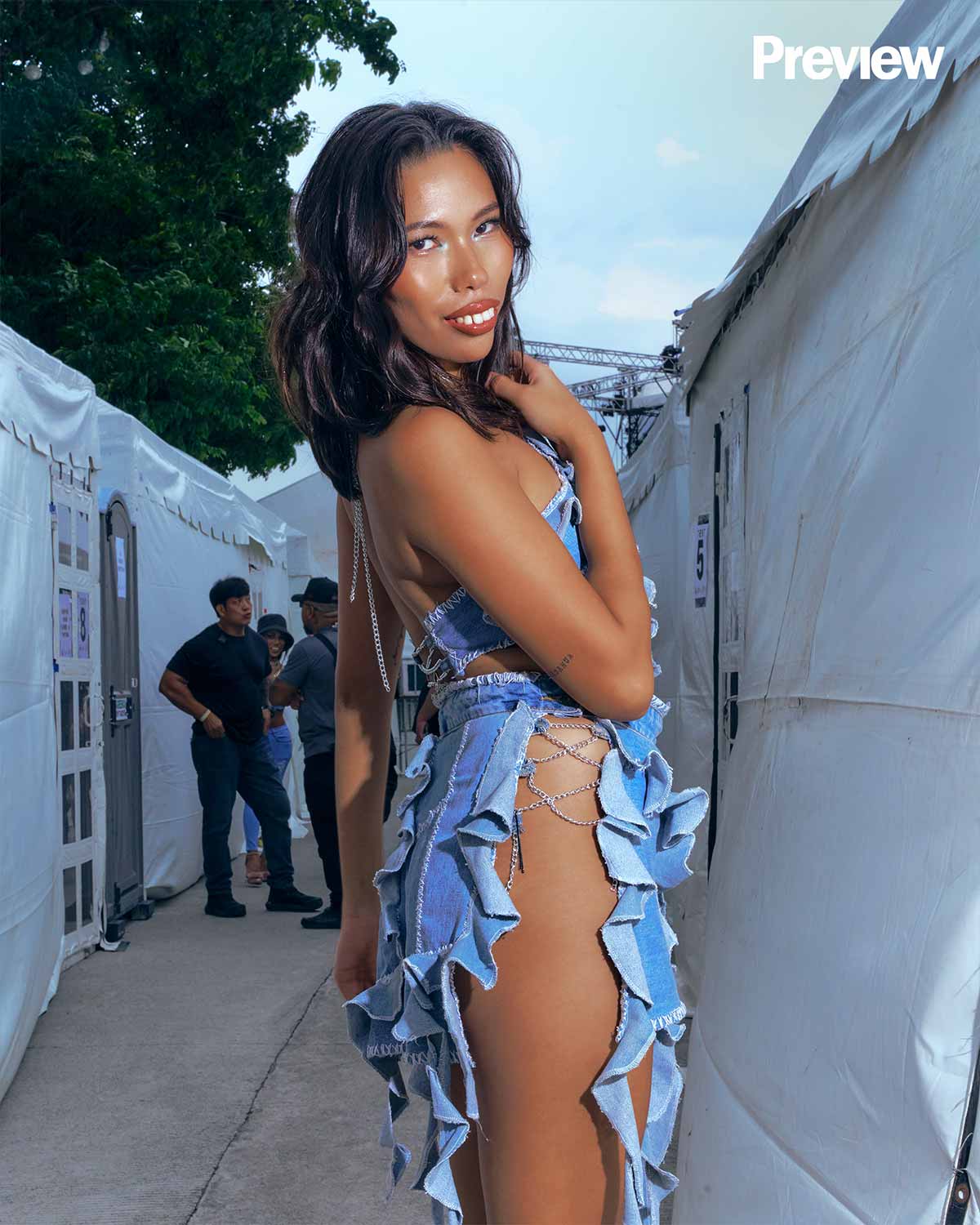
Social media personality and budding actress Pipay Lyndon Kyle Asuncion
There's an inherent danger when a movement such as Pride is commercialized. With the likes of BINI, Vice Ganda, and Gloc-9 as headlining performers, it's partly expected that masses of people would flock to Quezon City despite the weather. But the truth of the matter is that not each and every one of those people understood the importance of Pride and why it was being commemorated in the first place.
ADVERTISEMENT - CONTINUE READING BELOW
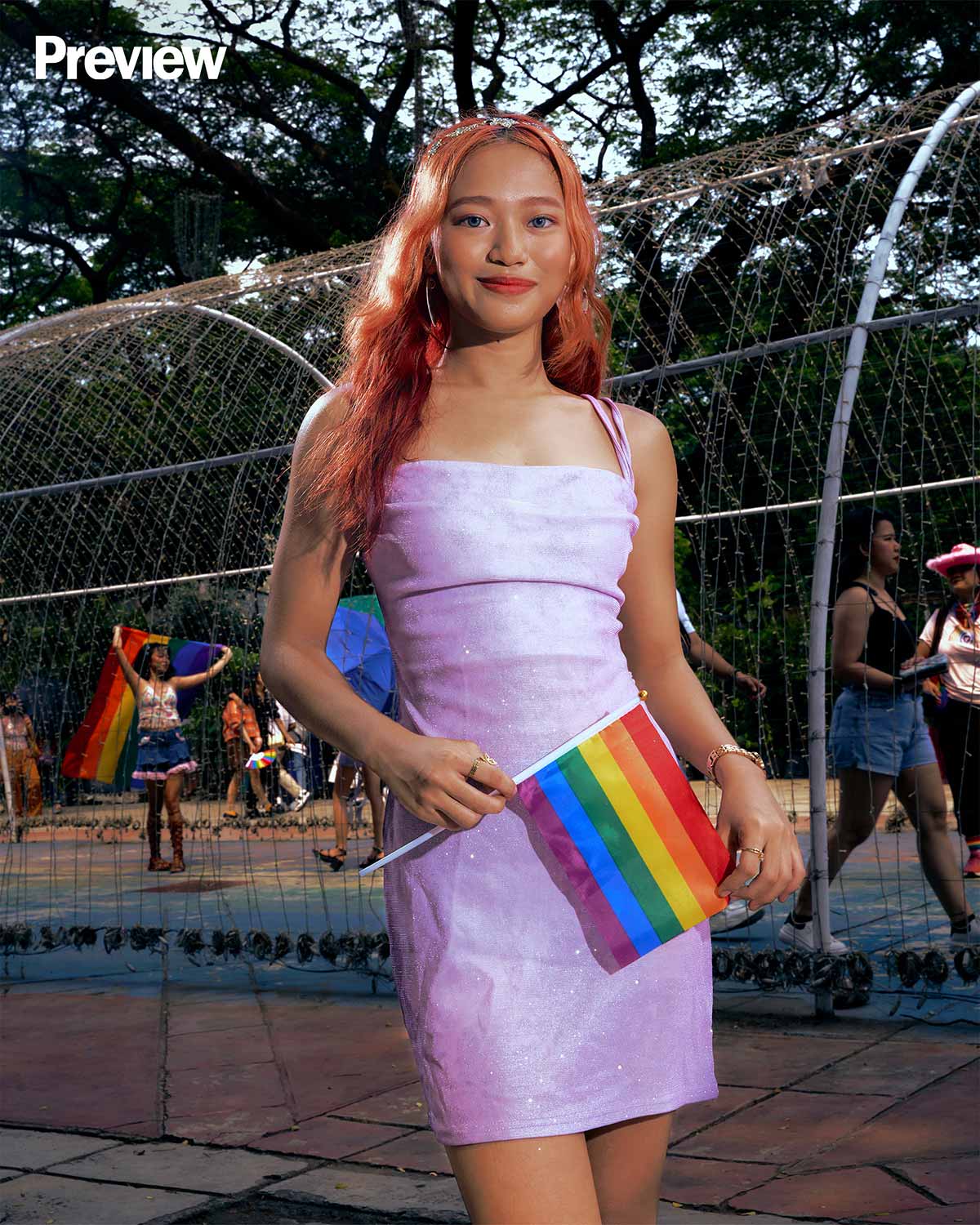
As an ally, Caryl acknowledges that everyone is deserving of their rights regardless of how they identify Lyndon Kyle Asuncion
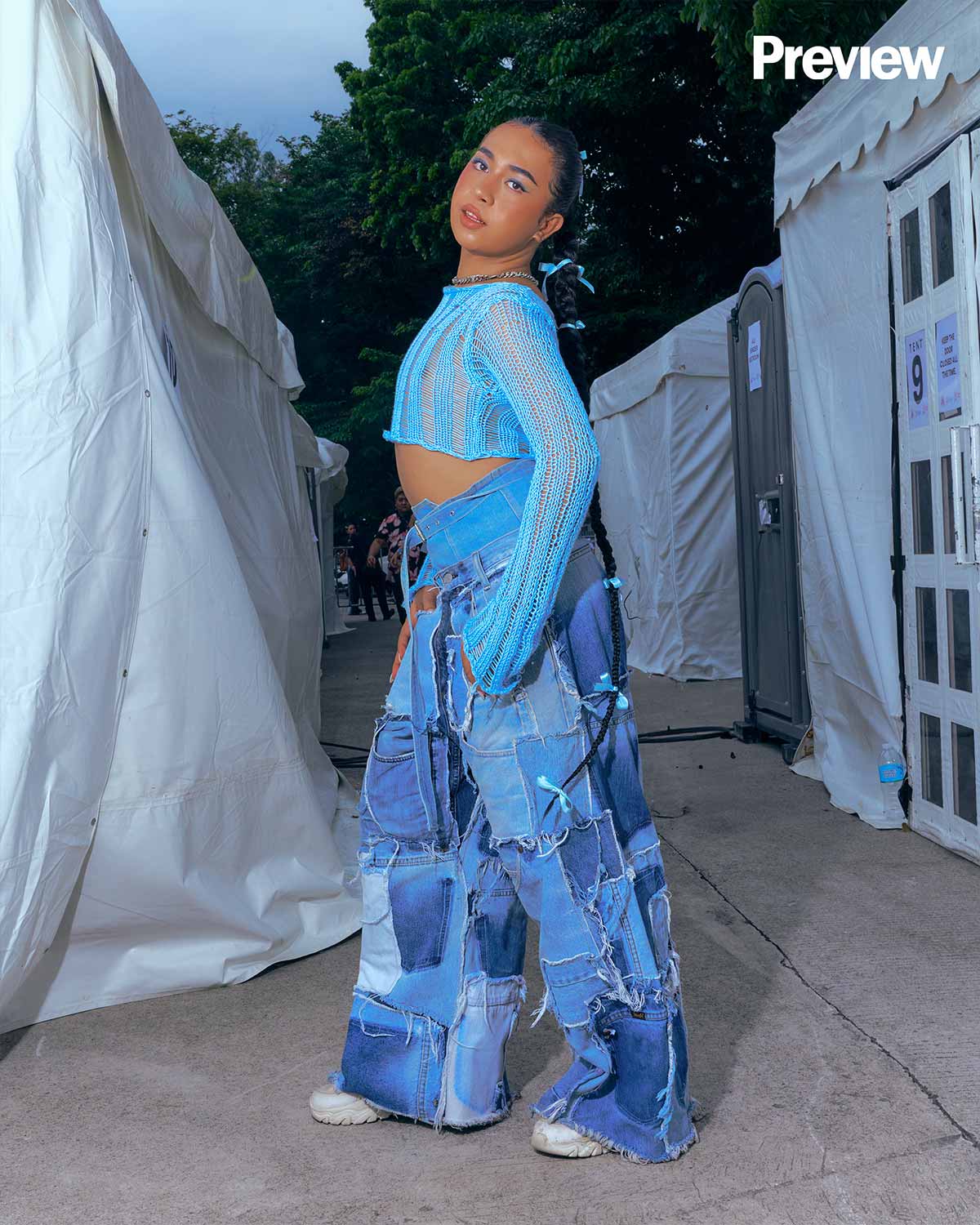
"Ngayong Pride, ipakita mo kung sino ka," content creator Miko Esjay expresses Lyndon Kyle Asuncion
ADVERTISEMENT - CONTINUE READING BELOW
As much as we would've wanted to assimilate as many individuals into the LGBTQIA+ movement, some of them simply weren't there for that. Pride was minimized into a free concert, ironically attended by homophobes who made attendees feel uncomfortable and unsafe. Our sacred space was taken away from us.
A stark reminder floats in the air: "Pride is first and foremost a protest."
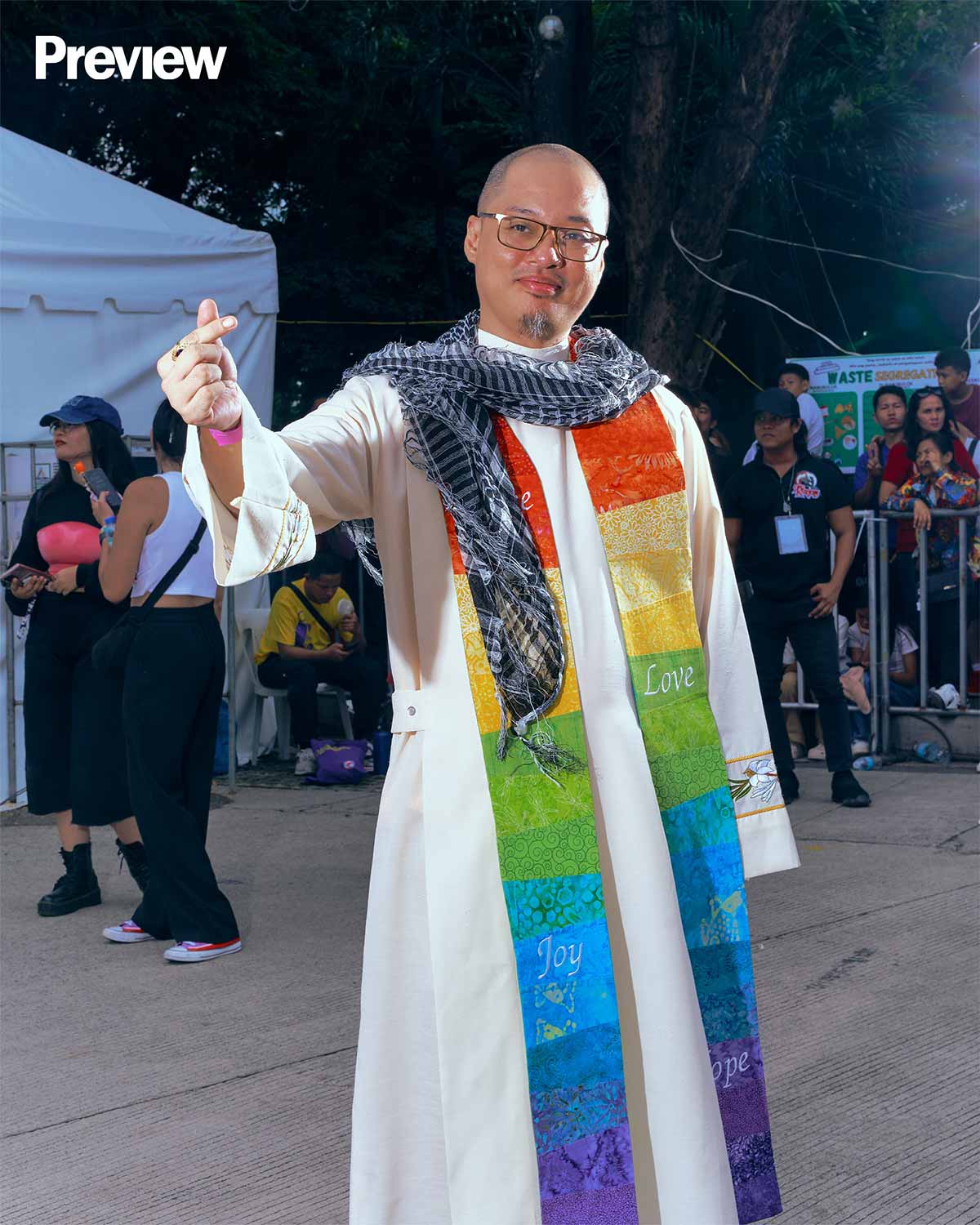
Reverend Joseph of Open Table MCC Lyndon Kyle Asuncion
ADVERTISEMENT - CONTINUE READING BELOW
Reverend Joseph of Open Table MCC reiterates the history of the Pride movement in the Philippines, citing that it has always been a battle against oppressive forces. "Doon nagsimula ang Pride 30 years ago. Pride is intersectional. Pride is faith. Ang Mother Church namin, MCC Manila, was a co-organizer of the first Pride march in 1994 together with ProGay Philippines," he shares.
As much as Pride is a celebration, it mustn't disregard its roots as a revolution, one that hasn't yet reaped the fruits of its labor. The SOGIE Equality Bill continues to languish in Congress decades after it's been drafted, which exacerbates our need to come together and mobilize. There is little to nothing to celebrate unless the rights that are deservingly ours are granted by our leaders.
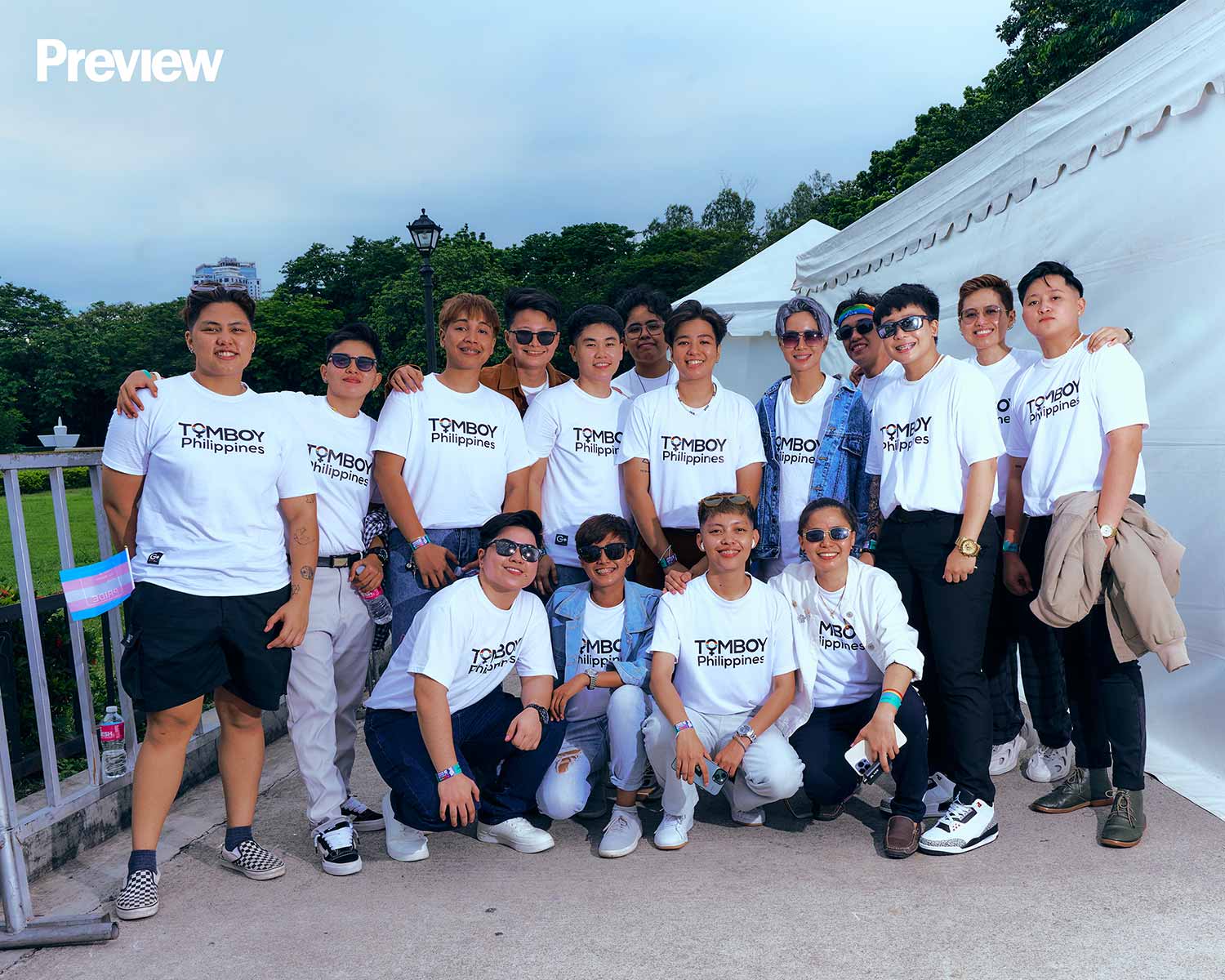
Members of Tomboy Philippines backstage at the #LoveLaban2Everyone Pride Festival Lyndon Kyle Asuncion
ADVERTISEMENT - CONTINUE READING BELOW
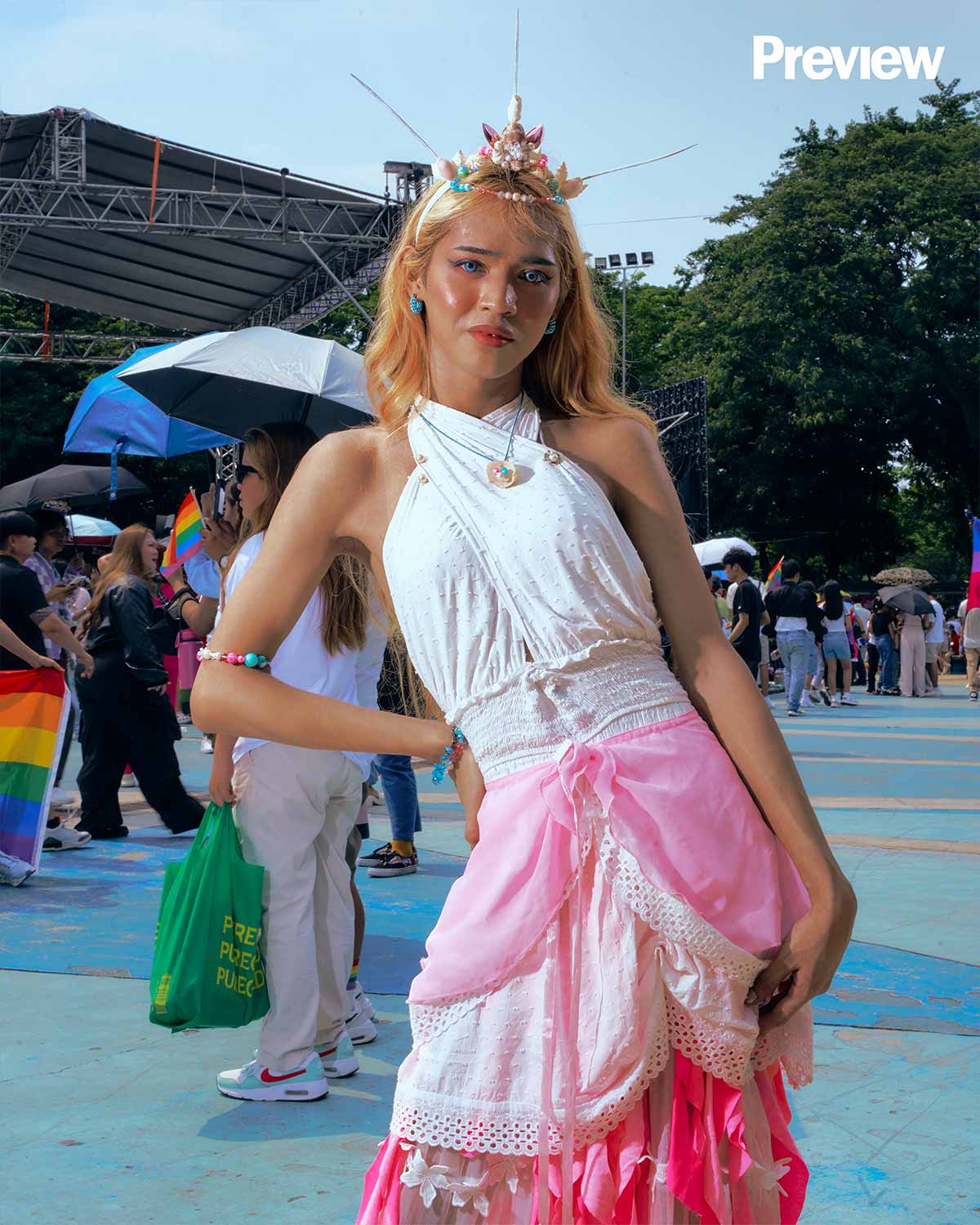
Jam attended Pride this year as her interpretation of a mermaid goddess Lyndon Kyle Asuncion
More than a commemoration of how far we've come, Pride is an indicator of how far we have to go. Liberties such as expressing our love to those we hold close to our hearts continue to be withheld from us. "For the longest time, nakikita yung pagmamahalan namin as something deviant," Anna (Instagram/elacubacub) says of her relationship with J (Instagram/jsscpnd). "Yung pagmamahalan namin ang resistance namin sa mga ideyang kumukulong sa kung ano lang ang itsura ng pagmamahal."
ADVERTISEMENT - CONTINUE READING BELOW
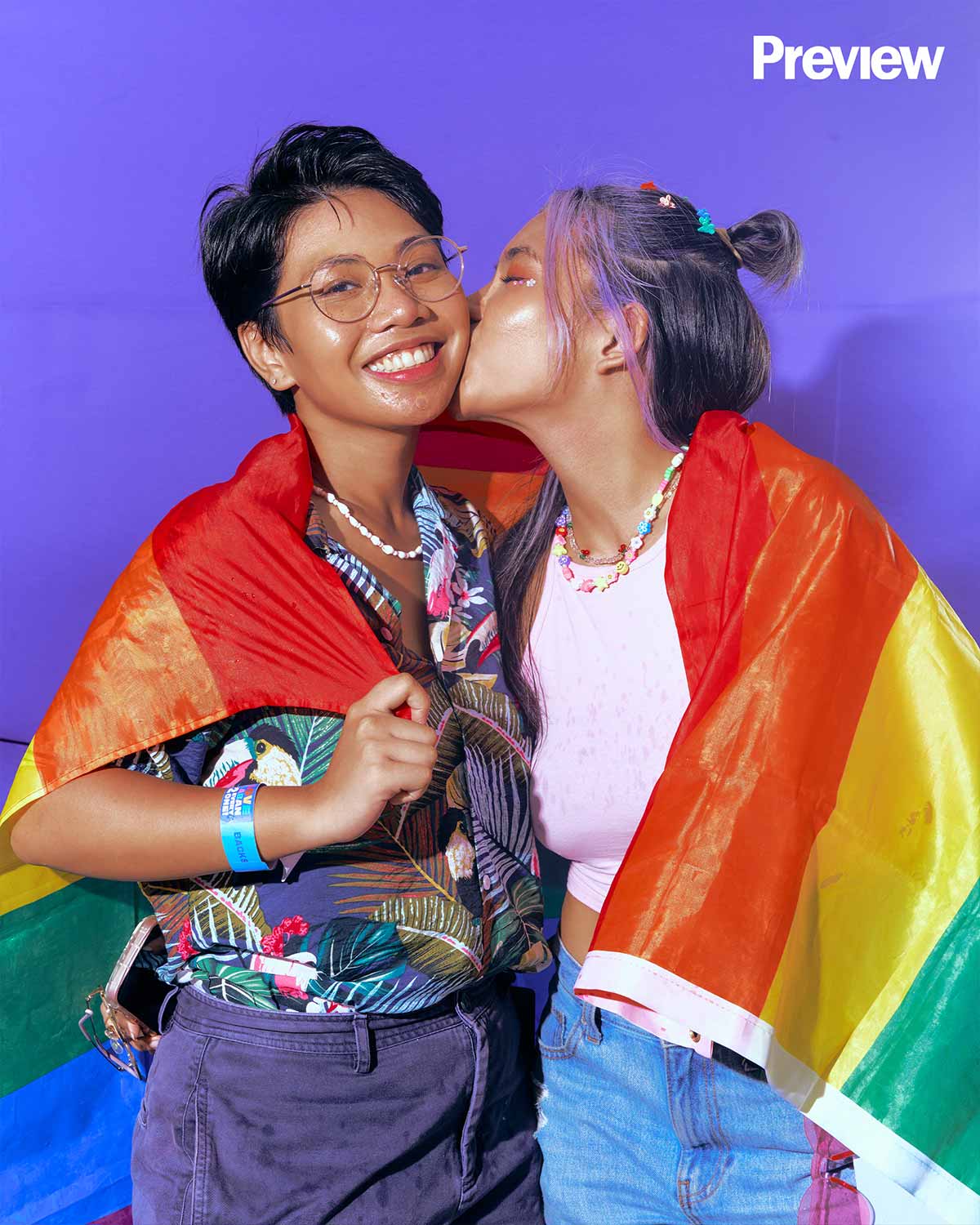
Anna and J after their Kiss Cam moment Lyndon Kyle Asuncion
Even on a more intimate, personal level, Pride allows us to embrace every facet of our identities. "It makes me feel alive," Joaqueen (Instagram/joaqueenb) expresses. Sky Teotico emphasizes that Pride is cultivated within oneself. "Doon naguugat yon eh, sa sarili natin. Kapag alam natin ang worth natin, naipaglalaban natin ang lahat ng karapatan natin at ng mga mahal natin sa buhay," he says.
ADVERTISEMENT - CONTINUE READING BELOW
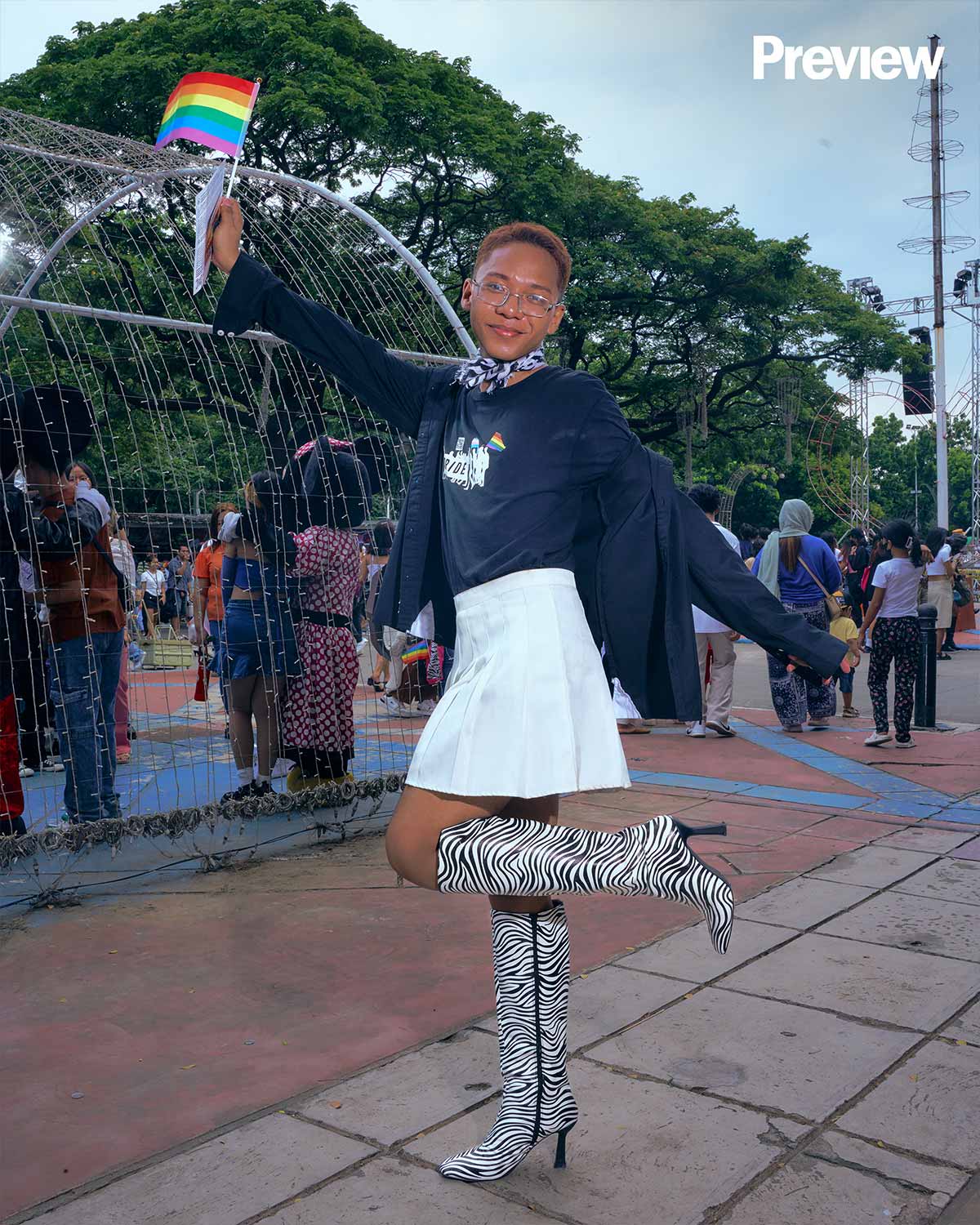
19-year-old Joaqueen is thankful for the queer representation he and his generation has now Lyndon Kyle Asuncion
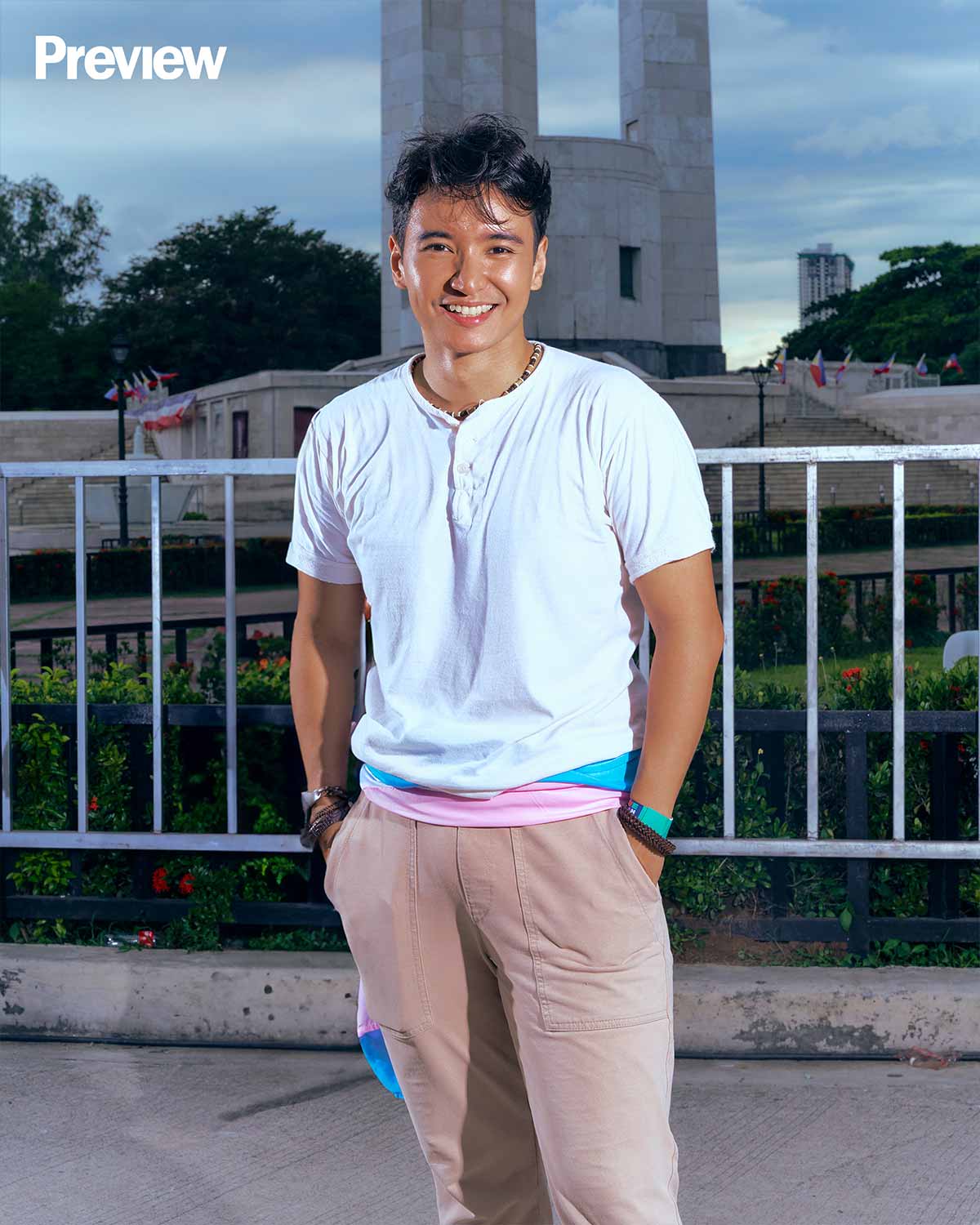
A proud transgender man, Sky Teotico took to the stage as one of this year's hosts. Lyndon Kyle Asuncion
ADVERTISEMENT - CONTINUE READING BELOW
And in this struggle, we need allies to genuinely understand where we're coming from. The plight of the LGBTQIA+ community, after all, is intersectional and therefore affects everyone regardless of their own SOGIE. "We need to break through the echo chambers so that the conversation can expand beyond the community itself," Nicole Cordoves says. "More than anything, we need to go out there to help people understand. As an ally, I'm one of those vessels."
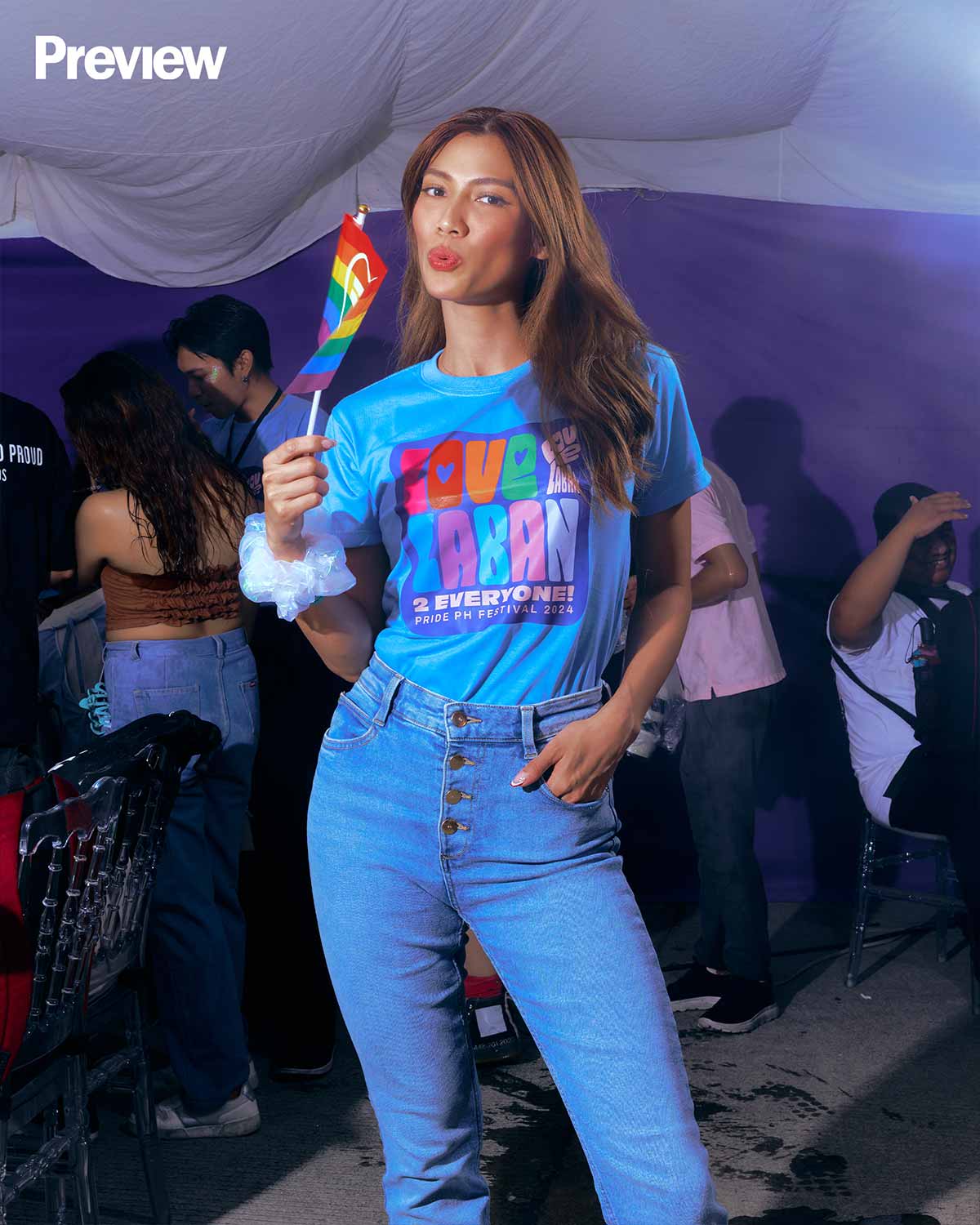
"We need to break through the echo chambers," says Drag Den resident judge and beauty queen Nicole Cordoves Lyndon Kyle Asuncion
ADVERTISEMENT - CONTINUE READING BELOW
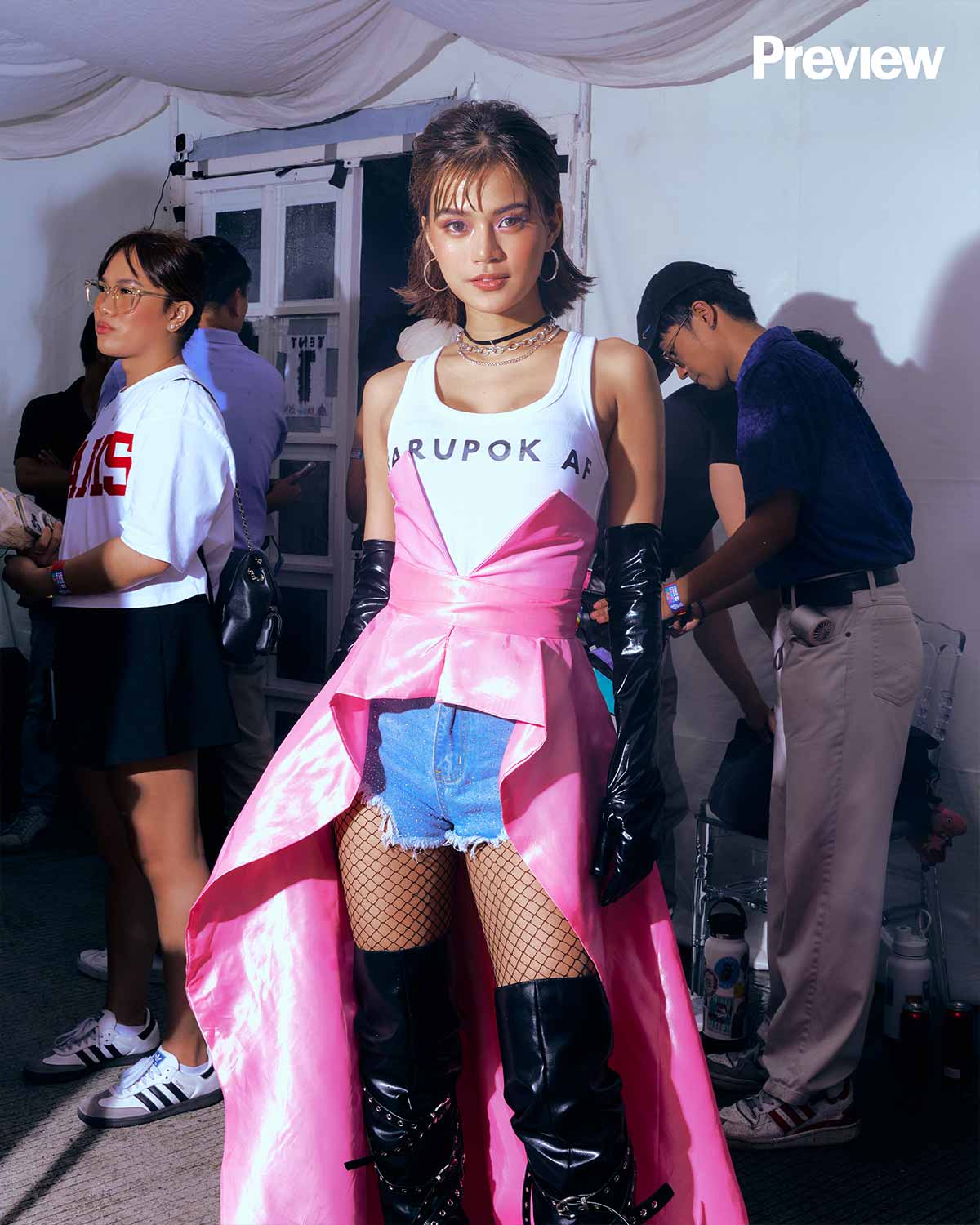
Maris Racal attended Pride for the first time this year. She stepped on stage with EJ Jallorina to promote their film "Marupok AF" Lyndon Kyle Asuncion
Much has been grieved about in regards to this year's Pride Festival. It was not the experience many were expecting, and that's a cross the organizing team will have to bear as it attempts a comeback next year. Many things have to be addressed behind the scenes to ensure that the same fiascos, rain or shine, don't occur again.
ADVERTISEMENT - CONTINUE READING BELOW
I, for one, don't doubt that the organizers had the community's best interest in mind. We all just wanted to sing, dance, and celebrate Pride as we usually do. After all, it is the one day of the year when everyone feels free to just be themselves.
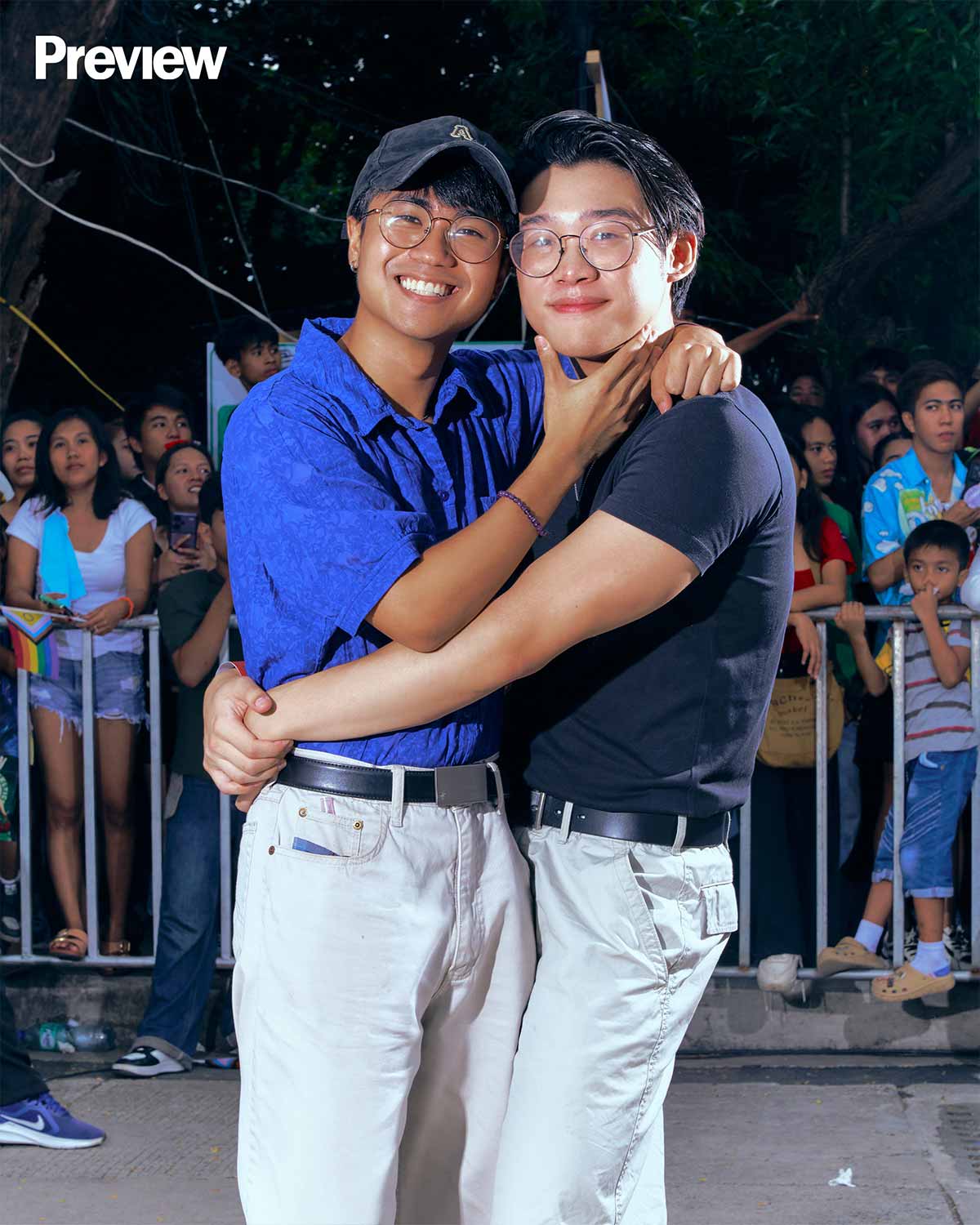
Albert and Aikee tell queer couples that they should "be each other's safe spaces" Lyndon Kyle Asuncion
ADVERTISEMENT - CONTINUE READING BELOW
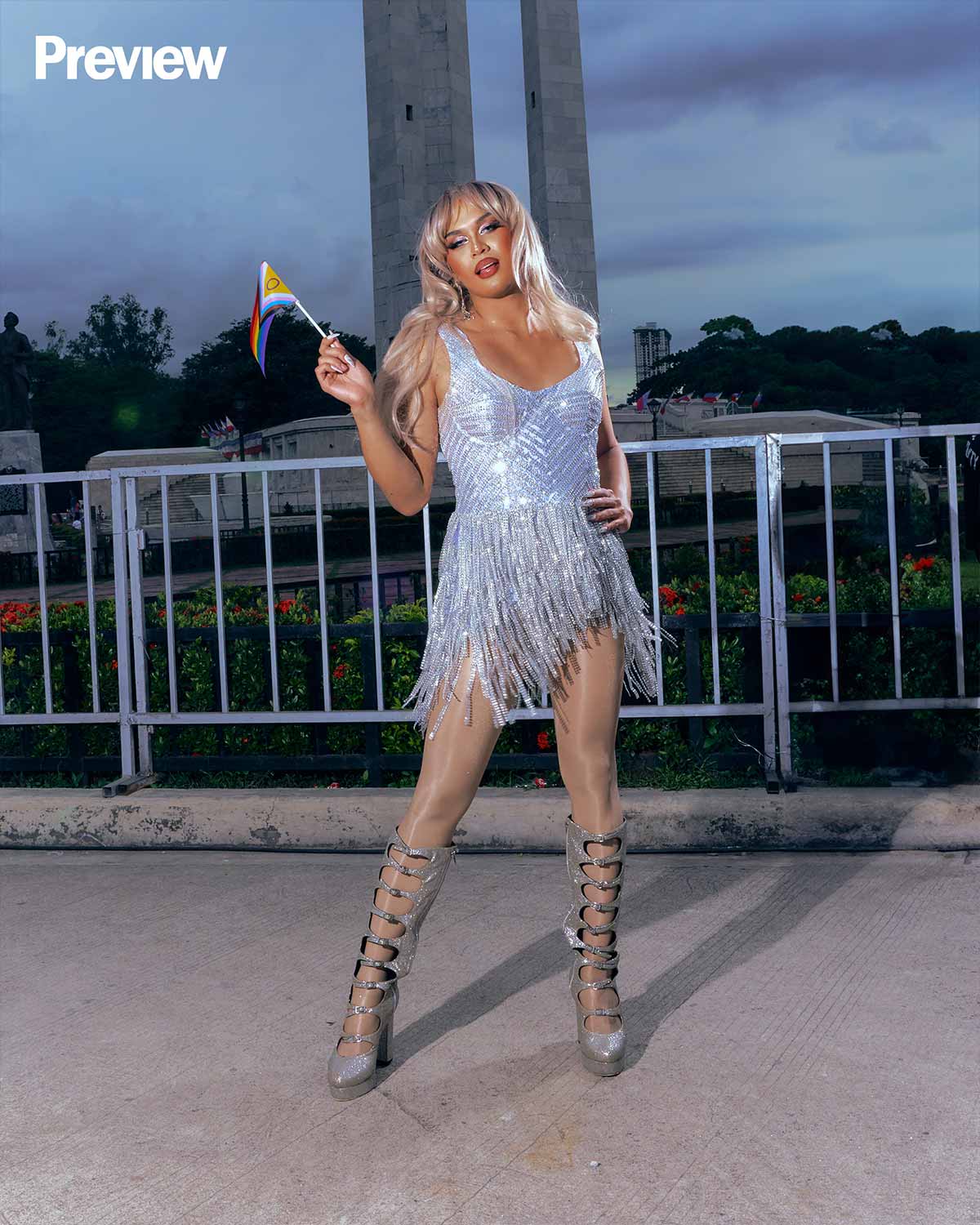
"Pride is power," Drag Race Philippines season 2 queen Matilduh declares Lyndon Kyle Asuncion
The only way to move forward is to anchor ourselves, once more, on what Pride really is at its core—a pursuit of queer liberation that's rooted in decades worth of power struggles. These struggles need to be acknowledged and must be the sole basis of how we should convene. These inform who is given a platform to speak and who is granted access to our spaces. As a community, we must question anything that brushes aside or makes light of this plight. It shouldn't be about the numbers.
ADVERTISEMENT - CONTINUE READING BELOW
Lyndon Kyle Asuncion
Pride is a celebration, but more than that, it is a revolution—and now is not the time to forget what it truly means.
A Preview Original production
Writer and Producer: Em Enriquez
Photographer: Lyndon Kyle Asuncion, assisted by Nikki Gabrielle
Hey, Preview readers! Follow us on Facebook, Instagram, YouTube, Tiktok, and Twitter to stay up to speed on all things trendy and creative. We’ll curate the most stylish feed for you!