
More Videos You Can Watch
These Groundbreaking Women Behind Purposeful Organizations Are Putting Advocacy Into Action
Women-led organizations Angat Buhay, PAVE Philippines, Bahaghari, The Learning Lab, and Hound Haven are breaking barriers and inspiring change, one advocacy at a time.
Published Mar 25, 2024

Behind these purpose-driven organizations are female leaders making strides.
The reality of gender-based biases has plagued women across the globe and generations. And while much has improved in the centuries that have passed, women’s issues—and their intersectionality with other causes—are still being addressed, because they, too, can transform in front of our very eyes.
Found on the front lines, however, are the women who inspire progress in their respective communities. Through their organizations, these women leaders have been catalysts for change, advocating for causes that place collective action and solidarity at the forefront of it all.
Ahead, meet five purpose-driven organizations and the women behind them leading the charge.
Moha Barakat and Isabel Santos of The Learning Lab, Max Arcebal and Chelsea Roman of Hound Haven, Reyna Valmores of Bahaghari, Phoebe Fructuoso of PAVE Philippines, and Leni Robredo of Angat Buhay for Preview In Focus March 2024
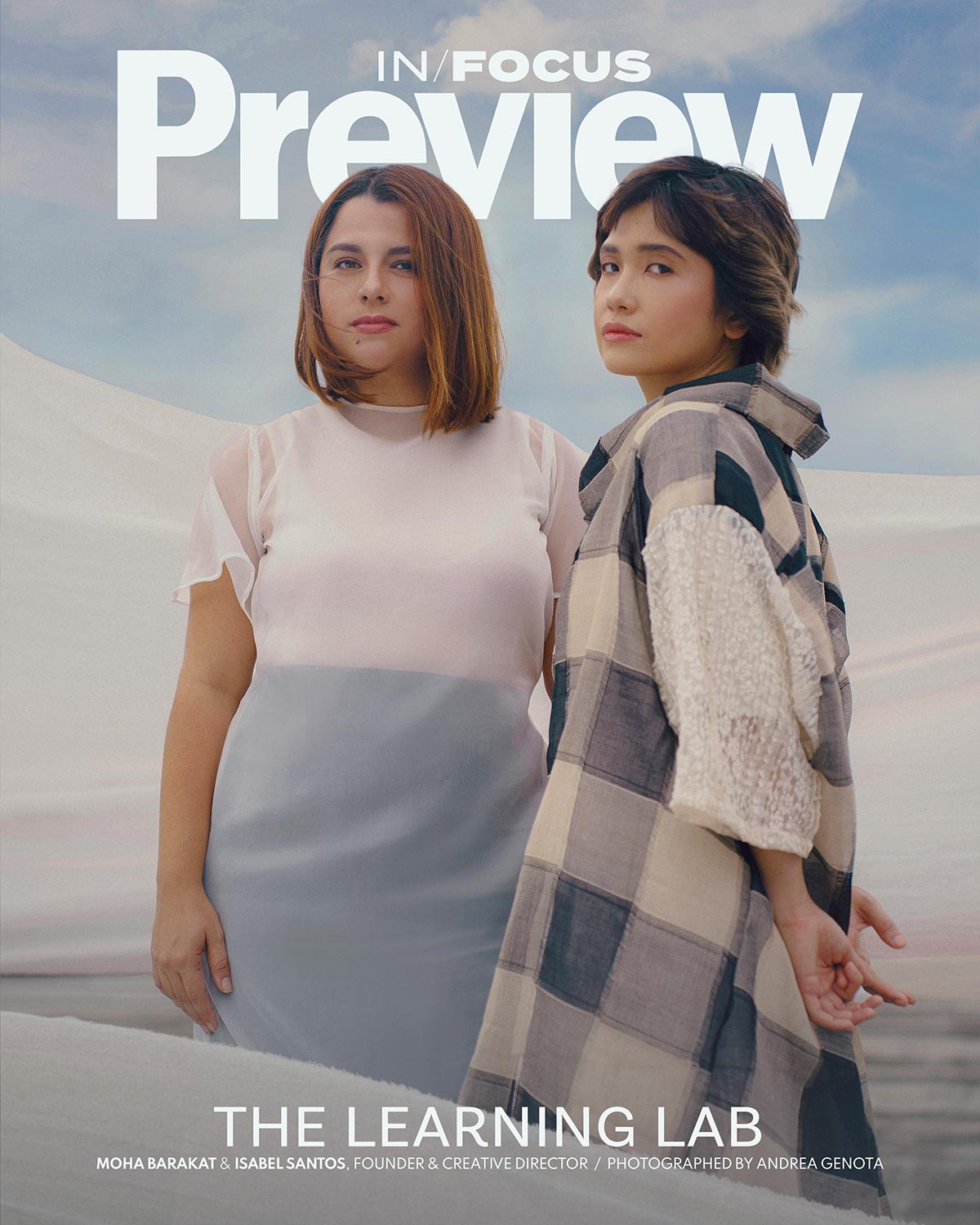
Moha Barakat and Isabel Santos of The Learning Lab
Andrea Genota
ADVERTISEMENT - CONTINUE READING BELOW
A common thread ties together the very core of Moha Barakat and Isabel Santos’ The Learning Lab: second chances.
At its most tangible are the material scraps, which find new life again with repurposed clothing. At its most human, however, is the older women who see opportunities anew, as it champions their livelihood through a needle and a thread.
But before this was woven into reality, the idea of their NGO first came together from Moha and Isabel’s joint interest in bringing their sartorial visions to life. The crux of the matter was the lack of tailors that were up to the task. “We were thinking, ‘Dami naman walang trabaho, how come kulang ng maha-hire?’” Moha recalled. “So we said, ‘What if magturo tayo?’”
Andrea Genota
CONTINUE READING BELOW
watch now
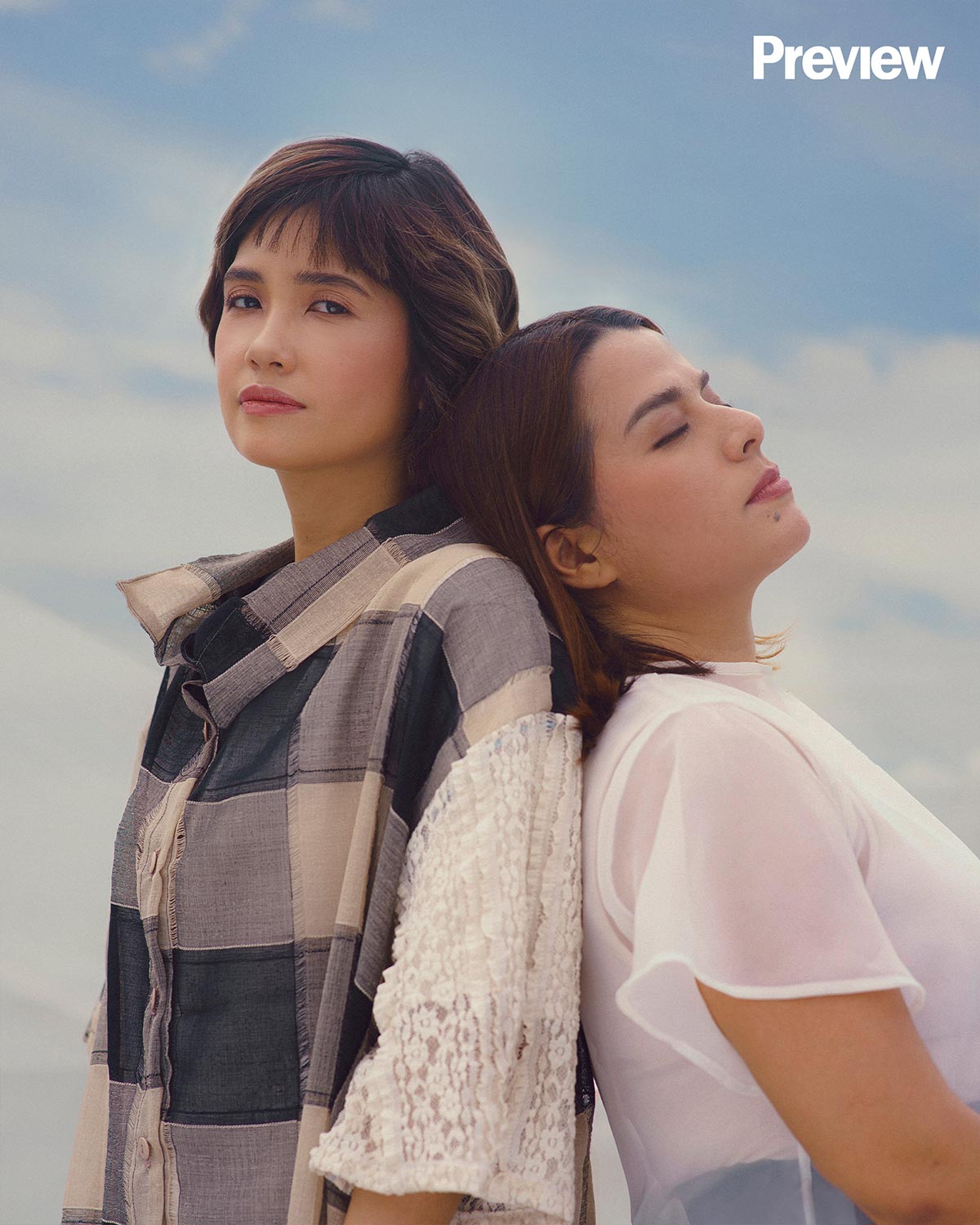
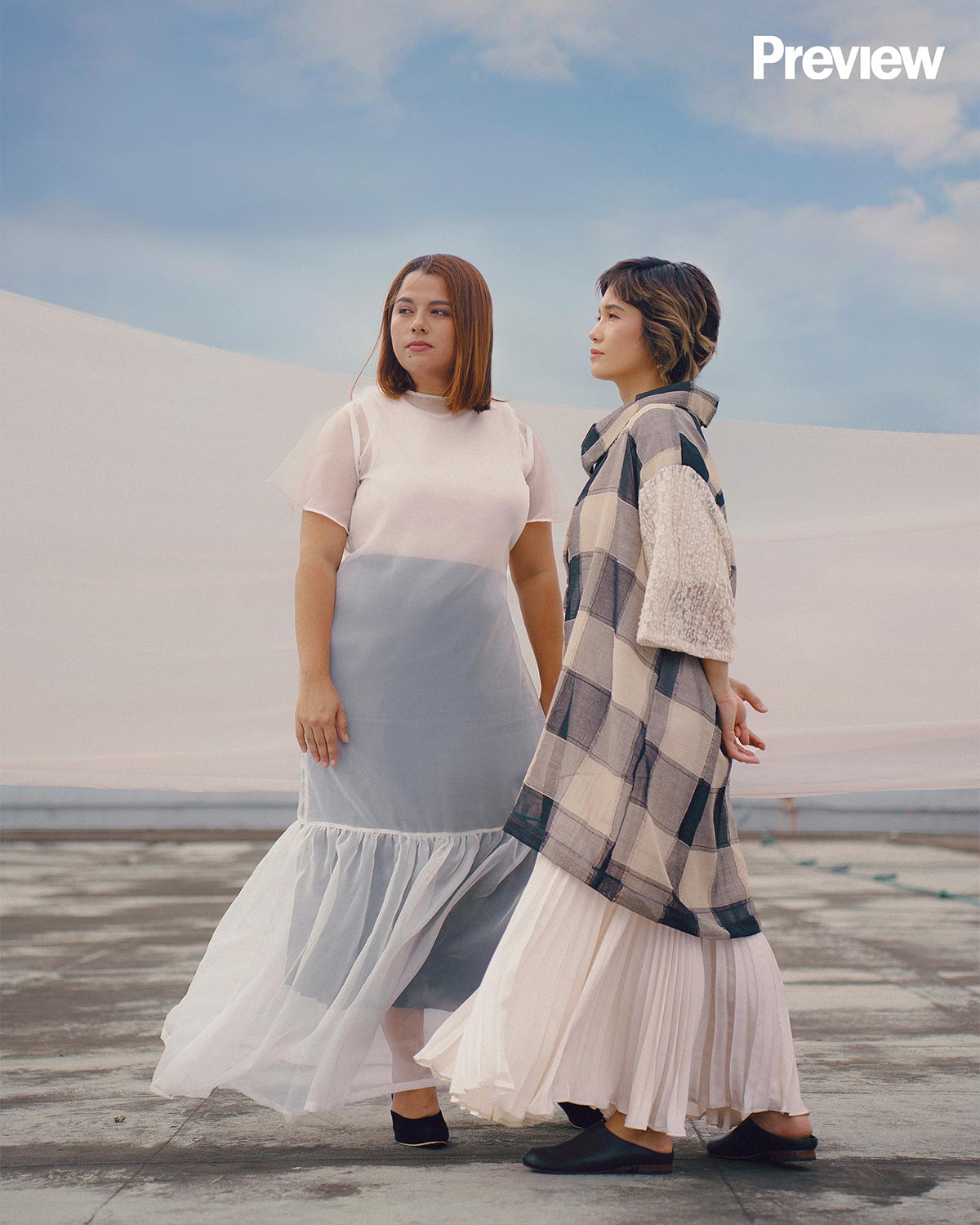
ON ISABEL: Pleated Skirt T-shirt Dress in Off-white, $135 (approximately P7,604), COS, cos.com. Checkered Oversized Piña Button Down, THE LEARNING LAB. ON MOHA: Boat Neck Tank Top in White, P2150, COS, zalora.com. Layered Pleated Mini Skirt in Black, approximately P3309, COS, cos.com. Sheer Piña Maxi Dress, THE LEARNING LAB.
Moha, backed by experience with her clothing shop Better Basics, had collaborated with AHA Learning Center, an older NGO that specialized in after-school programs to support students. Alongside the help of Better World Cubao which had 600 mothers in their care, The Learning Lab found its initial footing in handing nanays livelihood opportunities by teaching them how to sew. Isabel, as its creative director, oversees the initial looks that the mothers produce, which eventually become their new source of income.
But, more often than not, these nanays start from scratch. Ninety percent of the mothers begin their time in The Learning Lab with little to no know-how in sewing. Like their works, their seaming skills are molded by programs that take a page out of a fashion student’s syllabi. Guided by teachers from the University of the Philippines’ Clothing Tech, mothers are taught basic cutting, pattern-tracing, and mixing fabrics, which are often scraps donated by local designers and brands like Rajo Laurel, Martin Bautista, and Proudrace. Once they’ve successfully crafted their own piece, they can be sold–and at least 50 percent of earnings, if not a hundred, goes to them as creators.
ADVERTISEMENT - CONTINUE READING BELOW
There’s a poetic notion of second chances afforded to these fabrics and their seamstresses. While The Learning Lab is open to all women, nanays, often in their 50s and older, are prevalent in the roster for a reason.
Andrea Genota
“I like that idea that no matter what your age, meron ka pang life to live,” Isabel said. “I like ’yung stories about seniors and how they’re learning something new. Sometimes, hindi na sila nakikita [with what] they can do or contribute to the family. Pero ito, nakikita ko excitement nila na meron silang ginagawa.”
ADVERTISEMENT - CONTINUE READING BELOW
“When you help a nanay, you actually help an entire family,” Moha added.
And while Moha and Isabel may be instructing them with hands-on skills, these nanays have afforded them eye-opening perspectives on womanhood, which echo the conditions that Filipina women face. “It’s like having 12 new moms or lolas. When I’m there, I really talk about my struggles, and they’re openly sharing theirs,” Moha said, recalling stories of mothers who’ve experienced sexual abuse from their husbands and cases of adultery in 50-year-long marriages. Still, they note an unwavering, ever-present strength in these women.
“We make space for those who didn't have the opportunity early on. [There’s hope to] make it grow because we have the capacity to impact lives.”
“’Dun mo makikita ’yung real struggle of a woman, a mom, or a senior living in the Philippines,” Isabel reflected, to which Moha noted: “Whatever I’ve gone through, nothing is as difficult as what they’ve gone through.”
Now, 21 mothers are set to graduate from The Learning Lab’s second batch. Moha and Isabel hope to see 20 more women move up from their programs before the year ends, while their main goal is for each nanay to earn P8000 a month. “We have to keep coming up with projects, and hopefully have more partners. We make space for those who didn't have the opportunity early on,” Moha concluded. “[There’s hope to] make it grow because we have the capacity to impact lives.”
ADVERTISEMENT - CONTINUE READING BELOW
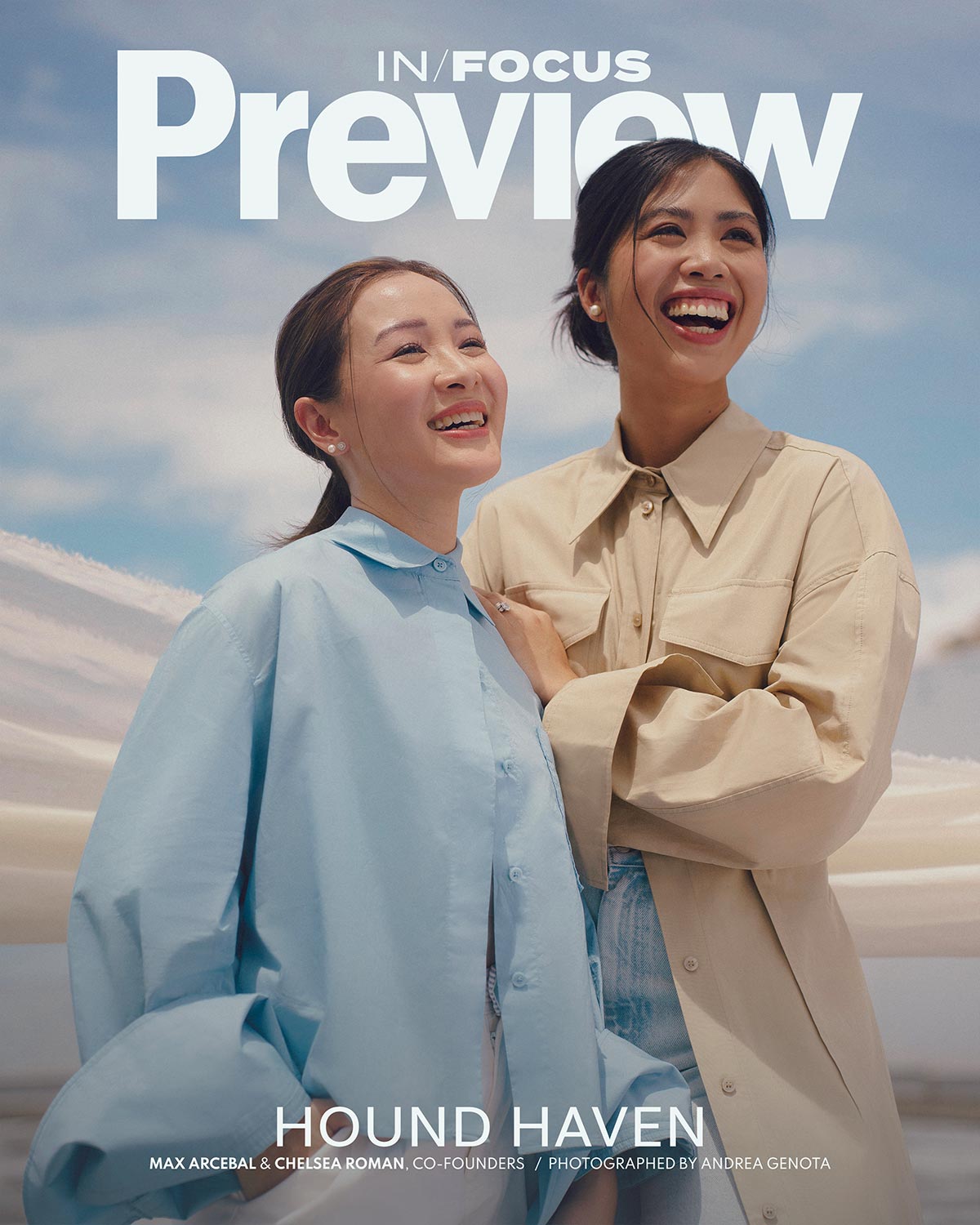
Max Arcebal and Chelsea Roman of Hound Haven
Andrea Genota
While the Philippines may have the Animal Welfare Act of 1998, its provisions seemed insufficient for the harsh realities that working and military dogs face, who are often neglected once their service has been completed.
Upon starting Hound Haven, Max Arcebal and Chelsea Roman faced this startling reality. For one, these working animals were merely tagged as property and equipment under the Commission on Audit (COA).
ADVERTISEMENT - CONTINUE READING BELOW
“Most of the government agencies, they don't have a lot of budget to take care of both working dogs and the retired ones,” Max explained. “You can't just give away company or organizational equipment without taking them out of the budget or liquidating them. But for us, the systemic error was still there. After that, we just kept making noise about the fact that they are tagged this way.”
In 2015, the two cousins launched their NGO catered to these neglected working dogs, the first of its kind in the Philippines to do so. Among their first partners included the Philippine Army, who had lent their ears to the then-23-year-olds and their burgeoning organization.
In retrospect, the collaboration between a male-dominated space and two young women’s compassion project seemed striking. The mere concept of starting an NGO wasn’t without pushback due to certain expectations for women, which, at the start, lingered over them like a cloud.
ADVERTISEMENT - CONTINUE READING BELOW

Andrea Genota
ON MAX: Blue Oversized Long-sleeve Shirt, P3185, COS, zalora.com. ON CHELSEA: Beige Cotton Shirt Dress, P3290, H&M Studios, hm.com. Straight High Fold-up Jeans in Light Denim Blue, P2690, H&M Studios, hm.com.
“When we first started Hound Haven, we were 23, two or three years out of college,” Max explained. “Although these comments were well-meaning, we were just getting a lot of advice from people. ‘You should get married first. You should have kids first. You should wait for your kids to grow up. And then when you have free time, set up a non-profit.’ There’s this preconceived ideal timeline of how women should be living their lives, and we didn't want to subscribe to a one-size-fits-all template.”
ADVERTISEMENT - CONTINUE READING BELOW
“Starting an NGO very early didn’t stop us from all the other things,” Chelsea said. “I don’t think women should feel that they have to follow this ‘ideal timeline.’ As long as the timeline makes sense to you, then you should just move forward.”
“We should embrace the femininity, the compassion, because that's how your purpose will shine. Compassion has always been something innate within [women], and that will help you serve your space.”
Now, Hound Haven, with a center based in Bulacan, has taken several working dogs under their wing, especially in the aftermath of COA’s circular stating that canines in the government must be retired by the age of eight. Many of them have faced both physical and psychological trauma, including animals deployed in a war-torn Marawi and canines injured mid-training. And like people in need of healthcare, each dog that enters Hound Haven’s doors undergo tailor-fit rehabilitation programs.
One case is Lotto, a Belgian Malinois whose leg had to be amputated after a training accident. “They had to amputate his left foreleg because he was training for the ASEAN Summit. And then he was asked by his handler to jump out of a moving truck,” Max recalled. “He had a limp for a few days. When the vet checked a few weeks later, they found out that the nerve had necrosis.”
ADVERTISEMENT - CONTINUE READING BELOW
The amputation and resulting unfamiliarity caused Lotto to experience “ghost leg” symptoms, which Hound Haven sought to rehabilitate with water therapy. For each dog, treatment begins with medical rehabilitation, followed by the behavioral aspect. Interaction and socialization then come into play, especially with those experiencing Post-traumatic Stress Disorder (PTSD).

Andrea Genota
ADVERTISEMENT - CONTINUE READING BELOW
At the core of it, compassion plays an integral part in operating an NGO such as Hound Haven, which, according to its co-founders, feels intrinsic to the experience of womanhood.
“It’s actually a strength because we’re exposed to heartbreaking scenes every day. You check your feed, and there’s this abused animal or someone neglected a pet,” Max said. “You need to have a certain mindset to be able to be in this industry and not just give up.”
“We should embrace the femininity, the compassion, because that’s how your purpose will shine,” Chelsea expressed. “It has always been something innate within us, and that will help you serve your space.”
Aside from the hopes of scaling their impact with new centers and opening international donations from big corporations, their biggest goal is still influencing legislation, growing beyond the Animal Welfare Act.
“Hopefully, we cover the systemic challenge for working dogs here in the country where they’re considered property, plant, and equipment, and where they don’t have the standard to get them to a family after years of service,” Chelsea said. “We started with a circular, and we hope to keep continuing the conversation.”
ADVERTISEMENT - CONTINUE READING BELOW
Reyna Valmores of Bahaghari

Andrea Genota
There’s a preconceived notion that the long-languished SOGIE Equality Bill (Sexual Orientation and Gender Identity Expression) caters solely to the members of the LGBTQ+ community, but those who champion it have refuted: Every single person, in fact, has a SOGIE.
For organizations like Bahaghari that spotlight this on a national stage, the connection between LGBTQ+ issues and other sectors in the Philippines has been a prime concern. “We operate with the understanding that people's issues are LGBTQ+ issues and LGBTQ+ issues are people’s issues,” chairperson Reyna Valmores explained.
ADVERTISEMENT - CONTINUE READING BELOW
The national alliance of LGBTQ+ organizations, chaired by Reyna, understands these intersectional needs that Filipino queer people face, especially with the diverse backgrounds found in the country. As a trans woman, Reyna herself has experienced discrimination, which has seeped even into the community.
“There are still those biases where if you say bakla, it means both a gay man and a trans woman in the Philippine context. But a lot of people also interpret it as a trans woman being the most extreme form of bakla, the most abominable,” she said. “So even within the community, there’s discrimination as well. It’s unfortunate, but it’s also something we’re trying to struggle against.”
And like most, her own experience as a trans woman has shaped her personal drive with the advocacy. As a child, Reyna recalls instances of her father striking her with a belt after displays of femininity. It’s an unfortunate fact that anecdotes like Reyna’s are not unique.
ADVERTISEMENT - CONTINUE READING BELOW

Andrea Genota
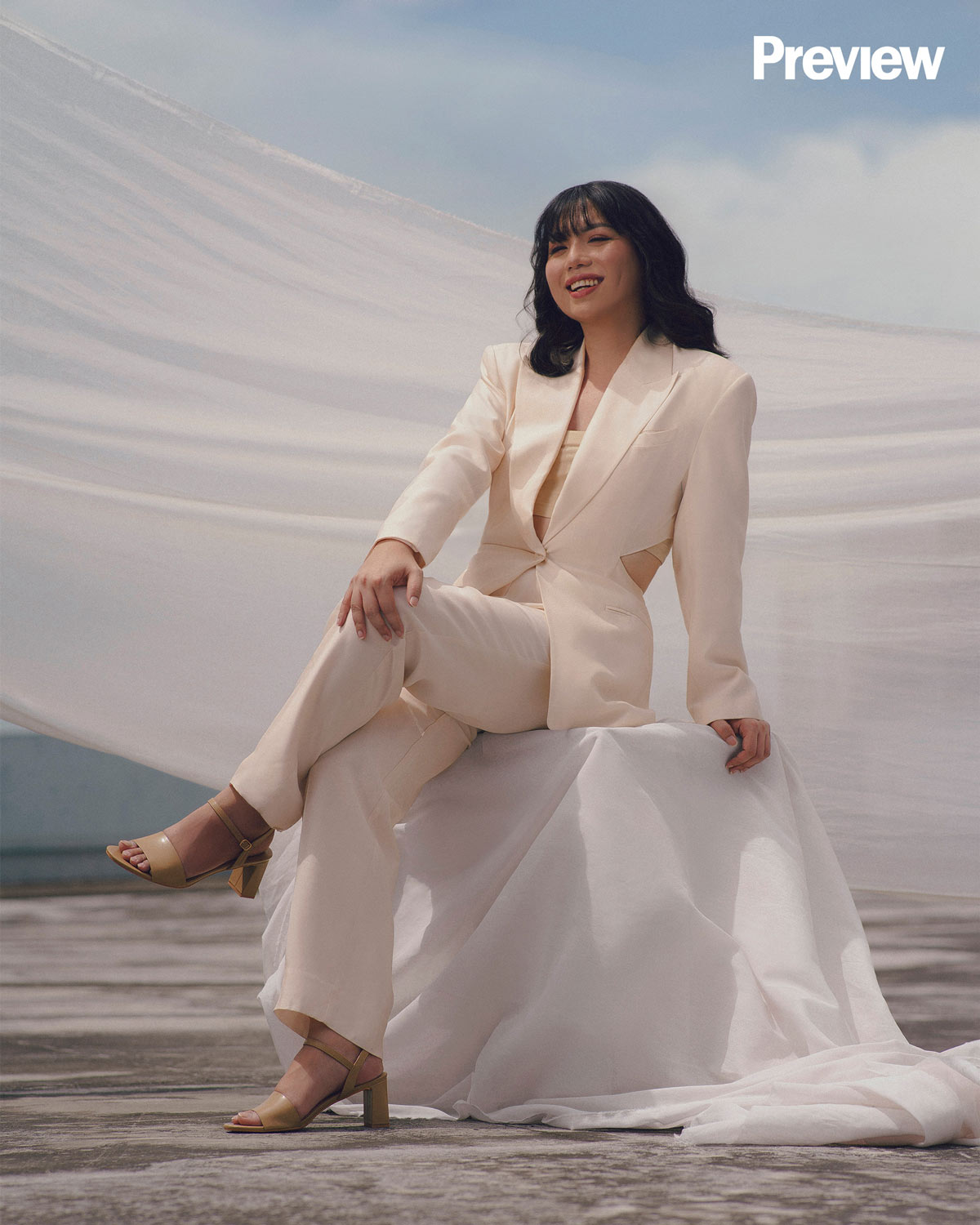
ON REYNA: White Cut-out Blazer, P7990, H&M Studios, hm.com.
Informed by her coming-out story and the experiences that echo throughout the LGBTQ+ community, Reyna found her platform in the organization after graduating from the University of the Philippines Diliman with a degree in molecular biology and biotechnology. “I was looking for a space not just where I could express myself, but also where I feel I could help make a difference for others.”
ADVERTISEMENT - CONTINUE READING BELOW
As a national alliance, Bahaghari organizes members of the LGBTQ+ community in schools, universities, workplaces, and other spaces in the Philippines. Much of it involves immersing themselves in actual reality far beyond an echo chamber. It’s during these moments when the intersection of issues becomes apparent.
“When Bahaghari went to urban poor communities to organize LGBTQ+ people, a lot of us were expecting that they’d say their problem is discrimination,” Reyna said. “But the first thing they actually keep saying is poverty, homelessness. ‘There's a demolition going on.’ ‘We’re about to lose our home.’ ‘We don't have stable jobs.’ I think it’s really telling how these national issues in the Philippines disproportionately affect LGBTQ+ people.”
One case is a transgender woman they met in Tondo, who, because of a lack of opportunities, entered construction work despite her hesitation. “She faces not only discrimination but also lower wages. It means that the issue of low wages is also an issue of the LGBTQ+.”
ADVERTISEMENT - CONTINUE READING BELOW
“We operate with the understanding that people's issues are LGBTQ+ issues, and LGBTQ+ issues are people's issues.”
Bahaghari is hyper-aware of the startling issues that trans women face, who, according to data, face an overwhelming number of hate crime cases. Their mobilization efforts start from schools, where microaggressions and major roadblocks can begin.
Among these efforts include campaigns in universities that have barred trans people from enrolling. “They’re being prevented from continuing their schooling unless they cut their hair. So we’re pursuing a campaign now to mobilize all of the transgender women into resisting this kind of policy,” Reyna said. “They are young people, young transgender people, and they have the right to education.”
Significant leaps, however, are being made each day. In 2022, transgender students from a university in Capiz were reportedly blocked from enrollment due to the length of their hair. According to Reyna, Bahaghari reached out to its LGBTQ+ students, snowballing to its administration that implemented a change in its handbook.
Andrea Genota
ADVERTISEMENT - CONTINUE READING BELOW
ON REYNA: Archival White Trousers, H&M Studios.
Reyna saw improvements in the littlest ways, too, from the very places Bahaghari visited, including a visit to a barangay in Quezon City.
“When I first went there, I would hear people snickering and making jokes that ‘there are gay people,’” she recalled. “If I just chose to cancel this, nothing would have happened. But we decided to stay on. We decided to keep fostering relations with people, whether they're LGBTQ+ or not.”
The result over time was changes in perspectives for those outside the queer community, which is how advocacies grow. “Eventually, after several months of us trying to talk about their issues and making them feel that they’re not alone, those very people who used to laugh about gay people were [the ones who asked for stickers that say] ‘This is a safe space for LGBT,’” she said.
ADVERTISEMENT - CONTINUE READING BELOW
“It really affirmed the fact that people are capable of changing whatever backward views they’ve come to learn growing up,” Reyna reflected. “All of us could be advocates for each other's battles.”
For Bahaghari, it’s these small positivities that deliver impactful progress to the bigger picture. These communities and the members behind them have been chipping away at conceptions of the past. And while there’s still a long way to go, these changes speak to a power amplifying every day.
“Bahaghari as an organization, alongside many other LGBTQ+ advocacy organizations, is a testament to the fact that LGBTQ+ persons are capable of so much more,” Reyna said.
“We’re capable of being part of national conversations that dictate the future of the Filipino people.”
Phoebe Fructuoso of PAVE Philippines

Andrea Genota
ADVERTISEMENT - CONTINUE READING BELOW
Content warning: The story below contains discussions of rape and sexual assault.
A viral video became the subject of discussion where Phoebe Fructuoso, the chairperson of PAVE Philippines, recounted her rape at 18 years old, a harrowing act done by her once-trusted schoolmates. The aftermath had left her stunned, and it wasn’t until two weeks later that she revealed to her family what had happened. It would soon lead to an eight-year court case that resulted in the incarceration of one out of four perpetrators.
The video’s viewers had their share of varied thoughts. “The people in the comments section would be fighting each other,” Phoebe described. “‘Paano mo maa-avoid ’yun?’ ‘Huwag ka na lang lumabas.’ ‘Babae ka, dapat hindi ikaw umiinom.’ ‘Kaya hindi ko pinapayagan ’yung mga anak ko.’”
Amid responses influenced by a traditional victim-blaming mindset, some have sparked conversations on rape culture, which, Phoebe said, we’re seemingly “educating each other.”
ADVERTISEMENT - CONTINUE READING BELOW
At a larger scale, her organization PAVE–which stands for Promoting Awareness and Victor’s Empowerment–seeks to crack these notions brought about by rape culture, educating on the reality of sexual violence and empowering its survivors who are often silenced by stigma.
Andrea Genota
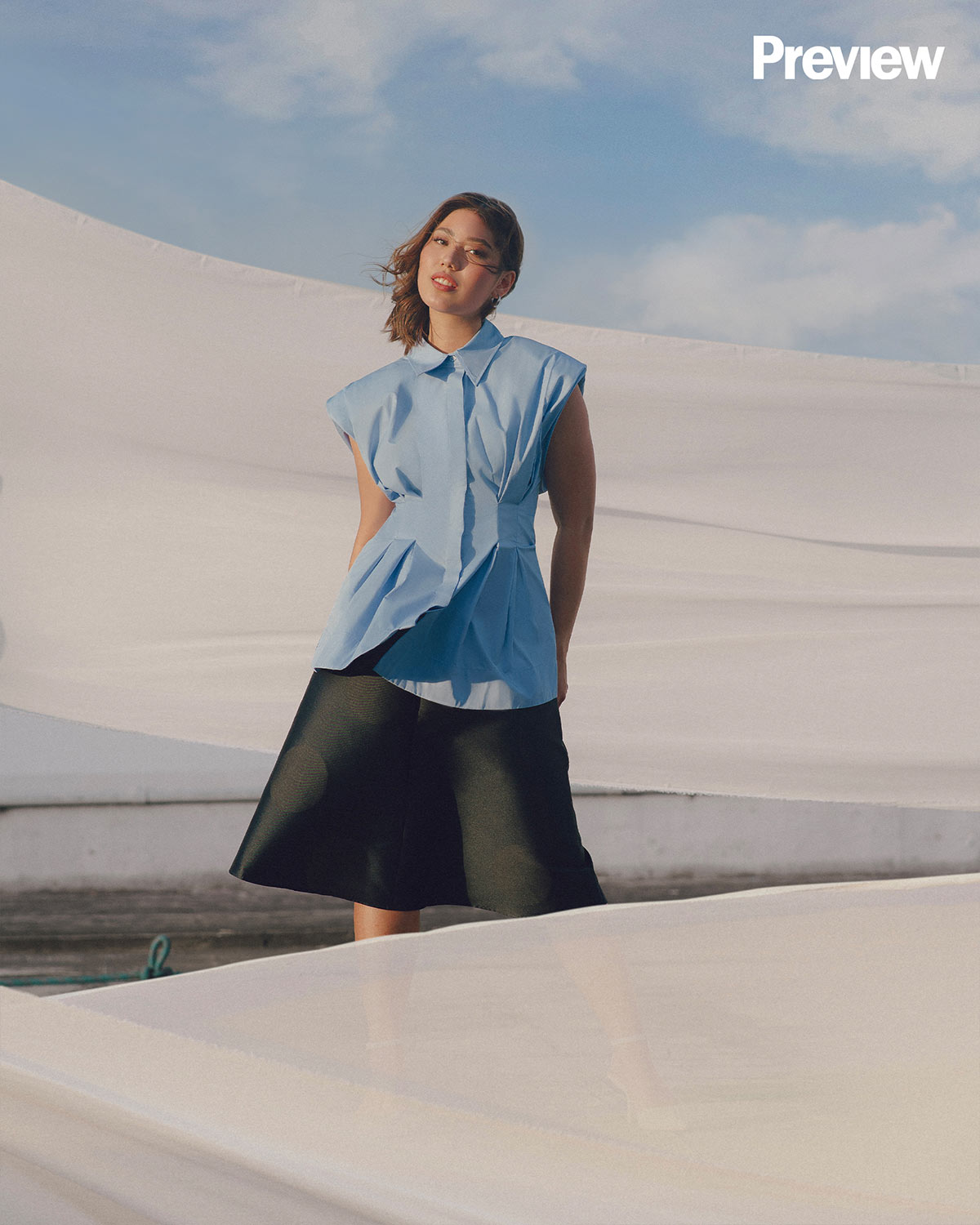
ON PHOEBE: Waisted Cotton Blouse in Light Blue, P2290, H&M, hm.com. Polka-dot Taffeta Midi Skirt in Black, approximately P12,675, COS, cos.com.
ADVERTISEMENT - CONTINUE READING BELOW
The idea of starting an NGO, however, wasn’t an instant thought, but one that simmered slowly and later confirmed by her faith. “I started PAVE because I realized it from a church sermon,” Phoebe recounted. “The pastor left us with a question: ‘How often did you know people were suffering and you didn't do anything to help?’ To relate it to my life, I have been silent. I haven’t been sharing my testimony on the same scale that I am doing now since I won my case.”
As Phoebe called it, the “light-bulb moment” had coalesced into a series of confirmations that felt like glaring signs. First was a dream, vivid in detail with a trail of blood flowing down her leg, which was later followed by calls in less than 24 hours from survivors who sought her help.
“I looked to the right and I was crying,” Phoebe said, as she described a significant moment with her friends. “I was telling them I want to start an NGO. This is what they need to rebuild their lives, to equip them to fight the battle.”
ADVERTISEMENT - CONTINUE READING BELOW
“I don't have shame in sharing my story because that is my advocacy, and I really do believe that the shame shouldn't be on the victim.”
With her occupation in the influencer marketing industry, Phoebe began with self-defense classes with content creators, with some later approaching her to say that they, too, had experienced sexual assault. In 2022, statistics say that 22 rape cases are reported in a day in the Philippines, and with the possibility of unreported cases, it isn’t a far-fetched consideration that one person is raped every hour.
With the alarming data, at the center of PAVE’s cause is providing mental, legal, and health counseling to survivors. Mental health awareness is a crucial part of it, given Phoebe’s own experience. “For me, the trauma of my relationship with my mother and how the people reacted to me getting raped was so much worse than the actual rape,” she said. “And I've talked to some survivors who can say the same.”
It’s a taxing undertaking to continuously recount a traumatic event before a judge, and more often than not, the justice system can take a toll on a survivor’s mental health. But after the court, Phoebe had viewed revisiting her story as something integral to her cause.
ADVERTISEMENT - CONTINUE READING BELOW
“When you’re raped, you feel dirty. When you’re abused, you feel dirty. Now, I see it as a story to tell,” she said. “I don't have shame in sharing my story because that is my advocacy, and I really do believe that the shame shouldn’t be on the victim.”

Andrea Genota
ADVERTISEMENT - CONTINUE READING BELOW
And with each story is a ripple effect felt through her fellow survivors. Among them are those who’ve spoken up in her podcast about their own experiences, fueling PAVE’s purpose of growing survivor advocates. “It wasn't until they heard my testimony and my thoughts about it that they realized they wanted to speak,” Phoebe said. “One of our survivors said, ‘You're starting a revolution, what does it feel like?’ And it means so much to me that they’re there behind me.”
The cause is tied to the women who’ve survived, but the effort to end rape culture and educate should also further its reach to men. “Our solution is education and teaching children consent. Our message shouldn’t be how girls should not get raped, but teach boys not to rape,” Phoebe explained. “I want to send out a message that we need men to play their part to support women.”
ADVERTISEMENT - CONTINUE READING BELOW
There’s more work to be done to eradicate rape culture. In PAVE’s list of aspirations are clinics catered to sexual assault survivors and applications used to report cases. Throughout it, at its foundations is the support of a community, strengthened by a sisterhood that hopes to go beyond. Putting an end to a culture is a collective effort, after all.
Atty. Leni Robredo of Angat Buhay

Andrea Genota
ADVERTISEMENT - CONTINUE READING BELOW
Since its transition from the Office of the Vice President to a non-government organization, Former Vice President Atty. Leni Robredo finds that certain aspects have been easier for Angat Buhay.
While its rebirth as an NGO provided a smaller scale compared to that of its governmental past, volunteerism has given it a wide-reaching expanse, making mobilizing to marginalized communities a quicker possibility.
Above all, bayanihan still runs at the core of Angat Buhay. Growing out of their initial idea of creating chapters, the NGO opted for a more “progressive governance” where volunteers identify the programs they hope to do and implement them, with Angat Buhay monitoring and assisting in finding funds.
For Angat Buhay’s first anniversary, several partners took part in “developmental speed dating,” where groups present the problems of a community and project proposals. The result, in its abstract sense, is an empowering view of ownership with their causes. “The worst thing that can happen is I’m the center of gravity. I think that’s not an empowering model,” Atty. Leni said. “We want the spirit of bayanihan to be at the center.”
ADVERTISEMENT - CONTINUE READING BELOW
Andrea Genota
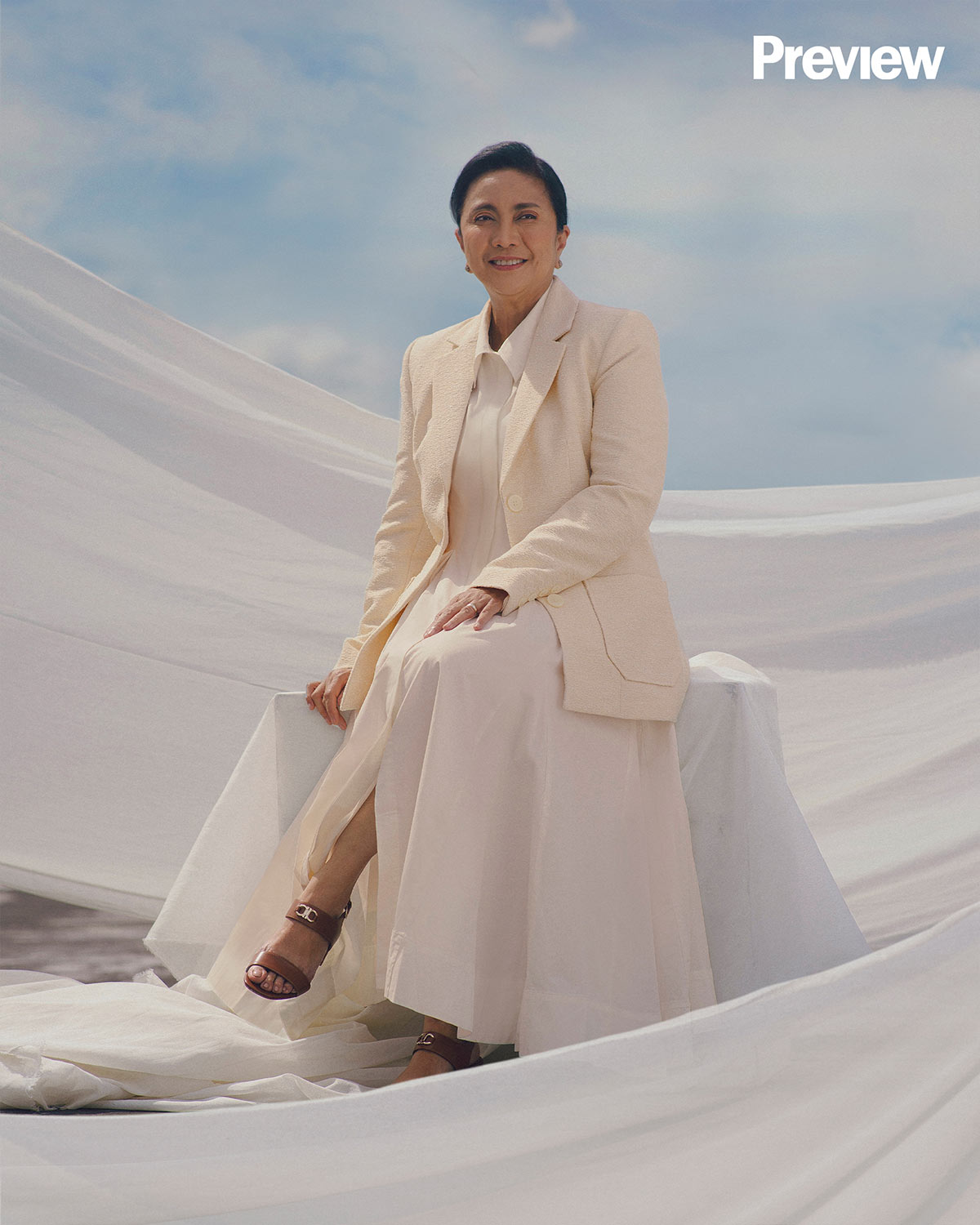
ON ATTY. LENI: White Waisted Shirt Dress, P3290, H&M, hm.com. Cream Textured Blazer, approximately P5854, H&M Studios, hm.com.
As part of its hands-on community efforts, Angat Buhay looks into data, correlations, and potential solutions. Drastic dropout rates in communities can be related to the distances children walk to and from school, with some students walking three to four hours to get to campus. One solution, as they concluded, was building dormitories. When Angat Buhay became an NGO, the program expanded to state colleges and universities, including those in the province of Quezon and south of Visayas.
ADVERTISEMENT - CONTINUE READING BELOW
To pinpoint the problem, its volunteers have to see it for themselves. “The only way you can develop empathy is if you immerse yourself in the communities. It’s where you understand what they need. Maraming gustong tumulong pero hindi naman naiintindihan kung ano ’yung pangangailangan,” Atty. Leni expressed. “Empathy is a spiritual muscle na pag nabuksan 'yung mata mo to the realities, hindi na muling pipikit pa.”
Empathy is one of the key insights Atty. Leni has learned during her time as vice president. Second is her perspective on limitations, which, to her, are opportunities in the guise of hindrances. “Most of the opportunities we were able to maximize were limitations at first,” she said.
“Our culture has always dictated that [women] are best suited for supporting roles. But if you trust in your abilities and power, malaking headway ito for a fulfilling leadership.”
The matter of limitations has already shrouded women in a patriarchal society, but female leaders like Atty. Leni have often been dubbed as the ones breaking the glass ceiling. However, it’s a fact that the road above it can be paved with gender bias, especially for a woman in high office under scrutiny.
ADVERTISEMENT - CONTINUE READING BELOW
“I’ve gone through a lot of discrimination because I’m a woman,” the former vice president said. “But I did not allow it to get in the way of the things I wanted to do. In the work that we do, we can’t afford to be less energized because we are being discriminated against.”
Atty. Leni doesn’t take these biases personally, she expressed. But while she may consider them a product of society, it doesn’t mean that she merely takes these issues in stride. “It’s a reality that you don’t just accept. It's a reality that you try to go beyond the limitation,” she said. “When I would be at the receiving end of misogynistic remarks, I issue a public statement that it is unacceptable. It’s a fact of life, pero it is a reminder that we don’t take things sitting down.”
ADVERTISEMENT - CONTINUE READING BELOW
Andrea Genota
Such matters have come to shape the ideals of Angat Buhay, who have instituted programs like Angat Bayi with the University of the Philippines Gender Studies to train burgeoning women leaders. Aside from financial empowerment, these women are taught to craft policies that cater to empowering their gender. Outside of the political arena, women leaders in NGOs remain as vital as ever with non-profit work requiring unique attention to detail, which women can often possess.
ADVERTISEMENT - CONTINUE READING BELOW
Abilities like these can be left untapped, and in the case of Atty. Leni, it was one that she had to discover as a necessity, following the death of her husband, former Department of the Interior and Local Government (DILG) Secretary Jesse Robredo.
“I was content with just supporting my husband,” she said. “But because of the plane crash that took his life, I was left with no choice but to step up. It was difficult for me dahil ’yung mindset ko laging ‘I am not good enough.’ I had to learn it the hard way.”
To make strides as a leader and to helm an NGO and further an advocacy, a woman must know her own worth, power, and abilities–even if society may attempt to persuade otherwise. Take it from Atty. Leni herself.
“We’re better off now compared to before, but it still leaves a lot to be desired. Our culture has always dictated that [women] are best suited for supporting roles. But if you trust in your abilities and power,” she said, “malaking headway ito for a fulfilling leadership.”
ADVERTISEMENT - CONTINUE READING BELOW
Produced and Styled by The Preview Team
Photographer: Andrea Genota, assisted by Kevin Gonzalez and Joey Alvero
Creative Director: Bacs Arcebal
Editor-in-Chief: Marj Ramos-Clemente
Production: Katrina Maisie Cabral, co-produced by Em Enriquez
Fashion: Reg Rodriguez and Paulina Singh
Makeup: Team Muriel Vega Perez for Max, Chelsea, Moha, Isabel, Phoebe, and Reyna; Rona Resñgit for Atty. Leni
Hairstyling: Team Muriel Vega Perez
Story: Katrina Maisie Cabral
Videos and Art Direction: Jana Jodloman
Social Media: Jamie Lou Briones
Hey, Preview readers! Follow us on Facebook, Instagram, YouTube, Tiktok, and Twitter to stay up to speed on all things trendy and creative. We’ll curate the most stylish feed for you!