
Did you know? Only one venue was constructed especially for the Paris 2024 Olympics in an effort to reduce costs and manage carbon footprint: the good-for-6000-pax, multi-sport Aquatics Centre. The Paris 2024 Olympic Committee made sure all other arenas and sporting venues were either already existing sporting stadiums—the Bercy Arena, Parc des Princes, and the Roland-Garros Stadium—or temporary structures that can be dismantled after the games.
Needless to say, it wasn't just the competition that made our hearts race. The City of Lights' breathtaking architecture and iconic monuments also won over Olympic fans, as we caught glimpses of the city while we cheered on our athletes. And who can blame us? These sporting venues are IG-worthy tourist spots in its own right! Ahead, we list down the famous Paris landmarks used in the Summer Olympics 2024 that you should add to your France itinerary, stat!
LIST: Famous Paris Landmarks Used as Sports Venues for Summer Olympics 2024
Château de Versailles (Palace of Versailles)
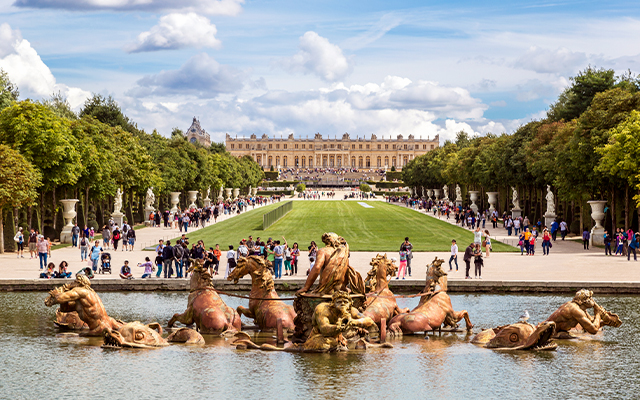
Sporting events: Equestrian, Modern Pentathlon
Why it's famous: This UNESCO World Heritage Site was a former residence and epicenter of French royalty. Initially built as a hunting lodge and private retreat, the Château de Versailles was the principal residence of French kings from King Louis XIV to Louis XVI.
Today, the palace is a museum and is visited by tourists from all over the world to gain insight into the lives of French nobility and the various events that shaped the history of France. It is home to many sculptures and paintings dating from the 16th to the 19th centuries.
Aside from the main structure, the Gardens of the Palace of Versailles are also well regarded. They were planned by André Le Nôtre, one of French history's most influential and famous landscape architects. The gardens have several terraces, ornamental basins, statues, and a grand avenue ending at the Fountain of Apollo.
Champ de Mars + Eiffel Tower Stadium (The Eiffel Tower Grounds)
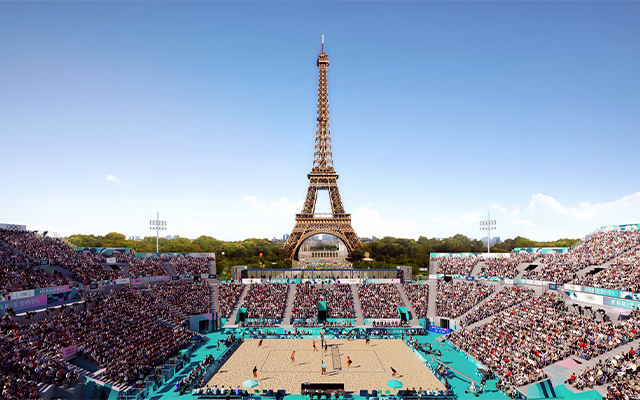
Sporting events: Judo, Wrestling, Beach Volleyball
Why it's famous: The Champ de Mars is one of Paris' most famous public gardens. It is a large open greenspace in the heart of Paris' seventh arrondissement, often used as a meeting point, a picnic venue, or a place to stroll in the afternoon. But more importantly, the Champ de Mars has also seen its fair share of key moments in French history, such as the 1791 Champ de Mars Massacre and the Paris Exposition in 1867, 1878, and 1889.
For the Paris 2024 Olympics, temporary structures such as the Eiffel Tower Stadium for beach volleyball and the Champ de Mars Arena for Judo and Wrestling have been erected to host sporting events. The Champ de Mars Arena will also host competitions for the Paralympic Games.
The River Seine
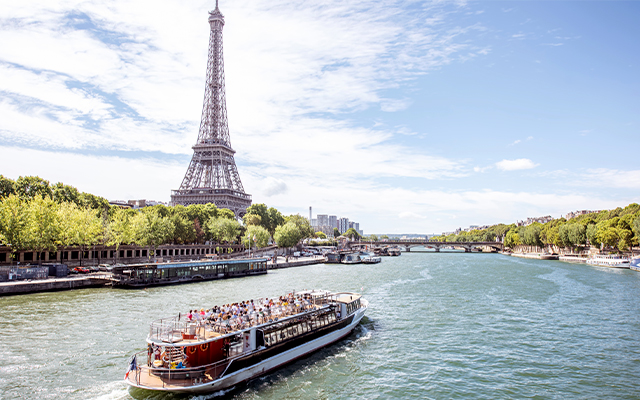
Sporting events: Opening Ceremony Parade
Why it's famous: One of the most famous waterways worldwide is the River Seine (more commonly called The Seine), which cuts across Paris and the cities of Troyes and Rouen. It is the second-longest river in France and is responsible for half of the water used around Paris and three-fourths between Rouen and Le Havre. Many electric power stations, both thermal and nuclear, draw their cooling water from the river.
The Paris 2024 Olympics Opening Ceremony took place here, marking the first time the event is being held outside a stadium. During the ceremony, boats carrying 10,500 athletes through the city replaced The Parade of Nations, a march of national delegations typically held at the main host stadium.
Pont Alexandre III
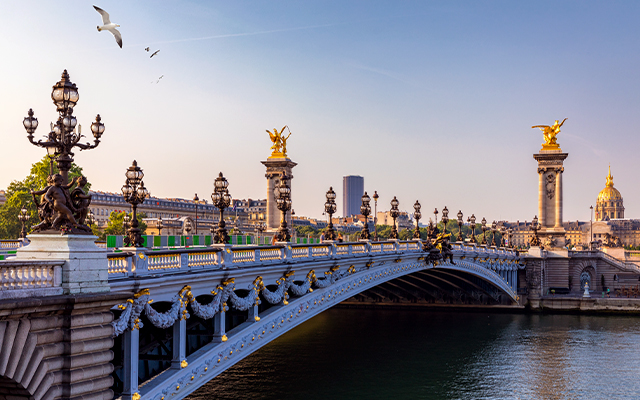
Sporting events: Marathon Swimming, Triathlon, Portion of Road Cycling
Why it's famous: Pont Alexandre III is an ornate and opulent arch bridge connecting the Champs-Elysées, the Invalides and the Eiffel Tower. It was inaugurated during the Paris Universal Exhibition of 1900 and designed to symbolize peace between France and Russia. Fun fact: despite only being inaugurated in 1900, Tsar Nicholas II of Russia laid the bridge's foundation stone in person in 1896.
The bridge is also a fixture in pop culture, making marked appearances in movies such as Anastacia, A View to a Kill, Midnight in Paris, and many more.
Adding to its historical significance, Pont Alexandre III is the site of many open-water swimming events for the Paris 2024 Olympics, marking the first time in over 101 years that swimming in the Seine will be allowed.
Trocadero
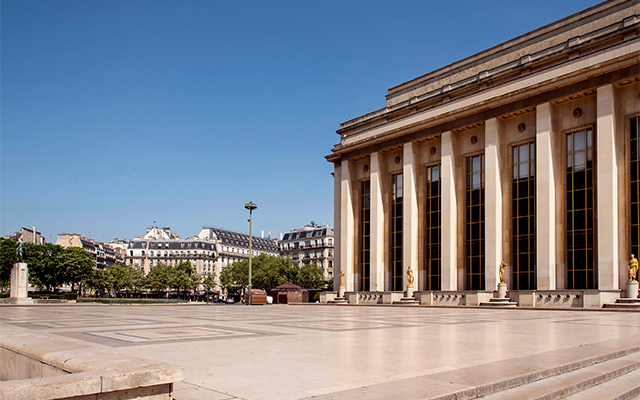
Sporting events: Athletics, Portion of Road Cycling
Why it's famous: The Trocadero and the Eiffel Tower face one another, creating one of the most picturesque landscapes in the world. The Trocadero is home to many lush and splendid gardens, ornamental ponds, and fountains but for many tourists, the Trocadero is arguably one of the best places in all of Paris to view the Eiffel Tower.
The Grand Palais
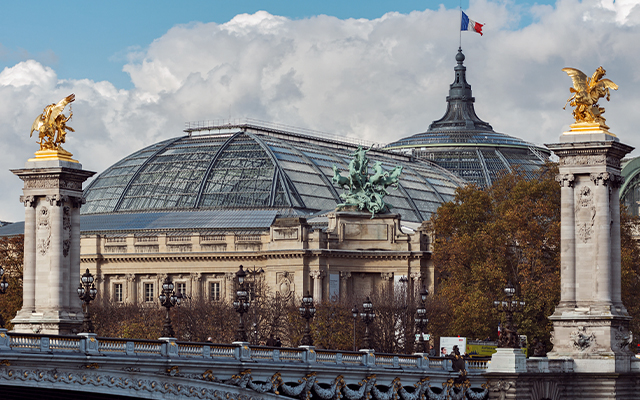
Sporting events: Fencing, Taekwondo
Why it's famous: The Grand Palais is one of Paris' most beautiful buildings. This structure, originally built for the Paris Universal Exhibition in 1900, is famous for its large glass dome flanked by the French flag and its nave, built with over 6,000 tons of steel. In more modern times, the Grand Palais is often used as an exhibition hall and museum complex for housing arts and culture events.
Prior to the Paris 2024 Olympics, the Grand Palais was closed for its first major renovation and full restoration. It has reopened specifically in time to host the biggest global sporting event-and the Paralympic Games-and will fully reopen to the public in Spring 2025.
Place de la Concorde
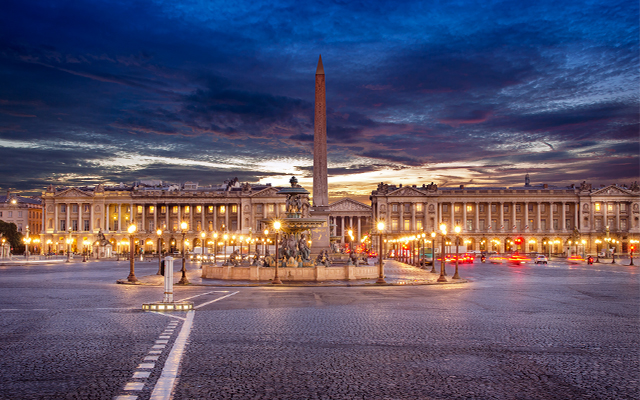
Sporting events: 3x3 Basketball, Breaking, Cycling BMX Freestyle, Skateboarding
Why it's famous: Place de la Concorde is one of the major public squares in Paris. Sprawled over 7 hectares, the plaza is home to ornate fountains, stunning sculptures, and a towering ancient Egyptian obelisk. It was constructed in honor of King Louis XV in 1772. But more than being a sightseeing attraction, the Place de la Concorde is most known for its ties to the French Revolution. Beneath the plaza's beauty lies grim tales of executions. Revolutionists erected here a guillotine that cut off thousands of heads. Louis XVI and his wife, Marie Antoinette, were some of the more notable figures who met their demise in this plaza.
Esplanade des Invalides
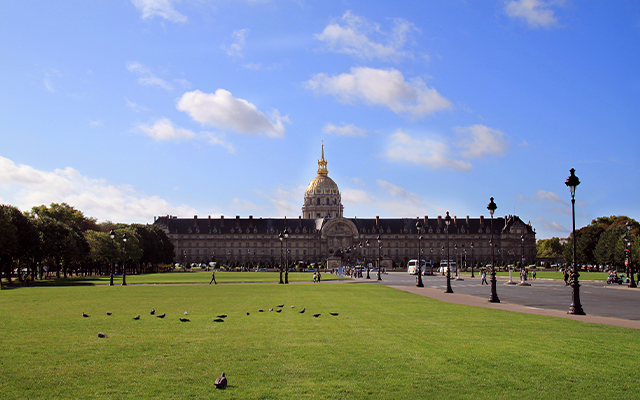
Sporting events: Archery, Athletics, Portion of Road Cycling
Why it's famous: The Esplanade des Invalides is the garden of one of Paris' most beautiful monuments, the Hôtel des Invalides. Here, many Parisians and tourists can partake in a variety of leisurely activities like playing sports, listening to live music, and taking a casual stroll.
The Esplanade is a vast green space opposite the Hôtel des Invalides, a former military hospital and retirement home for war veterans. Today, this building is famous for housing the French military history museum and the tomb of Napolean Bonaparte.
Hôtel de Ville (Paris City Hall)
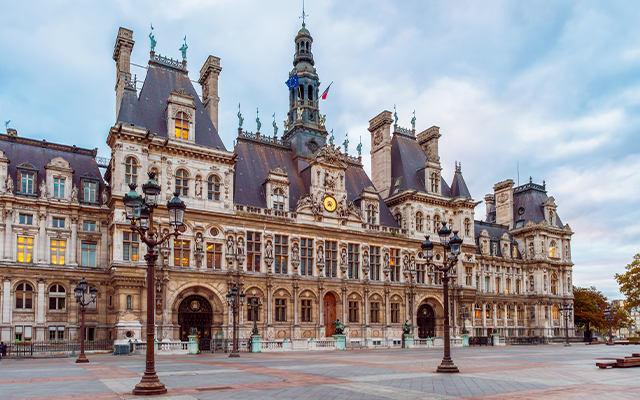
Sporting events: Athletics, Starting Point of the Marathon
Why it's famous: The Hôtel de Ville and its adjacent public square are known today as the home of the local government of Paris. Seeing as this is Paris, a city known for its ornate buildings and famous facades, the building housing its seat of power is as grand as you would expect it to be. With an imposing facade that stretches 143 meters across and towers at 18.80 meters high, it is regarded as the largest municipal building in Europe.
Few people know that this neo-renaissance Hôtel is actually a reconstruction of the original 16th-century building. In 1871, protesters against France's surrender in the Franco-Prussian war set fire to the structure, leaving nothing but the Hôtel de Ville's shell behind. Architects Théodore Ballu and Édouard Deperthes worked to incorporate the original surviving stone facade and recreate the original look of the exterior. They also rebuilt the interior to represent the luxe style of the 19th century.
Aside from these famous landmarks that will exclusively host games for the duration of the Olympics, you might also spot other sites such as the Hill of Montmartre, The Louvre, and Elancourt Hill in fleeting moments as portions of the marathon and cycling events will also pass through these landmarks.
For more information, visit the Paris 2024 Olympics' website.
Hey, Preview readers! Follow us on Facebook, Instagram, YouTube, Tiktok, and Twitter to stay up to speed on all things trendy and creative. We’ll curate the most stylish feed for you!
