
When Ruth Handler brought Barbie to life in 1959, she had the intention of letting little girls know that they can be anything. The swimsuit-clad figurine borrowed its name from Ruth’s daughter, Barbara, who was stuck playing with baby dolls at the time. The idea was to create something that could match up to—or possibly surpass—the toy firefighters and superheroes that boys had at their disposal.
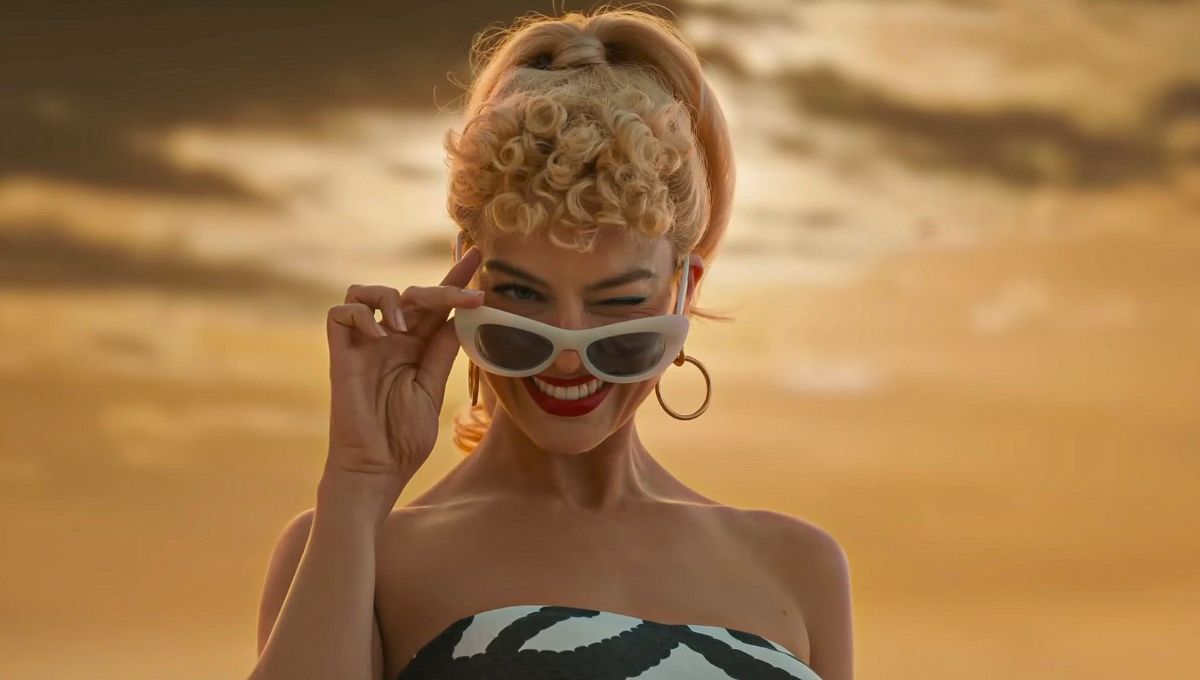
Ruth herself didn’t look anything like Barbie. So when criticisms arose about how the doll leaned into conventional standards on beauty, Mattel, under her leadership, seeked to shift Barbie’s image from just being another pretty girl. She became a career woman, taking on jobs in various fields and making a living for herself. Alongside the gingham dresses and pink stilettos, she also began to don doctor’s coats, spacesuits, and when the occasion called for it, mermaid tails. Before ladies “in the real world” could open their own bank accounts, Barbie was already purchasing real estate. She built her Dreamhouse all by herself, brick by brick.
Nowadays, the iconic doll aims to represent ladies of different professions and diverse ethnicities. Barbie has become all these women, and in turn, all these women have become Barbie. And truth be told, I’ve always wanted to become Barbie, too.
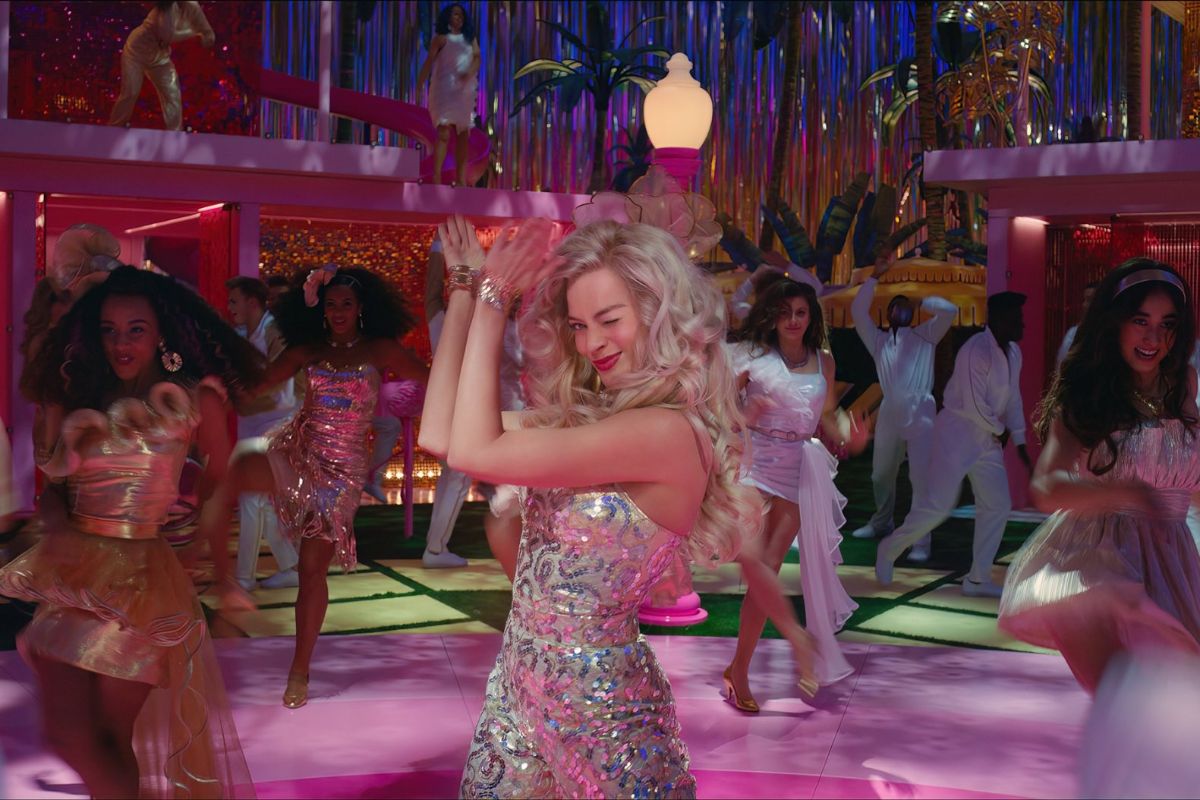
A lot of queer men like myself grew up not having any significant memories of her since she was a “girl’s toy.” On playdates with my female cousins or friends, there would be small instances where I would get to brush her hair or click on her heels. When an adult would be approaching, I’d hurriedly drop the doll and turn away like I never even looked at it.
Instead, as I wrestled with my self-identity growing up, there were many times I forced myself to be a Ken. I tried to be Basketball Player Ken when I transferred to Ateneo since my parents desired for me to be on the school team. That didn’t work out. I pretended to be Emo Ken so I could fit in with my classmates who listened to Fall Out Boy, and not Lady Gaga. That didn’t work out. I even became Bearded Ken when I told my peers I had an insatiable crush on a girl from a neighboring school. That, needless to say, did not work out as well.
I guess you could say that my coming out was when I finally stepped out of the box. It was liberation, but every rose that blooms also grows thorns. There were people I wasn’t ready to reveal my true self to, so I still had to act like a Ken (albeit not effectively) in front of them. There were others who made me feel a certain pressure to act or look a certain way so I can validate being a Barbie. This in-between was so tricky to navigate and many times, I felt like I didn’t belong to either camp.
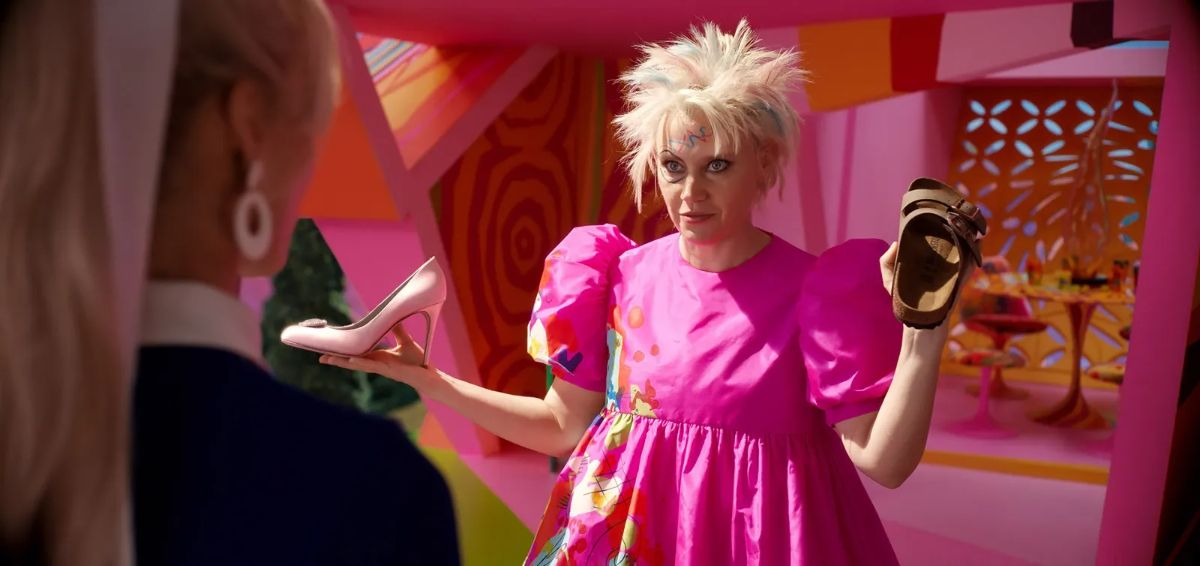
There’s a pivotal scene in Greta Gerwig’s Barbie (2023) where America Ferrera, playing the ordinary human mom Gloria, spits out a moving monologue about the struggles of being a woman in the world today. Without missing a beat, she enumerated the numerous double standards ladies are faced with when it comes to their appearances, their careers, and the very way they breathe. The cinema I was in was filled with nodding heads and affirming snaps when the speech concluded. In my seat, I felt so seen, and yet, a dissonance loomed over me.
I’m a person who is favored by those double standards. Who knows what opportunities landed on my lap simply because I identified as a cisgender male? Who knows how much discriminatory behavior I was “exempted” from because I “passed” as a straight man? When the central Ken, portrayed by Ryan Gosling, visits the human world, he’s overwhelmed with the amount of privilege he has as a man. It was something he was so pleasantly overcome with that he just had to bring it back with him to Barbieland. It’s a man’s, man’s, man’s world, and I reep what it sows.

Recently, I came to terms with the fact that I’m non-binary. I don’t want to subject myself to either gender, yet I’m also comfortable identifying as all of them (In an attempt to simplify something that can not be simplified, I can go by any pronouns).
I’m comfortable with being seen as a masculine figure, since it validates my experiences of boyhood. But at the same time, I detest it, wholly because the advantages it grants me means disadvantages for those who don’t identify the same way. I seek to disassociate myself from machismo and all of its rigid ideals. When you’re not a star athlete or one of the popular kids in an all-boys school, you’ll see just how filthy it all is.
At the same time, I want to reclaim my femininity, as it’s something I continue to be shamed for. I hate the fact that until today, it’s still seen as a weakness and a liability. Being called a “Barbie” is actually some sort of slur here in the Philippines. The word was weaponized to call out LGBTQIA+ people, particularly gay men, who were “halata” with the way they present themselves. Just pass by a street in a skirt or a pair of heels and these jeers will get thrown at you like bullets. In a conservative country that regularly praises the macho man, this, unfortunately, was not surprising.
I question myself a lot. Are my frustrations valid? Do I have the “right” to abhor society’s patriarchal fabric when I, consciously or unconsciously, benefit from it? Can I really identify myself with women when I’ve never walked a day in their shoes?

Where does a 23-year-old, mid-sized, flamboyant queer guy fit in all of this? Am I a Barbie or am I a Ken?
There are no answers to these questions, at least for now. The closest “answer” I have is another question, and it’s best sung by Billie Eilish:
What was I made for?
The singer’s voice shrouds the theater when Margot Robbie, bringing to life the main character herself, makes a crucial decision regarding her existence. In the movie, there’s a thin line between Barbieland and “the real world,” and in turn, being a doll and being human. The film, in its own ridiculously brilliant way, questions our existential being and the amount of agency we actually have over ourselves. It challenges Barbie’s motto—can we really be anything?
Stereotypical Barbie, still with her luscious blonde locks, arrived at her answer without any certainty that it would work out in her favor. In the end, she realized that she can be anything, but she also didn’t have to be anything.

At this point, I’ve waxed on and on about this doll. If you haven’t seen the film, you’re probably wondering why I’m so moved by it that I just had to air out my dirty laundry like that. But that’s exactly what happens when someone deprived of pink and glitter finally gets a heaping serving of it in one hour and 54 minutes. It feels like I finally have my very own Barbie. And the best part is, she looks nothing like Margot Robbie.
My Barbie is a 23-year-old, mid-sized, flamboyant queer guy who works at a fashion publication—a job they still can’t believe they have—and has their entire life ahead of them. This Barbie feels like being a Ken on some days. This Barbie realizes that they’re probably not the only one who experiences this much frustration with their identity. This Barbie knows that all of this speaks of a bigger, institutionalized problem that continues to make this world not as fantastic as Barbieland.

The movie displays the sheer importance of camaraderie, especially among groups that have been shoved aside in society. There have been critics pointing out the “blatant anti-man agenda” embedded in the film, which is easy to claim given the simplistic ways it exhibited feminism.
Though, it can be contested that this on-the-nose portrayal served its purpose to deliver Barbie’s message as precisely as possible. Something that’s pro-women isn’t automatically anti-men. Multiple scenes, in fact, showcase just how harmful the patriarchy is for men themselves, given the prevalence of toxic masculinity and male beauty standards. Femininity being celebrated does not demean or devalue its counterpart. The inverse has actually been ingrained into society if you think about it. Narrator Helen Mirren says it best at the denouement: “Someday, maybe the Kens will have just as much power and influence in Barbieland as women do in the real world.” Mic drop.
It’s this communal success that leads Stereotypical Barbie to her enlightenment. She chooses her own ending, in a way. And while our lives are not as simple as this work of fiction, it goes to show that our individuality is nothing but an amalgamation of the experiences we’ve shared and the choices we’ve made. In some cases, it also involves the choices we didn’t make.

In the relentless struggle that is pink versus blue, femme versus masc, or Barbie versus Ken, one thing is made clear for me: Making a choice is not necessary. The Barbie I’ve obtained is limitless. They can be anything and everything they’ve ever wanted to be. They’re something the eight-year-old within me, whose eyes twinkled at the sight of a state-of-the-art Dreamhouse at the toy store, surely needed.
Hey, Preview readers! Follow us on Facebook, Instagram, YouTube, Tiktok, and Twitter to stay up to speed on all things trendy and creative. We’ll curate the most stylish feed for you!
