
More Videos You Can Watch
The Art of Lagang: Filipino Artisans Strive to Preserve a Dying Cebuano Craft
Lagang—the forgotten Cebuano art of creating floral arrangements from chambered nautilus shells—is on the brink of extinction, with only a few artisans left to keep it alive in the face of dwindling resources.
Published Jan 30, 2025
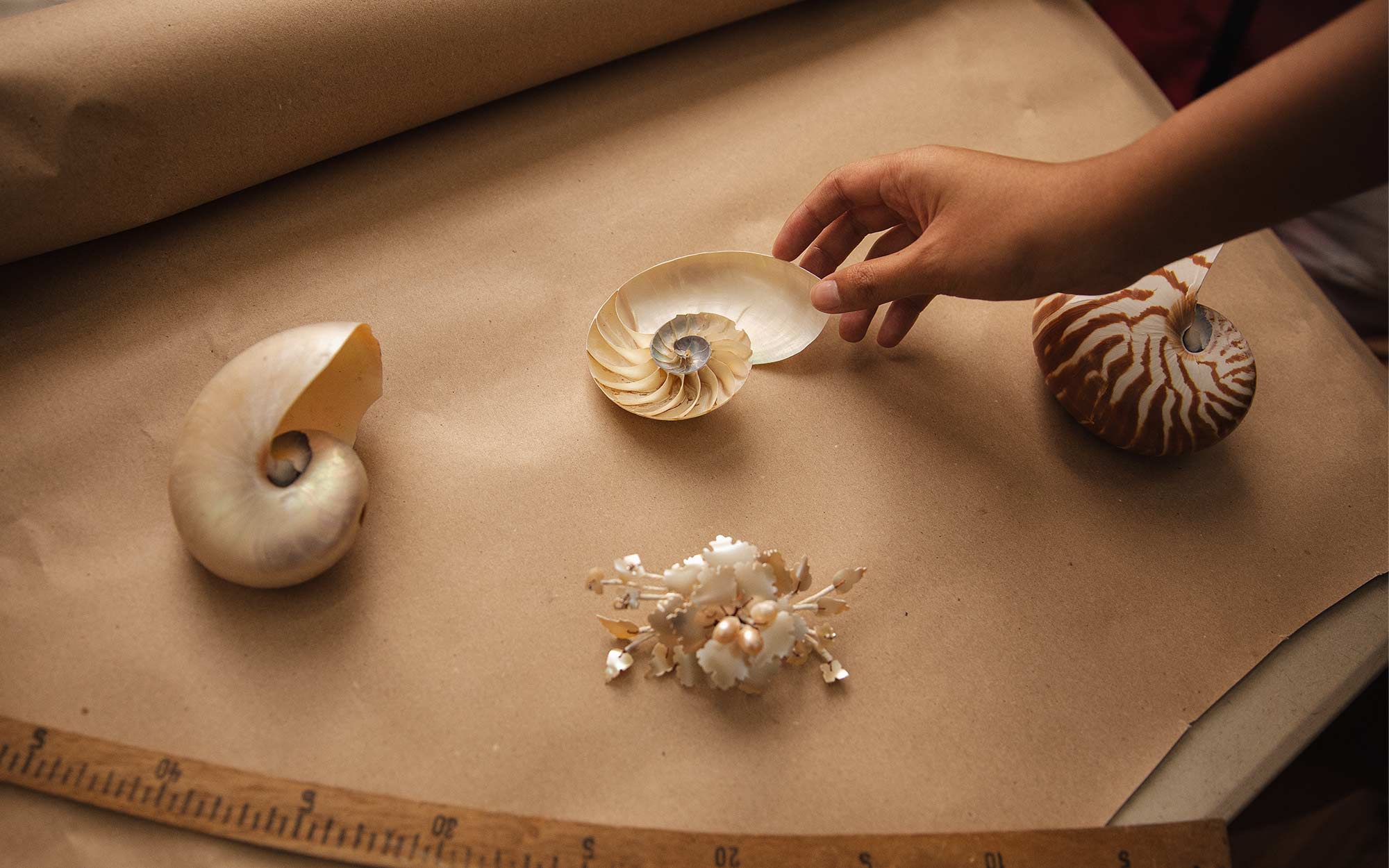
The art of Lagang has been considered a dying craft since the '80s. With only a handful of artisans left, the craft risks fading into obscurity—yet its last keepers are determined to keep it alive.
The Philippines is a land of stories told through its art—a tapestry woven with the colors of indigenous weaves, the rhythm of ancient dances, and the touch of hands that shape clay and carve wood. These traditions stand as living memories passed down through generations, preserving the legacy of ancestors in every thread, melody, and carved detail. Yet, in today’s modern era, many of these age-old crafts run the risk of vanishing away.
One such endangered tradition is Lagang, an intricate Cebuano art form that transforms chambered nautilus shells into intricate floral arrangements. This practice is rooted in the ingenuity of southern Cebu’s coastal communities. While its precise origins remain undocumented, historians and artisans trace it back to the late 19th and early 20th centuries, particularly in the seaside towns of Dalaguete, Argao, Boljoon, and Carcar.
At its peak, Lagang was a cherished decorative element in affluent households, embellishing shadow boxes that framed family portraits and religious images. Its luminous floral compositions offered a lasting alternative to fresh bouquets—a flower that never wilts. Today, however, the craft itself is teetering on the edge of extinction, with only a handful of artisans left to keep it alive.
ADVERTISEMENT - CONTINUE READING BELOW
Belg Belgica
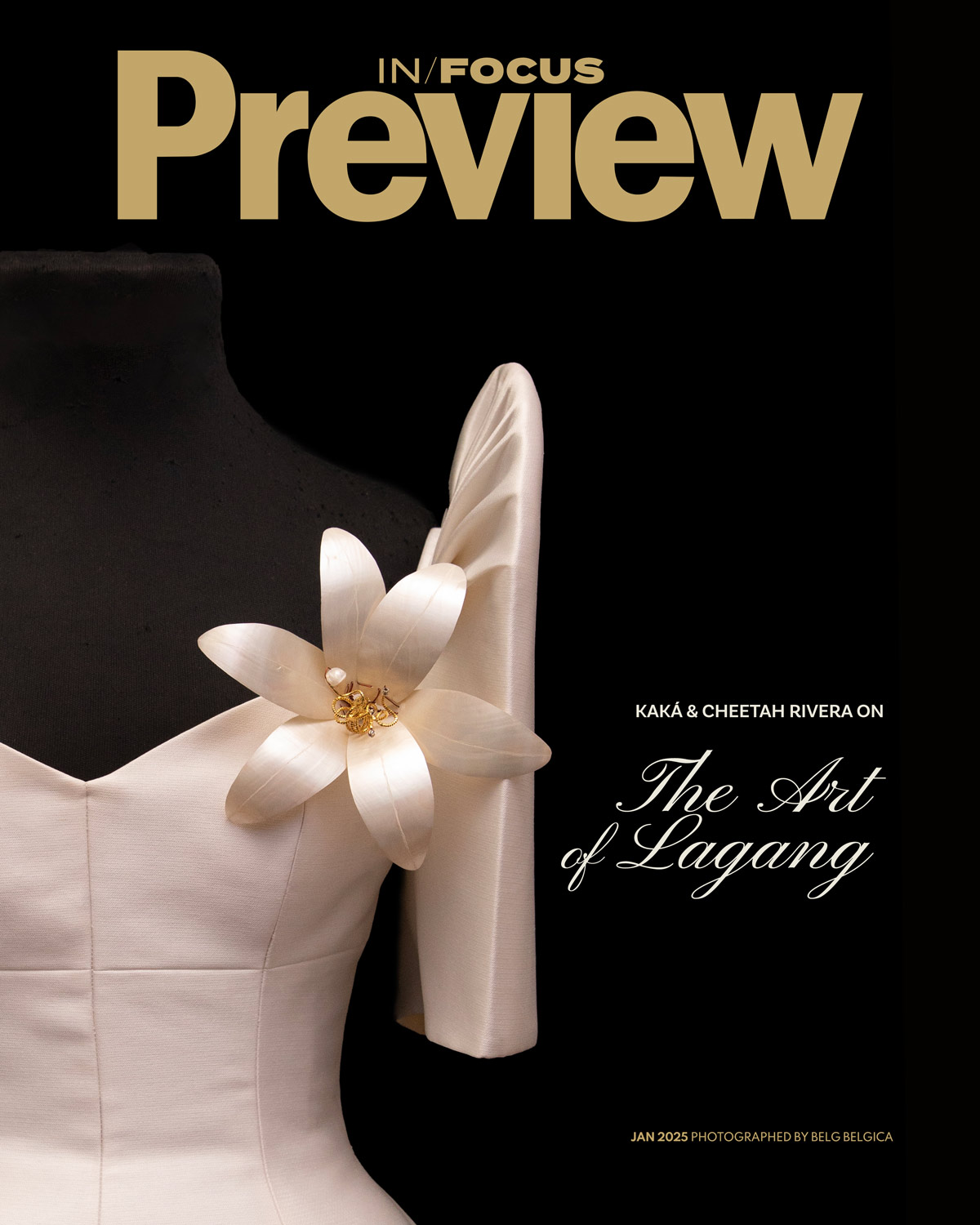
Kaká and Cheetah Rivera on "The Art of Lagang" for Preview In Focus January 2025
The Art of Lagang
The word “lagang” is Cebuano, a term referring specifically to the chambered nautilus shell. The craft involves a meticulous process: cutting, shaping, and arranging pieces of the shell into intricate floral patterns. Each shell must be carefully polished and assembled, a technique that requires extraordinary precision.
Kaká, a self-taught artisan from Sta. Maria, Bulacan, describes the painstaking nature of this process. “Medyo madaling pakinggan pero napaka-tedious gawin at napaka-delicate [ng material],” he explains. The nautilus shell is exceptionally brittle, leaving little room for error. “Sa isang shell, makakagawa ka na ng isang flower. The problem is, dahil shell siya, very brittle siya… So siguro out of 100 na nagagawa mo, 30 of those nagkakasira,” he shares.
CONTINUE READING BELOW
watch now
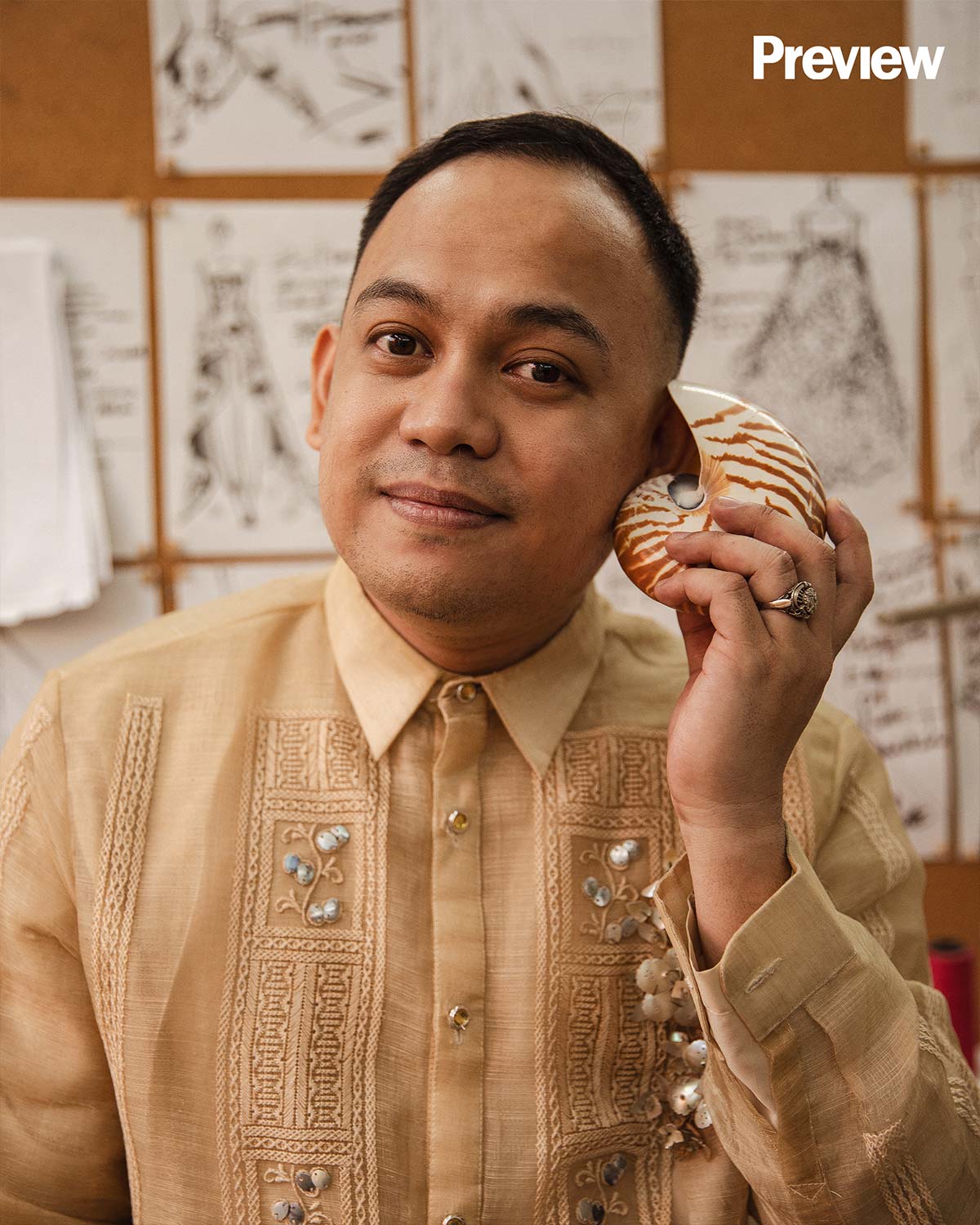
Bulacan-raised Lagang artist, Kaká. Belg Belgica
For Richelieu Colina, regarded as Cebu’s last remaining Lagang master, precision and patterns are paramount. “Yung [pinaka importante] talaga ay yung pattern. Kailangan may pattern. Mahihirapan ka sa design kapag hindi naka-pattern,” the 50-year-old artisan explains. "Yung mga gawa kasi namin, [gumagamit ng] 10,000 pieces na dahon. Nasa volume talaga [mga gawa namin], kaya mahalaga rin na precise gawa mo.”
ADVERTISEMENT - CONTINUE READING BELOW
Richelieu’s creations range from modest bouquets to grand floral arrangements used in carrozas (religious floats), with some projects taking months to complete. A single 12-inch bouquet requires a week of meticulous work, while elaborate carroza and altar decorations demand thousands of shell pieces and months of production.
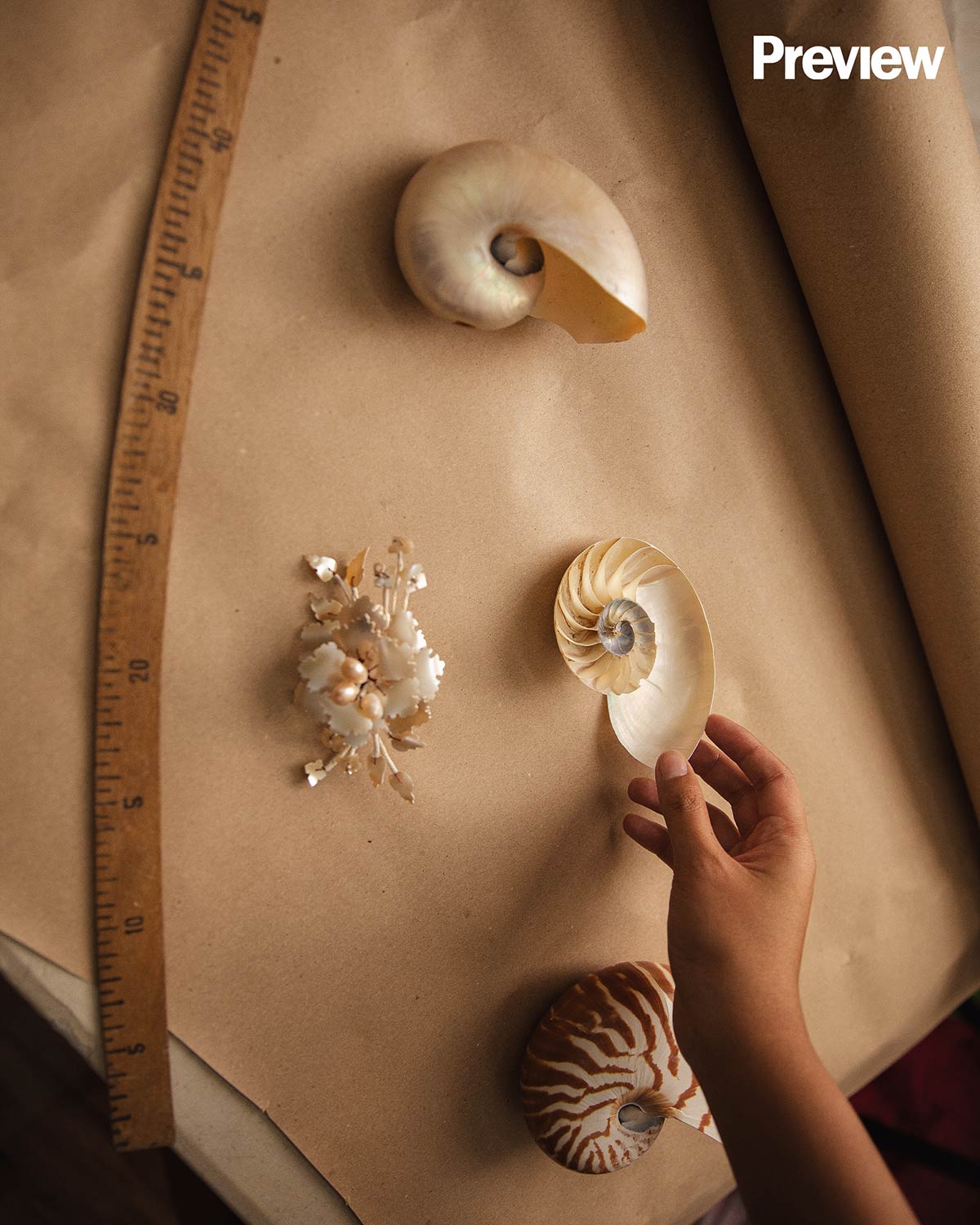
Belg Belgica
ADVERTISEMENT - CONTINUE READING BELOW
An Art in Decline
Despite its intricate beauty and exceptional craftsmanship, the art of Lagang is disappearing at an alarming rate. The scarcity of chambered nautilus shells has become a pressing issue for decades, with local sources nearly depleted. “Nautilus shell pa rin ang gamit ko ngayon, pero hindi na galing dito sa Pinas, galing na sa Taiwan,” Richelieu shares, recounting a time when Cebuano fishermen provided a steady supply back in the '90s.
With prices ranging from P400 to P600 per shell, the Lagang master laments the increasing costs of production. “Mas mura sana mag-source galing sa Cebu, pero wala na masyado nagbebenta ng mga raw [shells] dito,” he shares.
When he began learning the craft 35 years ago, nautilus shells were abundant in Cebu’s waters. Over the years, however, supplies steadily dwindled. "Mayroon pa rin iilang [fishermen ang nakakakuha ng nautilus shell], pero marami na rin talaga ang tumigil dahil wala na masyado makuha, kaya nahinto na ang export," he explains.
ADVERTISEMENT - CONTINUE READING BELOW
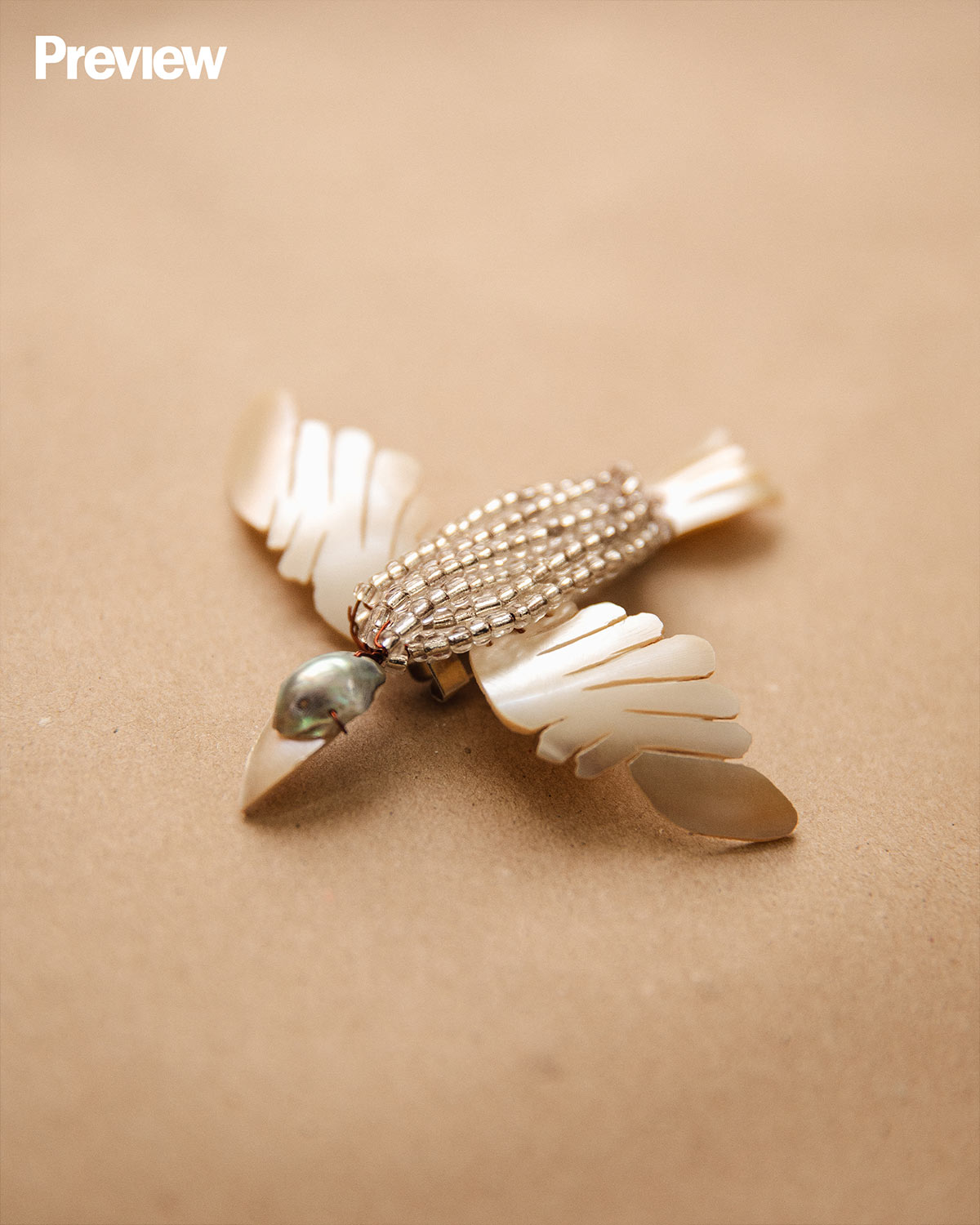
A dove-shaped Lagang pin by Kaká. Belg Belgica
The rising cost of raw materials, coupled with the labor-intensive nature of the craft, has rendered Lagang a luxury item. According to Kaká, simpler designs like brooches start at P1,500, while elaborate bouquets can command tens of thousands of pesos. Richelieu’s floral bouquets, often commissioned for weddings and religious events, start at P7,500 for a standard 12-inch arrangement, while more elaborate designs fetch up to P25,000 or even more.
ADVERTISEMENT - CONTINUE READING BELOW
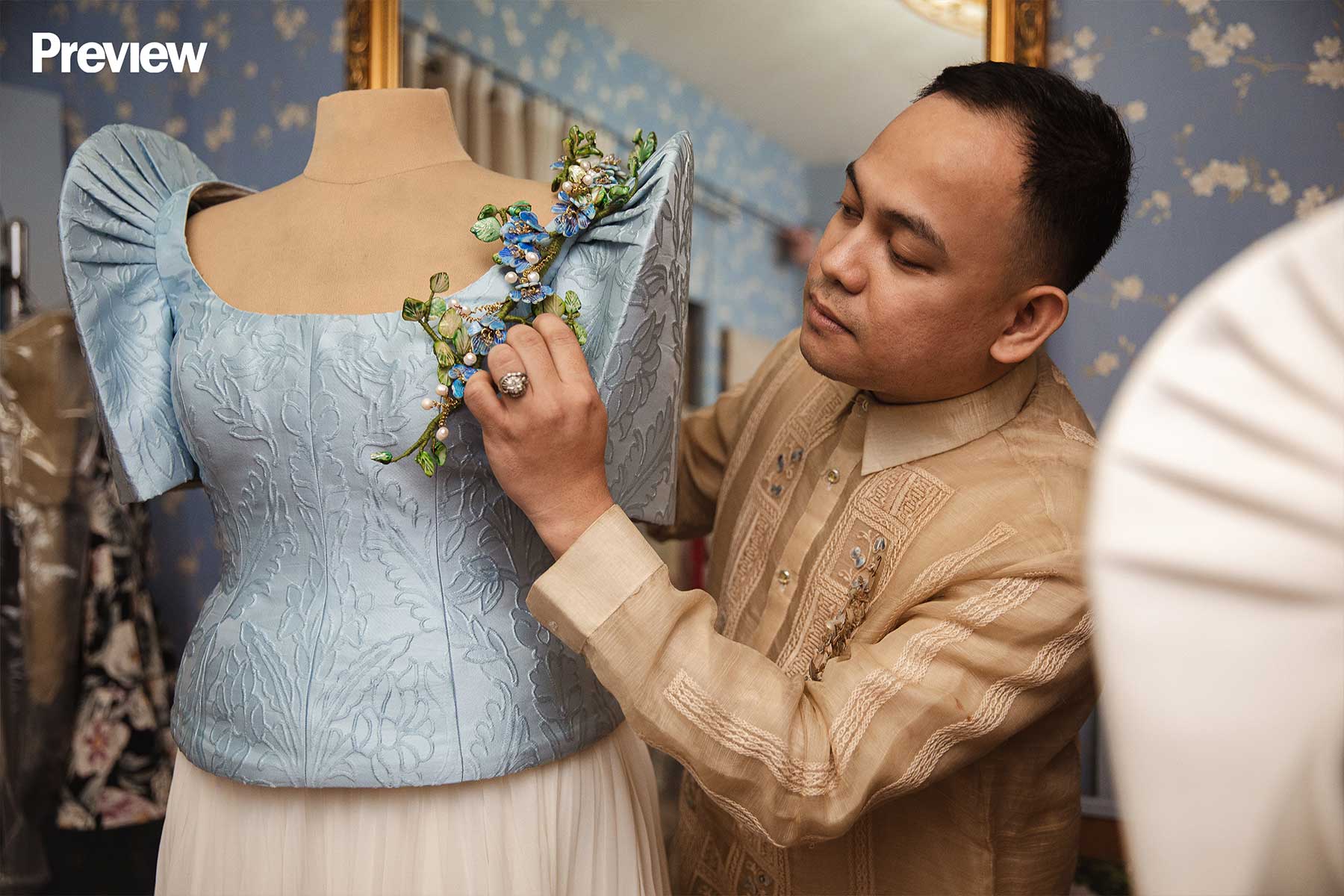
Kaká with one of his Lagang floral arrangements made with Osmeña shells— the most expensive of its kind. Belg Belgica
Preserving Cultural Heritage
For both Kaká and Richelieu, preserving Lagang is a mission rooted in cultural pride.
Now in his 50s, Richelieu has taken it upon himself to pass down his knowledge, mentoring around 20 students on the intricate techniques and discipline required for the craft. However, he emphasizes that for the art of Lagang to truly survive and thrive, institutional support is essential. “Financial na tulong talaga ang kailangan [naming artisans],” he says, stressing the difficulty of affording tools and materials.
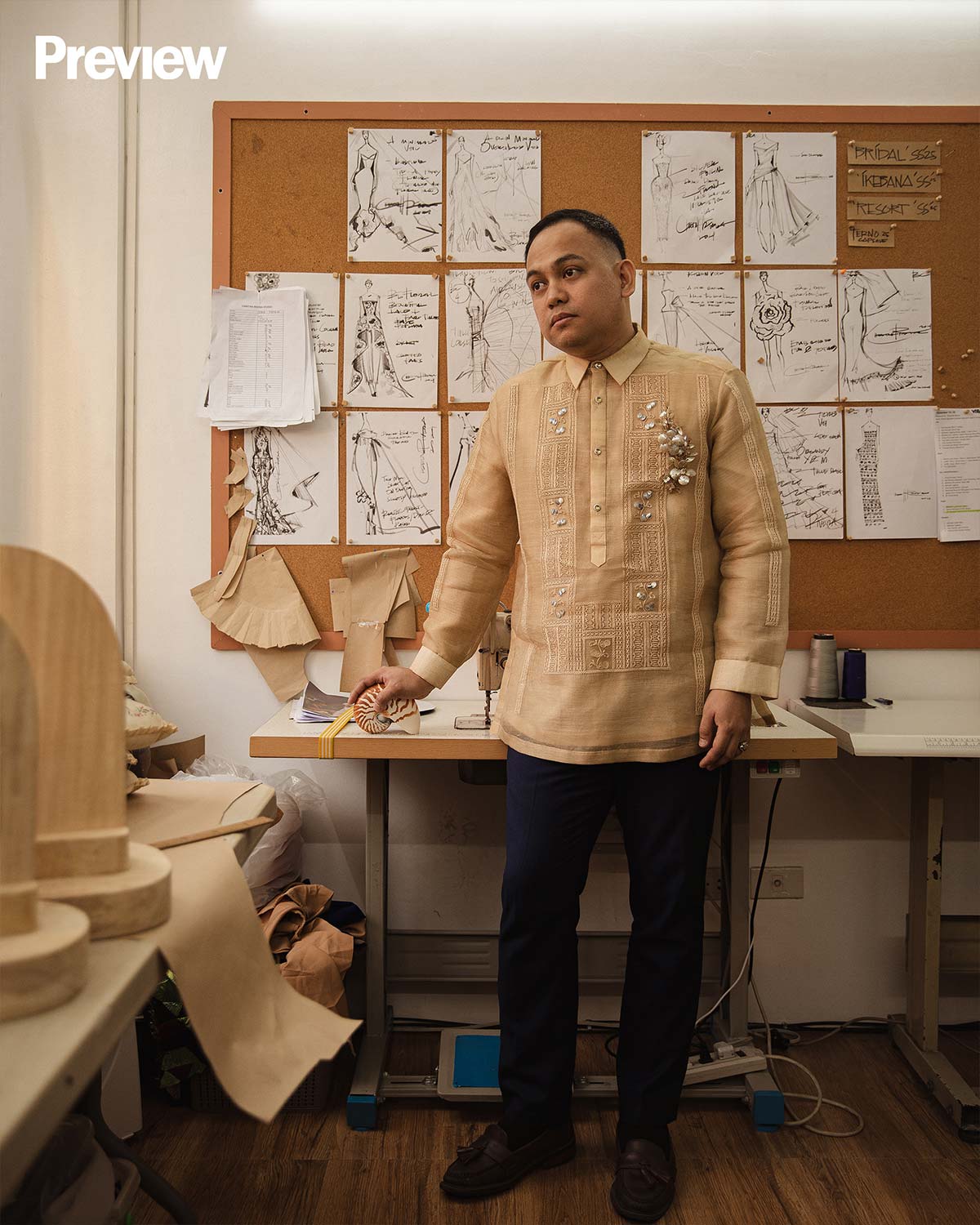
Kaká, meanwhile, envisions a future where Lagang finds its place in contemporary Filipino culture. Through his brand, Flos Conchas (Latin for “flower shells”), the Bulacan-raised artist is making a case for Lagang in Filipino fashion, creating nature-inspired embellishments for ternos, dresses, and barongs. “Very Filipino itong art na ito… wala kang makikitang art na katulad nito sa ibang bahagi ng mundo,” he proudly muses.
ADVERTISEMENT - CONTINUE READING BELOW
Belg Belgica
The Foray Into Fashion
Traditionally, Lagang pieces adorned homes in southern Cebu, particularly in the seaside city of Carcar, and served as elaborate decorations for churches’ altars and carrozas. Today, the art of Lagangis finding its place in the fashion industry—with designer Cheetah Rivera and Kaká leading the charge.
ADVERTISEMENT - CONTINUE READING BELOW
For the 2024 State of the Nation Address (SONA) back in June, Cheetah was commissioned to create a custom piece for Cebuana beauty queen Jamie Herrell, fiancé of Ilocos Norte governor Matthew Manotoc. While brainstorming, Cheetah knew she wanted to craft a design that would truly represent Cebu. It was then that she discovered the art of Lagang, a Cebuano tradition. Intrigued by its rich history, deep connection to Cebu’s past, and the looming threat of its extinction, she was inspired to incorporate this endangered craft into her design. “I realized it was the perfect time to explore that concept,” Cheetah shares with Preview.
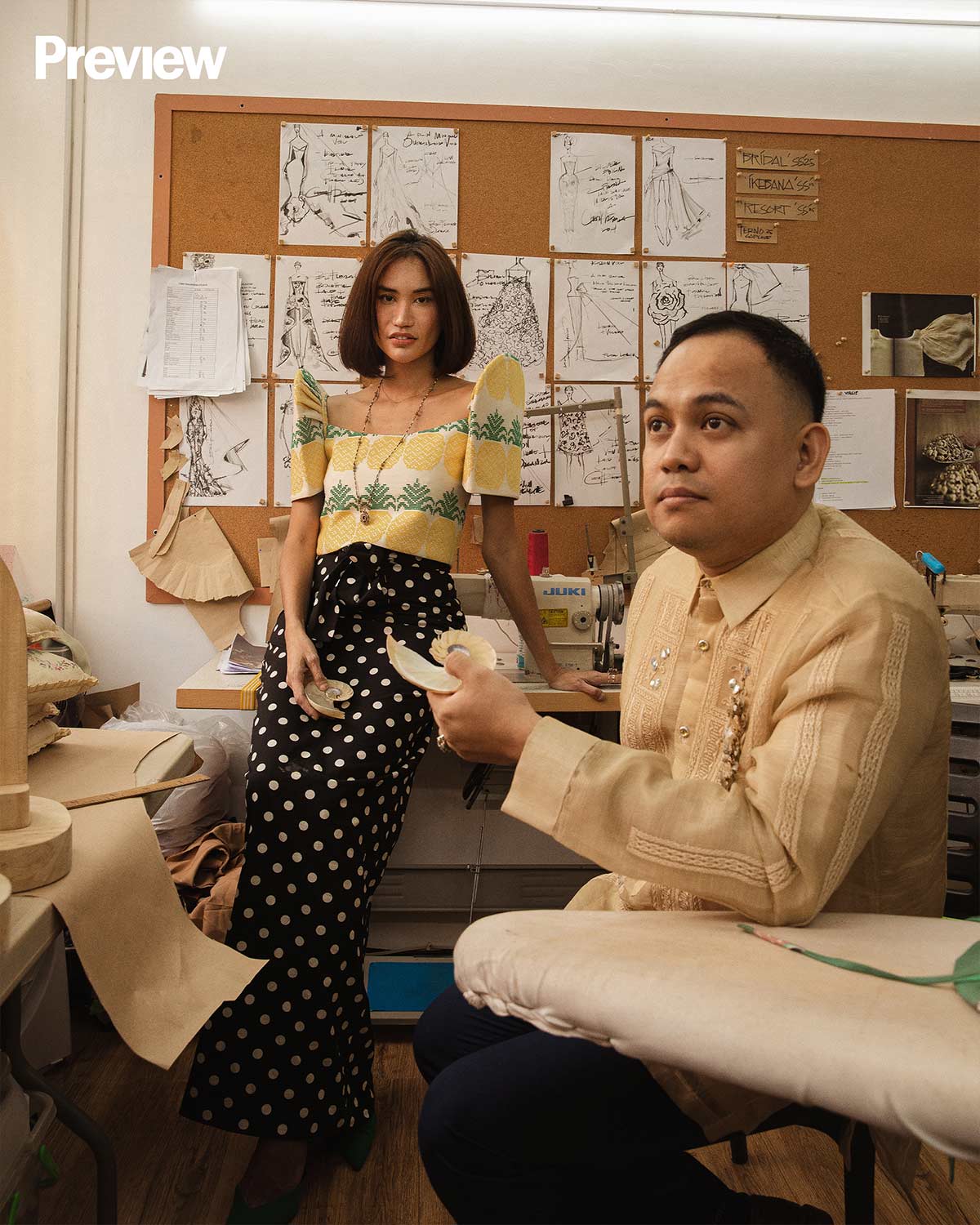
Kaká with Cheetah at her atelier. Belg Belgica
ADVERTISEMENT - CONTINUE READING BELOW
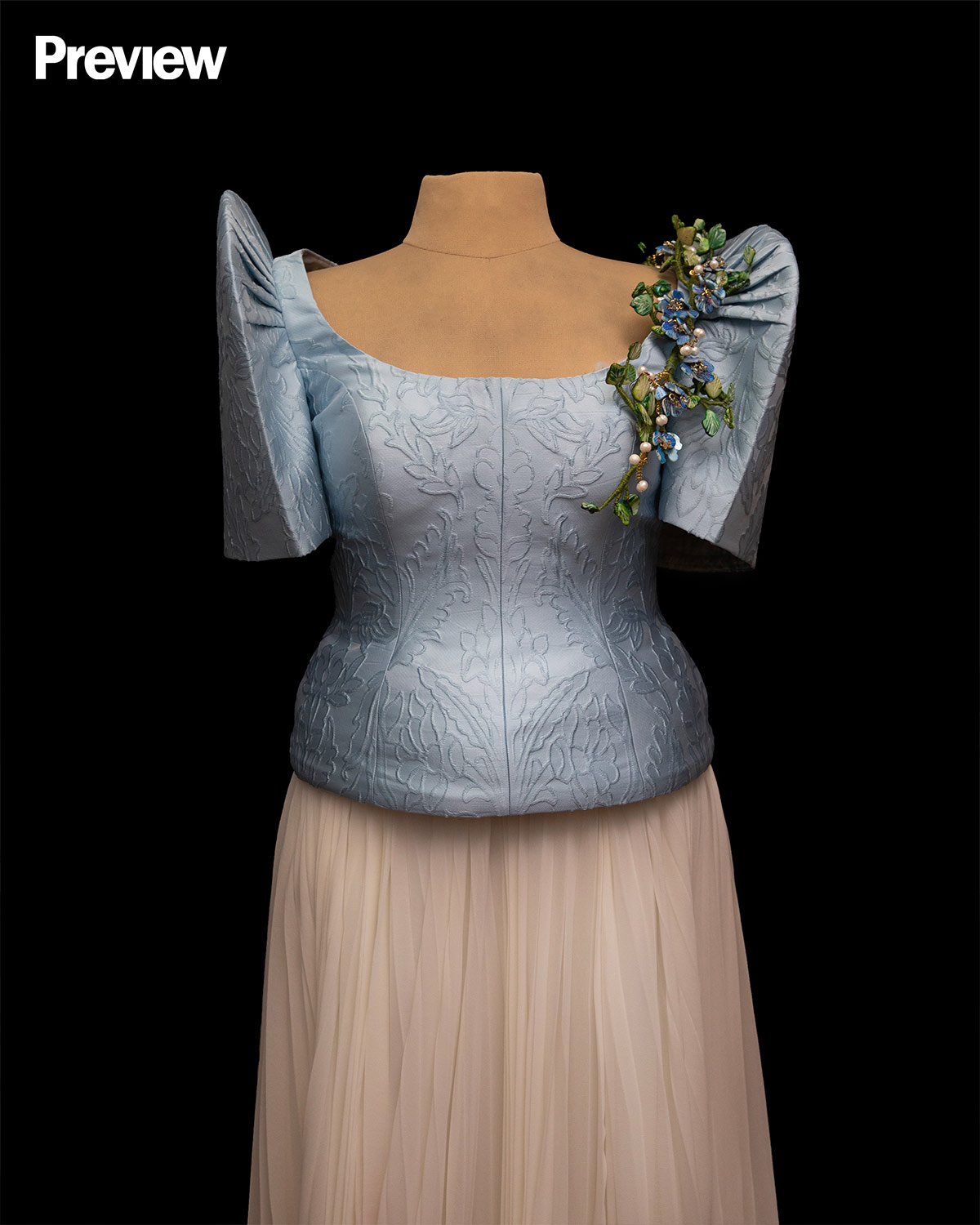
Stars aligned when she connected with Kaká through a Facebook group, whom she enlisted to collaborate on the terno. Driven by a fascination for traditional formalwear and shell craftsmanship, their joint vision was realized through a regal, modern terno ensemble. Complete with butterfly sleeves and a bustier neckline, the custom piece featured Cheetah’s trademark sculptural bodice, complemented by an alampay crafted from columns of shells, arranged to resemble a bundle of Sampaguita flowers.
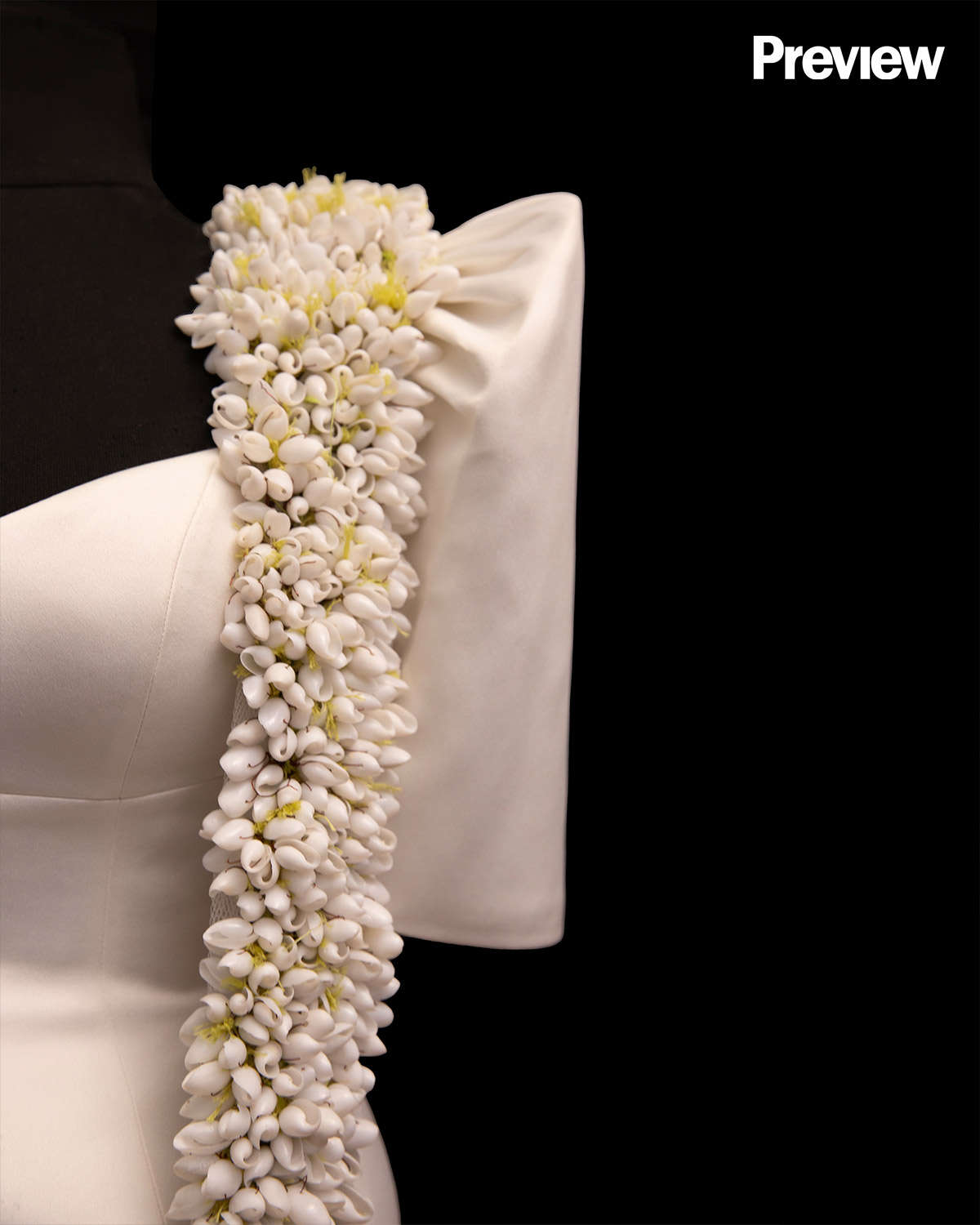
Belg Belgica
ADVERTISEMENT - CONTINUE READING BELOW
This project marked the beginning of an ongoing partnership between the two artists. Armed with a mission to preserve the craft's legacy, Cheetah and Kaká are working together to bring the art of Lagang into the realm of fashion. Over six months since their first collaboration, Cheetah has dressed style personalities like celebrity dermatologist Dr. Aivee Teo and actress Heart Evangelista in ternos embellished with Kaká’s Lagang creations.
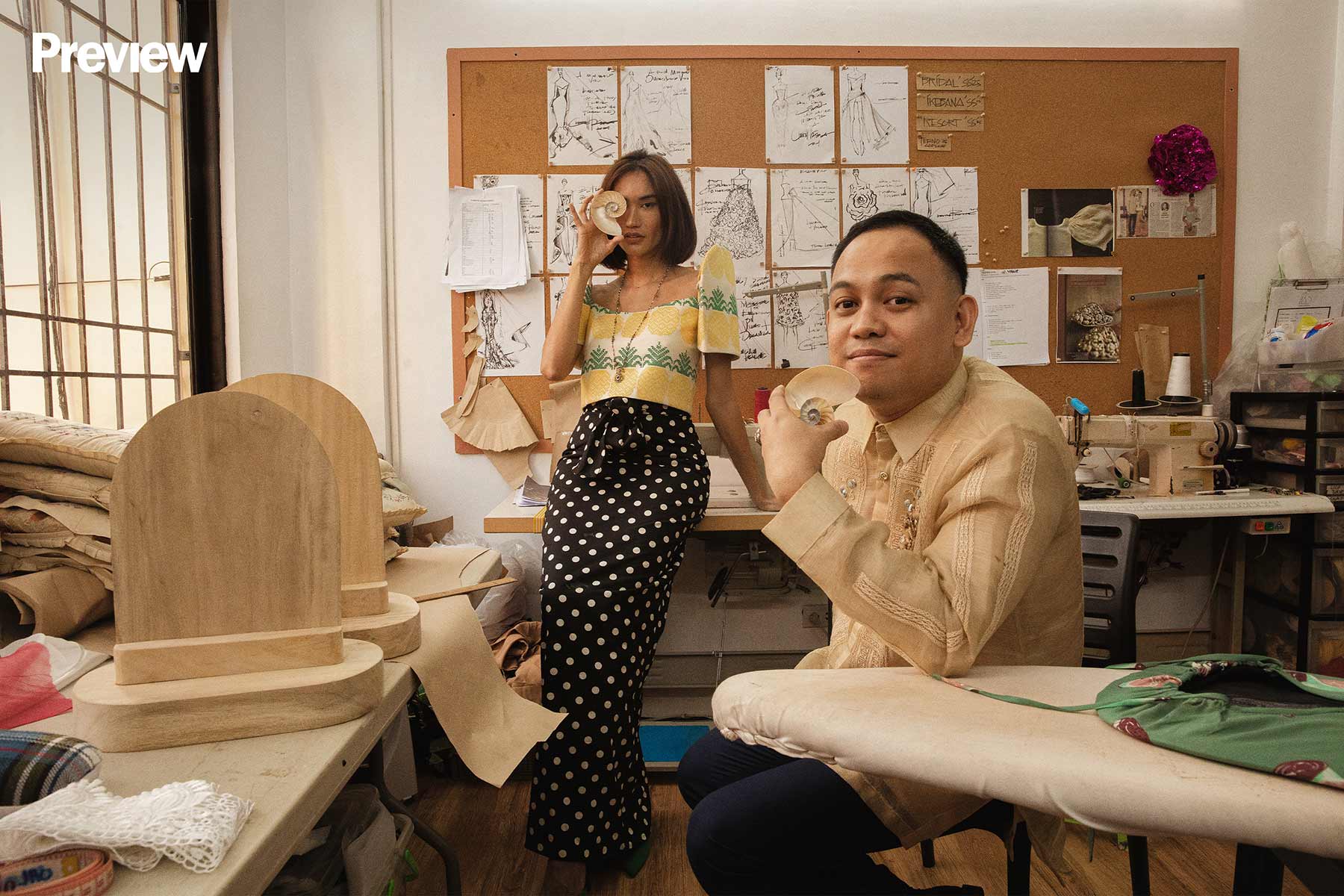
Belg Belgica
ADVERTISEMENT - CONTINUE READING BELOW
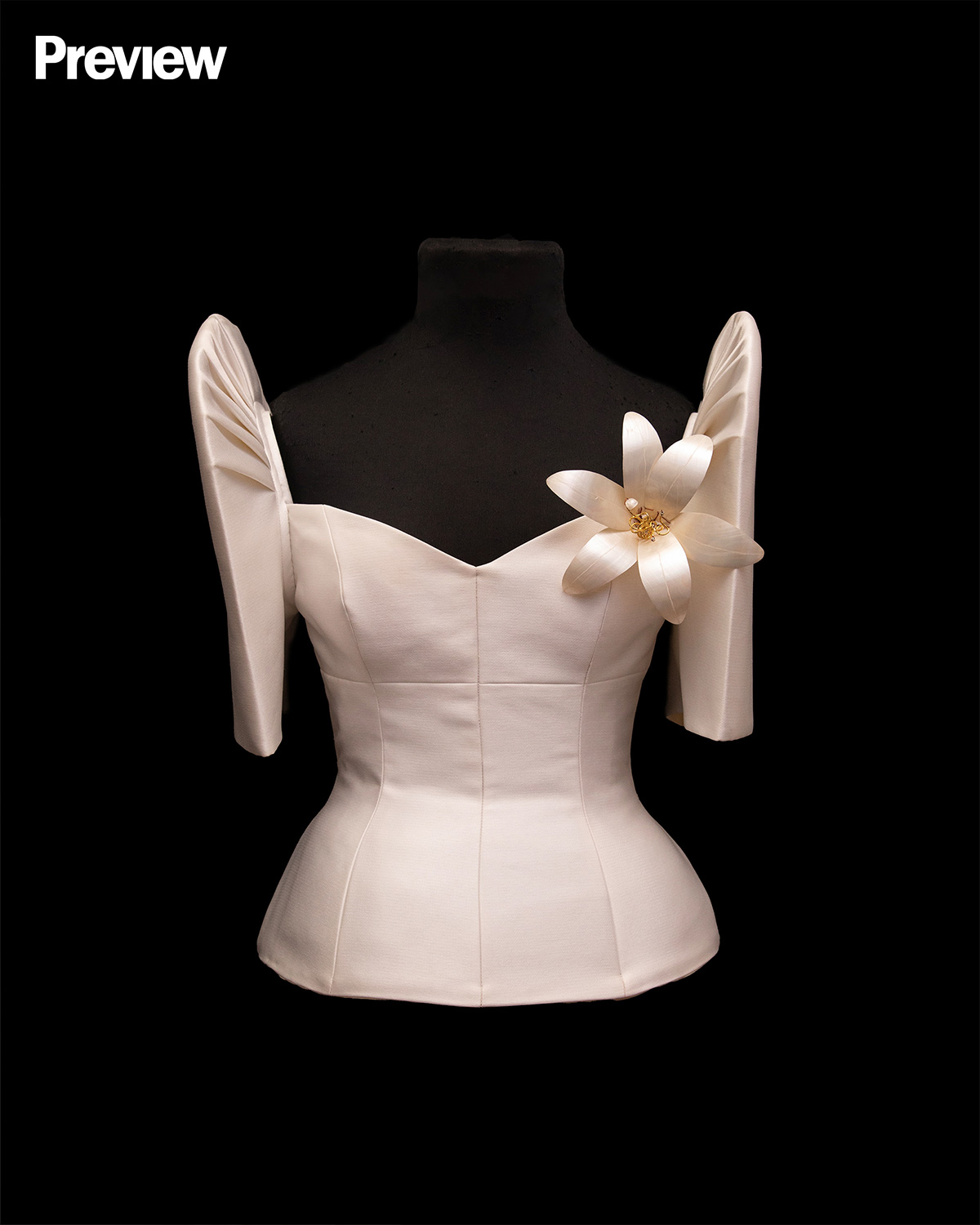
Cheetah's signature sculptural terno adorned with a Lagang brooch by Kaká. A custom piece designed for Dr. Aivee Teo. Belg Belgica
By championing the art of Lagang through her work, Cheetah hopes to send a message of "bayanihan," a collective effort to support Filipino artisans. Reflecting on her decision to incorporate Lagang into her designs, the 2023 Best Filipino Fashion Designer honoree muses: "When I started conceptualizing ideas, I had this intention to somehow hope that my design would give an awareness to this beautiful art," she shares. "I'm also at a stage as a fashion designer wherein its exciting to share points of views with different artisans for collaborative work and try new things for the brand."
ADVERTISEMENT - CONTINUE READING BELOW
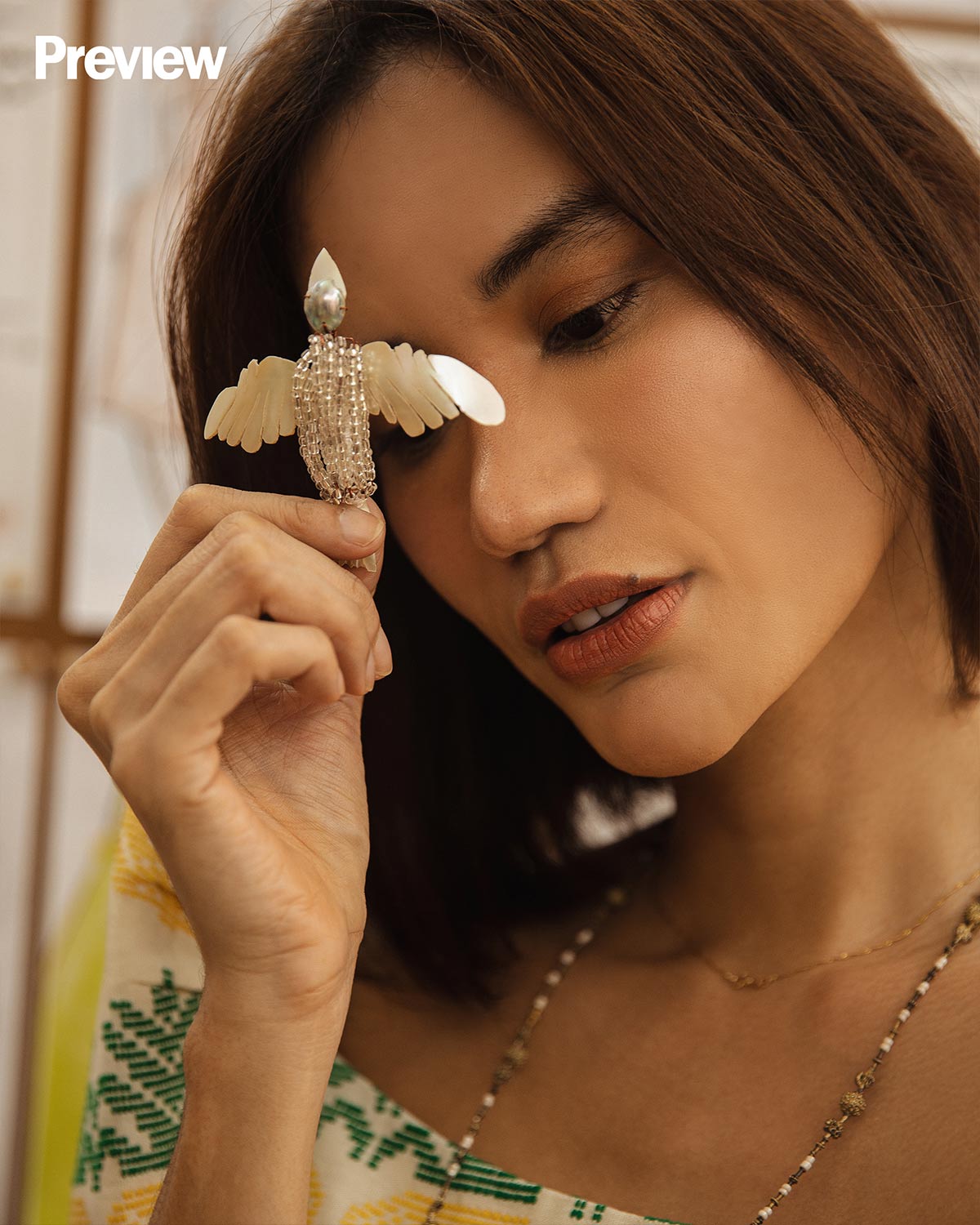
Belg Belgica
A Fragile Legacy
Lagang was born from the desire to craft flowers that never wither, a keepsake meant to transcend generations. Yet, the art itself now faces its own impermanence, now standing on the edge of obscurity.
As it stands, its survival rests in the hands of the few remaining artisans and the efforts to sustain its legacy. While challenges persist, the centuries-old craft is finding its place amid modernity. But for Lagang—and many other Filipino art forms—to truly thrive, mere admiration will not suffice. After all, art does not survive on recognition alone. Like any form of livelihood, proper financial support is the lifeline that will sustain it.
ADVERTISEMENT - CONTINUE READING BELOW
As designer Cheetah Rivera puts it, “We are capable as a nation and as Filipinos to create art and innovations if only we [could] truly support each other. And with that, we need the help of all the Filipinos to support our own—[and that] support means proper compensation for all the artists so we can continue doing what we do best.”
Belg Belgica
ADVERTISEMENT - CONTINUE READING BELOW
A Preview Originals Production
Photography: Belg Belgica
Creative Director: Bacs Arcebal
Editor-in-Chief: Marj Ramos-Clemente
Production and Story: Paulina Singh
Special thanks to Cheetah Rivera, Junefil Perez Ravelo II (Kaká), and Richelieu Colina
Hey, Preview readers! Follow us on Facebook, Instagram, YouTube, Tiktok, and Twitter to stay up to speed on all things trendy and creative. We’ll curate the most stylish feed for you!