
According to a new report by the International Monetary Fund (IMF), 14% of the Filipino workforce could be replaced by AI as the technology continues to evolve.
The report estimates that 36% of jobs in the Philippines are “highly exposed” to AI. Before you panic, here’s the catch: More than half of those highly exposed jobs fall under the “highly complementary” category. This means AI could actually help workers perform tasks more efficiently rather than replace them altogether.
The real concern lies in the remaining 14% of roles, which the IMF classifies as having “low complementarity” with AI, hinting these roles could face the brunt of AI’s impact.
Who are Most at Risk of Losing Jobs to Artificial Intelligence?
One of the Philippines’ most vital industries—business process outsourcing (BPO)—is among the sectors most likely to feel the effects, with many roles having high exposure and low complementarity to AI.
For one, advances in AI-powered chatbots and virtual assistants threaten to replace many customer service positions. Other roles heavily impacted include sales and service jobs, many of which involve routine tasks that AI can perform efficiently.
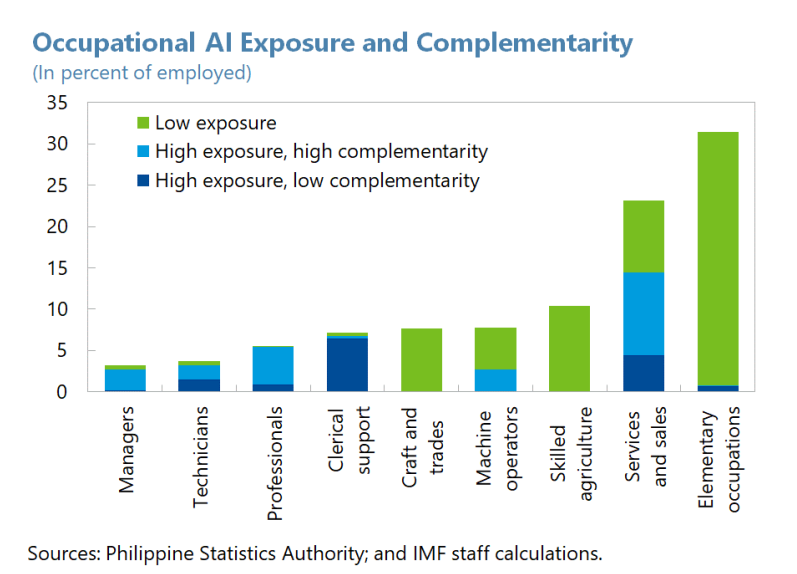
On the other hand, managers and professionals have the lowest exposure to AI, since the strategic and analytical nature of their roles make it harder to automate. For technicians, clerical support, and machine operators, the risks are more balanced.
Surprisingly, the impact also varies by gender. IMF found that half of women’s jobs are highly exposed to AI, compared to only a quarter of men’s roles.
“To ensure that the gains from implementing AI are widely shared, the authorities will need to invest in digital infrastructure and education and strengthen the social safety net,” IMF said in the report.
The good news is that the majority of Filipinos are generally receptive to learning AI to stay competitive in the workforce, according to online employment portal JobStreet.
In addition, JobStreet said it has not yet observed a decline in administrative roles on its platform as of 2024, as AI adoption is still in its early stages. We can breathe easy for now.
*This story originally appeared on Spot.ph. Minor edits have been made by the Preview.ph editors.
Hey, Preview readers! Follow us on Facebook, Instagram, YouTube, Tiktok, and Twitter to stay up to speed on all things trendy and creative. We’ll curate the most stylish feed for you!
