
Hello there, gorgeous! Welcome to Clean Beauty Conversations, a series of informative pieces about everything we love, and those which need rethinking, about the world of beauty.
***

July 2012 – I was 31 years old, sweating in Athens heat, shopping for sunblock at a little corner pharmacy. I grabbed the first bottle I saw and headed for the cashier then I stopped in my tracks, remembering that I was pregnant! A recent conversation with a friend popped to mind – she mentioned that she stopped using a lot of products when she got pregnant, and how hard it was to find ones that were pregnant-friendly. This moment, at age 31, was the first time I ever flipped a bottle to check the back literature and see what exactly was in this product. I remember that short but very real shock of panic, scanning the list of ingredients and thinking: 1) “This is in English, right?,” then 2) “Shoot, I don’t know what any of these are!,” then 3) Wait, what am I even looking for?!” Pushing down the feeling of confusion, I went back to the sunblock shelf and grabbed a tube with a picture of a baby on it, reasoning that if it’s safe for babies, it should be safe for soon-to-be-mommies. I then silently promised that I would spend the required 10 to 20 minutes to Google what I needed to avoid to keep my little baby safe, and that would be that – confusion over. It’s been almost 12 years and I’m still Googling.
I contrast that with my 17-year-old niece who, while still in high school, prides herself on being an informed consumer. She is mindful of what she puts in and on her body – chooses vegetarian and whole foods, and vegan and organic personal care products. She understands intrinsically what I didn’t at 31 – that making informed choices is a lifestyle, it isn’t a single 20-minute research session.
We should truly learn from the younger generations. They treat shopping with a greater sense of purpose than we ever did growing up. For most young skincare lovers, it’s not enough to be told what to buy by their favorite celebrity or fashion editor. In an era where knowledge is king, a new crop of beauty consumers has emerged: the skintellectuals.
What Is a Skintellectual?

“Skintellectual” is a term coined to describe consumers who combine intellect with their love for skincare. Unlike more casual customers, skintellectuals dive deep into the realms of science, ingredients, and reviews. Although the exact etymology of the term is unclear, an analysis by the Business of Fashion traces its origins to as early as 2017, when science-forward brands like NIOD and The Ordinary started coming to the fore.
From there, it ushered in a new wave of minimalist, clinical-looking brands. Promising simple, high-performance formulas without the fluff, they didn’t shy away from skincare jargon and technical details. The ideal brand for the educated skincare consumer who knows what they want.
Adopting a more investigative approach to their regimens, skintellectuals seek solutions for hyper-specific skincare concerns — be it acne, fine lines, dehydration, or a damaged skin barrier — all of which require the credibility of experts and thoughtful formulations.
True enough, in 2020, Global Cosmetic News reported that Google searches for skincare ingredients reached an all-time high, ranging from the crowd-favorite vitamin C, to more unsung heroes like ceramides and salicylic acid. But these skintellectuals aren’t just paying attention to the latest industry trends and buzzy ingredients, they’re also watching the brands behind them.
It’s no surprise that the top demographic comprising skintellectuals are the internet-savvy Gen Zs. According to a report by WGSN, Gen Z is the most self-educated generation to date. Born into a period of rapid social media growth, they constantly seek out product information, tutorials, and news online. Because of this, informed online communities continue to spark demand for industry authenticity and transparency.

How to Start Your Skintellectual Journey
If being a skintellectual simply means making informed choices, then I believe that everyone who is a consumer of anything that goes on their skin and body ought to aspire to be a skintellectual. It may sound daunting, but it is just about taking that extra time to understand your own needs, to get to know a product before using it and to align your values with the way you consume.
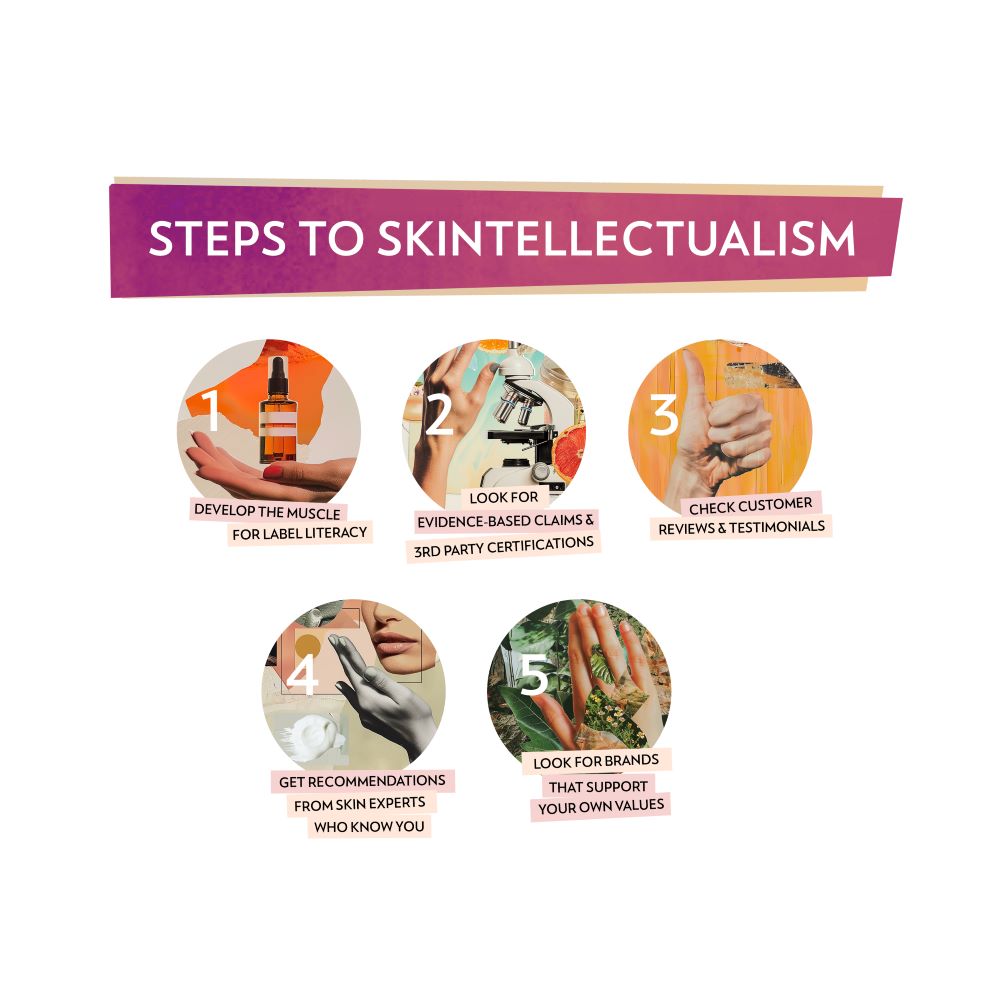
Here are some tips to help you start:
1. Develop the muscle for label literacy
There is no need to memorize scientific names of ingredients, but making a habit of scanning the back of a bottle before buying it is the best way to make an informed decision. Since the birth of Pure Culture, we’ve always encourage consumers to ask thee questions before deciding to buy something: 1) What’s in it?, 2) How did it get to me?, 3) Where will it end up? To make things a lot easier for buyers, we have also collated a list of questionable ingredients to avoid when considering the safety of our bodies and that of the planet.
2. Look for evidence-based claims and third-party certifications
Seek out products or ingredients that are supported by scientific research, clinical studies, and third-party certifications. These products tend to be more transparent about their formulations, not only allowing for more informed decisions but also fostering accountability within the skincare industry. Third-party audits often involve rigorous quality control standards, helping products achieve higher consistency.
3. Check customer reviews and testimonials
An easy way to start becoming a skintellectual is to study peer recommendations. Instead of buying a product because you like the endorser, go to the reviews section and see what real-world users are saying. And since skintellectuals are active participants in the vast online beauty community, you will most likely find reviews from your fellow skintellectual!
4. Get recommendations from skin experts who know you
Skin experts such as dermatologists and aestheticians can provide valuable insight not necessarily because of their knowledge of products, but more so because of their knowledge of your skin history, lifestyle, allergies, and triggers. They also have scientific knowledge and clinical experience to draw on when making recommendations.
5. Look for brands that support your own values
We all stand for something, and certain things are more important to us than others. Understanding what is important to you, and finding brands that align with that is not just fulfilling, but it also makes life easier. Seek brands that disclose comprehensive information about their sourcing, manufacturing processes, and sustainability initiatives so that you have the information you need to consciously choose.
Whether you're a seasoned skincare enthusiast, a curious newcomer, or one propelled to make more conscious choices due to a change in their life (like me in 2012), the skintellectual revolution is for everyone. In a world brimming with options, embracing a skintellectual approach is the wisest way to navigate your way toward your healthiest skin ever.
About the author
Alex Gentry is Cofounder and Chief Innovator at Pure Culture, the Philippines’ first certified toxin-free high-performance skincare line. Learn more here.
Hey, Preview readers! Follow us on Facebook, Instagram, YouTube, Tiktok, and Twitter to stay up to speed on all things trendy and creative. We’ll curate the most stylish feed for you!
